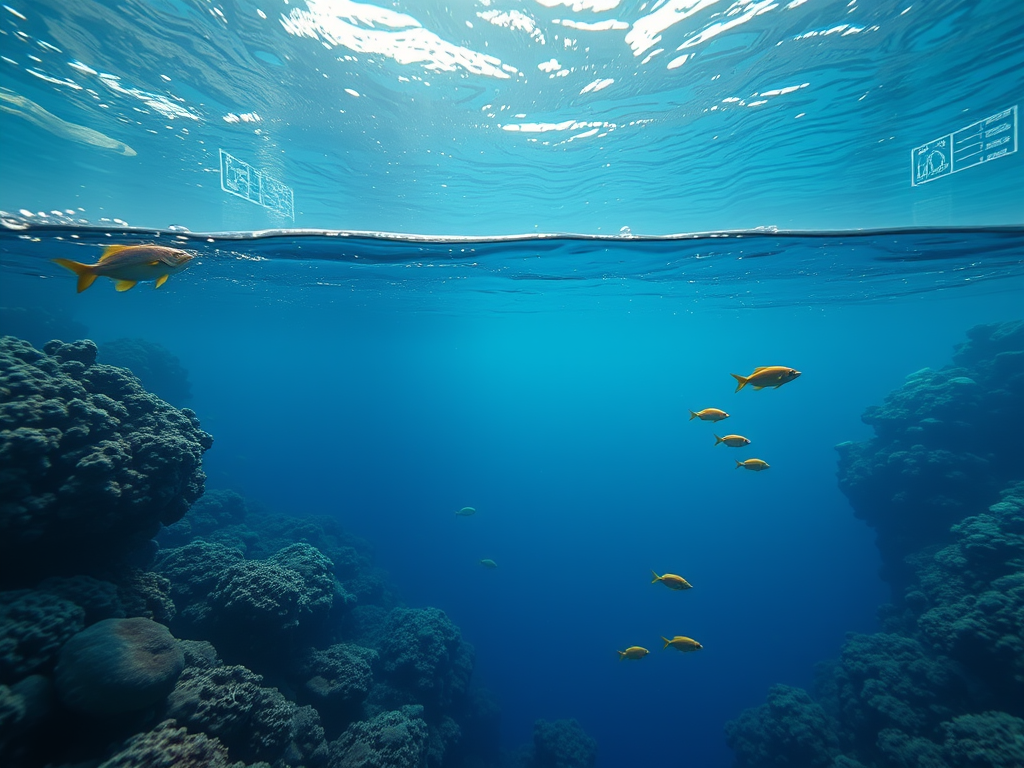
Earth’s ocean, the planet’s life-support system, is experiencing rapid and widespread transformations that extend far below its surface. A promising international study published in Nature Climate Change reveals that vast regions of the global ocean are experiencing compound state change, with simultaneously warming, becoming saltier or fresher, losing oxygen, and acidifying—clear indicators of climate change pushing marine environments into uncharted territory.
Led by researchers from the Institute of Atmospheric Physics (Chinese Academy of Sciences), Mercator Ocean International (MOI, France), and the Laboratoire de Météorologie Dynamique at the École Normale Supérieure (ENS–PSL, France), the study developed an assessment and monitoring framework and tool to standardise and combine and multiple ocean essential variables, pinpoint when and where are clearly affected by compound state change in a warming climate. With this framework, this study demonstrates an increase in impacts of these compound state changes across much of the ocean’s upper 1,000 meters, identifying areas most affected.
“Between 30% and 40% of the ocean’s upper layers have already undergone significant shifts in at least two critical properties compared to 60 years ago,” explains Dr. Zhetao Tan (ENS-PSL), the study’s lead author. “In some areas, up to a quarter of the ocean shows simultaneous changes in temperature, salinity, and oxygen—a striking and alarming trend.”
The most intense compound changes are occurring in the tropical and subtropical Atlantic, North Pacific, Arabian Sea, and Mediterranean Sea. The combined impact of these shifts is particularly concerning: while each variable affects marine life independently, their simultaneous alteration can push ecosystems beyond their adaptive limits.
“The ocean is experiencing strongly compound change multidimensionally,” warns Prof. Lijing Cheng (IAP/CAS), “The ocean condition is transforming in multiple dimensions at once, and even the deep ocean—once considered stable—is responding more rapidly than we thought.”
This innovative framework also enables us to identify when and where climate change signals surpass short-term variability, and allows us to move from looking at the change in each variable on its own to combining them into a multivariate composite index. This approach allows for scientists to determine when the ocean has transitioned into a new state and how deep these changes penetrate—critical insights for monitoring and mitigating climate risks.

“Our findings are based on direct physical and biogeochemical observations,” emphasizes Prof. Sabrina Speich (ENS-PSL), co-chair of the Ocean Observations for Physics and Climate group. “They underscore the urgent need for sustained, high-quality ocean monitoring to inform global climate action.”
Compound ocean changes are reshaping marine ecosystems and threatening the communities that rely on them. “Marine species face heightened stress when exposed to multiple stressors simultaneously, forcing migration or decline,” notes Dr. Laurent Bopp (ENS–PSL). “This disruption can destabilize global fisheries, compromise food security, and jeopardize livelihoods.”
Beyond biodiversity, these shifts may weaken the ocean’s capacity to absorb carbon and heat, undermining its role as Earth’s climate regulator.
“This framework provides a scientific foundation for assessing climate risks and supporting policies, such as the expansion of marine protected areas under the UN’s High Seas Treaty,” says Dr. Karina von Schuckmann (Mercator Ocean International).




Leave a Reply