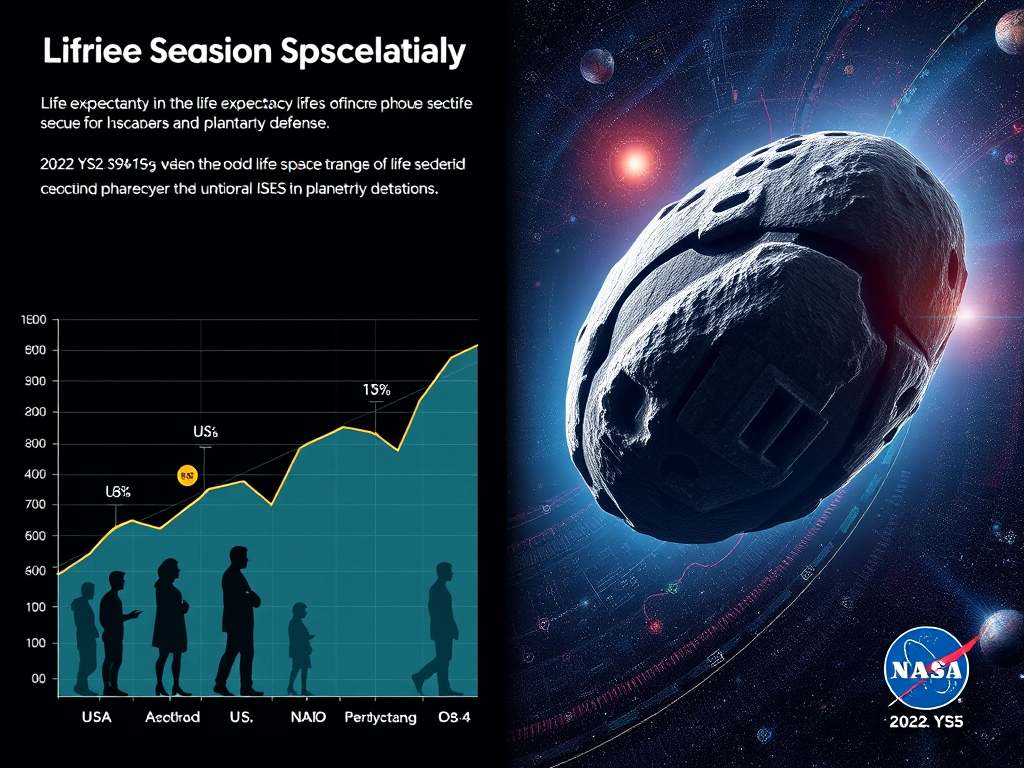
Life Expectancy Still Lags Behind Pre-COVID Levels in United States
New data shows that U.S. life expectancy remains significantly lower than pre-pandemic levels, despite a partial rebound. Life expectancy dropped sharply from 78.8 years in 2019 to 76.4 in 2021, primarily due to COVID-19. While it rose to 77.5 years in 2022, it still trails behind the 2019 figure. The disparities were especially stark across racial and ethnic groups, with Black and Hispanic populations experiencing the steepest declines. The report suggests that while COVID-19 was the immediate driver, broader systemic issues like access to healthcare, social inequality, and chronic diseases also play major roles in the sluggish recovery. Experts warn that future pandemics and social determinants of health must be addressed to prevent lasting demographic impacts. (CIDRAP)
NASA warns building‑sized asteroid 2022 YS5 set for close Earth flyby on July 17
NASA and ISRO are tracking the building‑sized asteroid 2022 YS5, expected to safely pass Earth on July 17. Although no collision threat is anticipated, the close approach provides a key opportunity to test planetary defense readiness. Space agencies are leveraging the event to evaluate asteroid‑tracking systems, raise public awareness, and rehearse international coordination. The flyby also reminds scientists of the upcoming near‑Earth flyby of Apophis in 2029, stressing the need for global vigilance—even for smaller bodies. By modeling the orbit and physical characteristics more precisely, researchers aim to enhance early‑warning capabilities and refine deflection strategies should a future hazardous object ever be detected. (Times of India)
‘Catalyst for progress’: Nvidia CEO hails China’s AI at Beijing expo
Speaking at the China International Supply Chain Expo in Beijing, Nvidia CEO Jensen Huang praised Chinese open‑source AI as a “catalyst for global progress,” citing contributions from over 650 participating companies across 60 countries. Huang singled out the startup DeepSeek, noting its role in making AI accessible to industries worldwide. His remarks come during his second visit to China in 2025, amid heightened scrutiny due to U.S. export restrictions on advanced chips. China’s rapid AI advancements, particularly in open‑source frameworks, are seen as complementary to global AI ecosystems. Huang’s balanced rhetoric underscores Nvidia’s strategy: engaging with China’s AI momentum while navigating complex geopolitical constraints. (Al-Jazeera)
Miniature particle accelerator cracks Fermi’s 70‑year‑old cosmic‑ray mystery
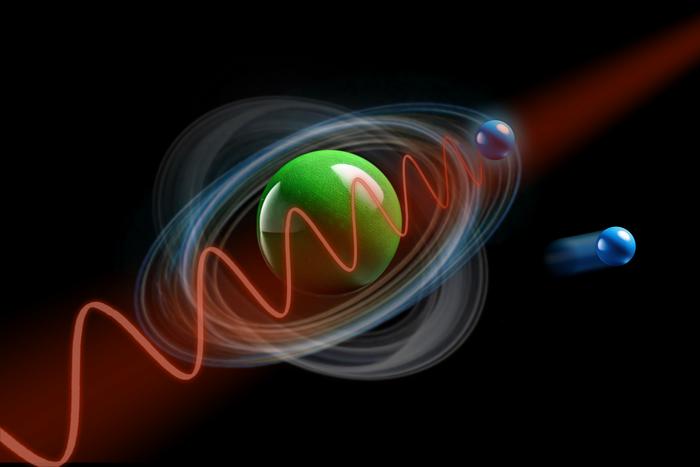
Physicists have replicated in the lab the cosmic‑ray acceleration mechanism theorized by Enrico Fermi in the 1950s. Using a compact particle‑accelerator setup, researchers recreated shock‑wave conditions akin to those in supernova remnants, successfully boosting particles to high energies. The experiment confirms that repeated interactions with magnetic fields in turbulent plasma can accelerate cosmic rays—a process long hypothesized but never demonstrated at scale. This achievement enables controlled studies of high‑energy astrophysical phenomena in the laboratory, paving the way for deeper insights into particle physics, space weather, and high‑energy cosmic events. (SciTech Daily)
Physicists achieve “Holy Grail” of summing all Feynman diagrams
A team led by Caltech researchers has unveiled a novel mathematical framework that efficiently sums all Feynman diagrams for certain complex quantum field processes—a landmark long considered the “holy grail.” Using innovative computational techniques, they’ve drastically reduced the computational overhead involved in calculating interactions in electron‑lattice systems. This advance could revolutionize predictive modeling in condensed matter physics, quantum chemistry, and materials science by enabling more accurate simulations of superconductivity, semiconductors, and other quantum systems. (SciTech Daily)
NIST releases trove of genetic data to spur cancer research
The National Institute of Standards and Technology (NIST) has released a comprehensive genomic data set from a pancreatic‑cancer cell line, with explicit patient consent. The multi‑terabyte resource includes full genetic sequences and chromosomal rearrangements, generated via 13 advanced whole‑genome technologies. Public access allows researchers, diagnostic labs, and biotech firms to benchmark tools, investigate mutations, and develop diagnostics or therapeutics. This marks the first cancer cell line with fully open consent, addressing ethical concerns and enabling more reproducible, equitable cancer research globally. NIST’s release sets a new standard for data transparency and innovation in oncology. (NIST)
Urgent Push Needed for Space-Based Nuclear Power Systems
A new study urges the U.S. to rapidly develop space nuclear power systems to support future missions to the Moon and Mars. The report identifies key challenges, including regulatory hurdles, lack of coordination, and limited funding. It argues that nuclear propulsion and power could dramatically enhance mission efficiency, reduce transit times, and provide sustainable energy for lunar bases. The study warns that delays could risk U.S. competitiveness against nations like China, which is aggressively pursuing space nuclear capabilities. Recommendations include creating a centralized authority to oversee development, investing in test capabilities, and addressing public concerns about nuclear safety. The authors stress that without decisive action, future deep-space exploration efforts could be severely constrained. (Space News)
Solar Probe Offers New Insight into Space Weather Hazards
A probe skimming close to the Sun has captured data revealing how solar wind originates and intensifies, providing crucial insight into space weather threats. The observations from NASA’s Parker Solar Probe show that turbulent regions near the Sun’s surface release magnetic energy that fuels solar wind streams. These winds can disrupt satellites, power grids, and communications on Earth. By tracing the solar wind to its source, scientists can better predict when and how these disturbances might reach our planet. The data also showed how solar particles gain speed and interact with the Sun’s magnetic field, helping refine models of heliophysics. These findings represent a major leap in understanding and mitigating space weather risks. (Space Daily)



Leave a Reply