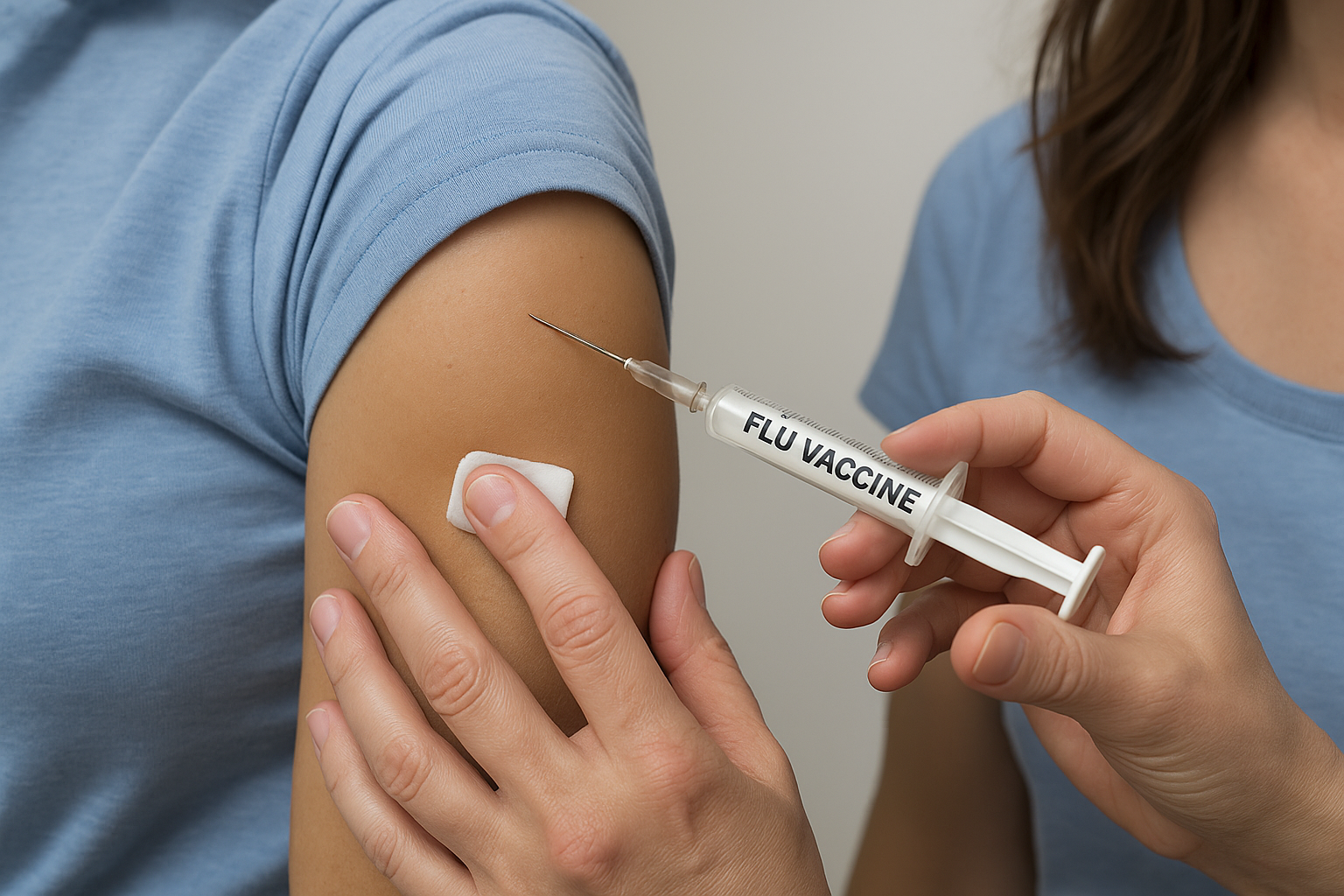
Doctor-created reminders nudge kids’ flu shots—but not adults
A randomized trial of 22,233 unvaccinated patients at UCLA Health tested whether receiving a short, physician-recorded video or an infographic featuring their doctor’s photo would boost influenza vaccination. Overall adult vaccination didn’t increase by season’s end, but pediatric uptake did rise, suggesting parent decision-making may be more responsive to personalized prompts. Researchers note the “white coat effect” likely travels through trust and familiarity rather than new information alone. The work underscores that low-cost, scalable nudges can be age-sensitive and that adult vaccine hesitancy may require different levers (e.g., stronger clinical recommendations at point of care or structural access fixes). Limitations include a single health system and opt-in messaging. (CIDRAP)
Drug-resistant malaria shows signs of regional spread in Africa
Surveillance data compiled by researchers indicate worrisome patterns of antimalarial resistance spreading across borders in parts of Africa. The brief highlights mutations linked to artemisinin partial resistance and decreased partner-drug efficacy, raising concerns for frontline therapies. While individual countries have reported pockets of resistance, the new synthesis points to broader, regional-scale movement—likely aided by human travel and insufficient containment measures. Public health implications include the need for intensified molecular surveillance, rapid regimen adjustments, and investment in next-gen drugs and vaccines. The report urges coordinated cross-border strategies to prevent treatment failures. (CIDRAP)
Most symptomatic healthcare workers still test for COVID—but vaccination lags
Monthly questionnaires from 893 Irish healthcare workers (2024–2025) found 36% reported respiratory symptoms during the study window; of those, 63% tested for COVID-19, aligning with local guidance. However, influenza and SARS-CoV-2 vaccination coverage was low (37% and 22% respectively), revealing an uptake gap even among clinical staff. Prior long COVID diagnosis correlated with higher odds of reporting symptoms. The authors argue that maintaining routine testing among HCWs remains important during surges, but improving vaccine coverage is critical to protect staff and patients. They call for targeted campaigns, easier access, and institutional policies that normalize seasonal vaccination. (CIDRAP)
Astronomers turn galaxy-cluster magnets into a dark-matter detector
Physicists devised a clever astrophysical test for axions—hypothetical dark-matter particles—by exploiting the colossal magnetic fields threading galaxy clusters. As gamma rays from distant black holes traverse these tangled fields, some photons would convert into axions (and back), imprinting a telltale, statistically predictable “messiness” in signals across many sources. By aggregating observations rather than relying on a single clean conversion, the approach could sharpen constraints—or reveal hints—of axion physics using existing telescopes. It’s an extreme-scale experiment: clusters weigh quadrillions of Suns; axions, if they exist, are ultralight. The study appears in Nature Astronomy. (Eurekalert)
Engineered immune cells aim to prevent organ-transplant rejection
A team at the Medical University of South Carolina reports a prototype therapy that repurposes genetically engineered immune cells to precisely target antibody-producing cells that trigger rejection. Unlike broad immunosuppression, this approach seeks “targeted immunosuppression,” potentially extending graft life and protecting patients prone to rejection without leaving them globally immune-compromised. In preclinical work, the modified cells neutralized culprit B-cell populations implicated in antibody-mediated rejection. Although early-stage, the concept could “level the playing field” for highly sensitized patients who struggle to find compatible organs. Next steps include safety studies and translational pathways toward trials. (Eurekalert)
FAA abruptly dismisses entire commercial space advisory committee
In a surprise move, the Federal Aviation Administration removed all members of its Commercial Space Transportation Advisory Committee, which had provided industry input on launch licensing, safety, and policy. The agency did not immediately detail replacement plans, fueling uncertainty as launch cadence climbs and regulatory frameworks evolve. Industry watchers worry about lost continuity on issues like debris mitigation, human-spaceflight occupant safety, and new-entrant licensing. The reset could presage a recharter with revised scope—or a prolonged vacuum in formalized stakeholder dialogue. The shake-up lands amid heightened commercialization and policy flux in the U.S. space sector. (Space News)
Light-driven “photophoresis” could lift metal sheets—no moving parts
New analysis explores how photophoresis—forces arising when light heats an object unevenly—can generate lift on ultra-thin metal sheets. Although the effect is tiny, it might enable novel actuator-free microdevices or high-altitude flyers under specific conditions. The study disentangles misconceptions around the mechanism, showing how gas flows near heated surfaces produce motion without fans or propellers. While practical applications face steep materials and environmental constraints, the work refines a little-known physical effect with potential niche uses in space/atmospheric tech and microrobotics. (Ars Technica)
Ice discs “slingshot” across metal thanks to self-generated steam
Inspired by Death Valley’s mysterious “sailing stones,” Virginia Tech researchers showed that small ice discs can spontaneously accelerate and fling themselves across a heated metal surface. The phenomenon leverages the Leidenfrost effect: a vapor layer forms under the melting disc, reducing friction and enabling erratic, sometimes rapid motion. High-speed imaging and surface temperature control clarify how geometry and heat gradients combine to produce the slingshot behavior. Beyond delightful physics, the insights could inform heat-transfer engineering and the management of phase-change instabilities in industrial settings. (Ars Technica)
Meta reverses rules that let chatbots be creepy with kids
Following backlash, Meta walked back policy language that had allowed its AI chatbots to generate romantic innuendo or profess “love” to under-18 users. The reversal underscores how quickly safety norms are tested—and revised—as companies push AI assistants into broader demographics. Lawmakers and advocacy groups had warned that permissive prompts risked grooming-adjacent behavior and blurred boundaries in youth interactions with bots. Meta’s shift comes amid mounting scrutiny of AI safety guardrails, age-verification, and content policy transparency. Expect renewed pressure for externally auditable controls across the industry. (Ars Technica)
US EV-charger money flows again—with a gas-station twist
After a months-long pause, $5B from the federal NEVI program is moving to states to build fast-charging corridors—but new guidance “encourages” funding projects where the charger host also owns the land. That favors truck stops, convenience stores, and big-box retailers that can deploy quickly and offer amenities drivers want. Supporters say it streamlines leases and accelerates installs; critics argue equity and rural-access goals got watered down and that the pause itself slowed momentum. States now have 30 days to resubmit plans aligned with the guidance, setting up a near-term wave of highway-focused chargers at familiar fueling hubs. (Wired)



Leave a Reply