Scientists at the University of Melbourne have uncovered for the first time how Australia’s iconic Twelve Apostles were formed, finding tectonic plate movements over millions of years lifted and tilted the giant structures out of the sea.
Until now, the evolution of the Twelve Apostles had not been well known.
University of Melbourne lead researcher Associate Professor Stephen Gallagher from the School of Geography, Earth and Atmospheric Sciences said the tectonic event helped shape the Apostles into being one of the world’s best-preserved and accessible records of ancient climates and sea levels.

“Much like an environmental time capsule, each layer of these giant structures preserved information about the Earth’s climate, tectonic activity, plants and animals over millions of years, including a key time about 13.8 million years ago when the climate was much warmer than what it is today,” Associate Professor Gallagher explained.
He continued, “We are using this ‘window back in time’ to understand where temperatures and sea levels may be heading on our current path of climate change. With only eight of the twelve Apostles remaining, we need to study and learn from them while we can.”
Like tree rings, the layers have provided scientists with a clearer idea of the Apostle’s age than ever before. The researchers say they are actually younger than previously understood.
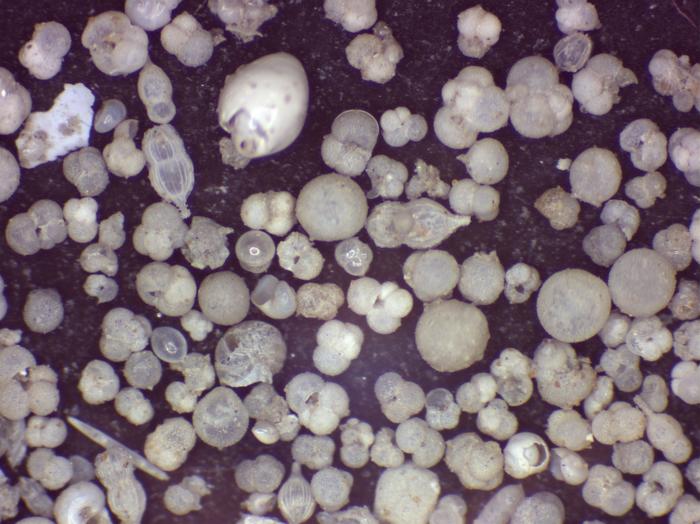
“Early preliminary research indicated the ancient limestone layers ranged between seven to fifteen million years old, but we discovered microscopic fossils that more accurately dated the layers as 8.6 to 14 million years old,” Associate Professor Gallagher said.
The landmark study was published today in the Australian Journal of Earth Sciences.
The study uncovered that while the Twelve Apostles were pushed out of the sea over millions of years by shifting tectonic plates, it was only in the last few thousand years, after the last Ice Age, that coastal erosion exposed and shaped the towering rock pillars that we see today.
“We also uncovered that the tectonic movements didn’t push up the Apostles perfectly straight. Instead, they forced layers to tilt and break along the way. If you look closely at the cliffs around the Twelve Apostles today, you can see the limestone layers are not flat but are, in fact, tilted by a few degrees. Small fault lines can also be seen, which are records of ancient earthquakes,” Associate Professor Gallagher said.
The researchers are now working to examine individual rock layers and reconstruct changes in climate, ocean conditions and sea levels to understand how ancient processes continue to influence modern coastal erosion.
IMAGE CREDIT: Stephen Gallagher, University of Melbourne.



Leave a Reply