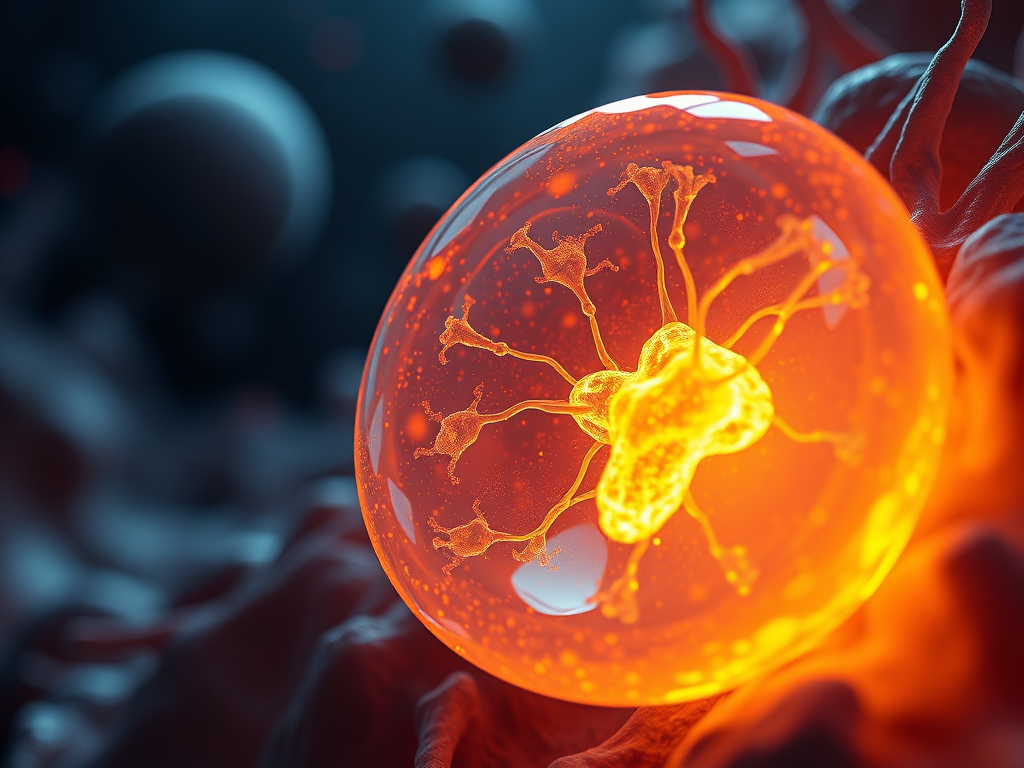
Scientists can now “freeze time” inside living cells
Researchers at Osaka University have unveiled a groundbreaking cryo‑optical microscopy technique capable of capturing ultra-detailed snapshots of cellular activity with millisecond timing. By rapidly immobilizing cells at targeted moments, the method overcomes traditional live-cell imaging’s trade-offs between speed and resolution, allowing detection of transient events such as calcium waves in heart cells with unprecedented clarity. Published in Light: Science & Applications, the approach bridges the gap between live temporal dynamics and cryo-level structural detail, offering powerful new insights into rapid biological processes in neuroscience, cardiology, and beyond. (Science Daily)
First U.S. human case of travel-linked screwworm confirmed, sparking industry concerns
The U.S. Department of Health and Human Services confirmed the nation’s first human case of New World screwworm—a flesh-eating parasite—linked to travel abroad. The patient, who returned from El Salvador, was diagnosed on August 4 by the CDC after investigation by Maryland health officials. Industry sources, however, reported the traveler came from Guatemala, fueling confusion and unease among ranchers already on edge as the parasite spreads north from Central America. While HHS stressed the public health risk is low and no U.S. animal cases have been found this year, the news rattled the cattle industry, with USDA estimates suggesting a Texas outbreak could cost $1.8 billion. The case follows recent federal plans to expand sterile fly facilities to combat the pest. (The Guardian)
EU wildfires surpass one million hectares burned in 2025
This year’s wildfire season in the European Union shattered records, scorching over 1,015,731 hectares—surpassing the previous 2017 high of 988,524 hectares, according to AFP’s compilation from EFFIS data. Spain, Portugal, Cyprus, Germany, and Slovakia are already facing their worst fire seasons in decades. While total area burned has tapered off in the last week, the human and environmental toll—air quality, displacement, biodiversity loss—remains severe. This alarming milestone reinforces mounting concerns about Europe’s vulnerability to extreme fire events amid climate-driven droughts and heatwaves. (Phys.org)
Scientists propose dark matter might turn gas giants into black holes
A bold theoretical model suggests that dark matter accumulation within gas giants could trigger black hole formation. Under certain conditions, dark matter particles residing in the cores of planets like Jupiter might collapse gravitationally, potentially transforming them into micro black holes. While speculative, the idea merges planetary science, exotic physics, and cosmological inquiry. If feasible—even in niche astrophysical contexts—it would redefine our understanding of planetary destiny under dark matter influences. (SciTech Daily)
Plant-based microbeads offer promising weight-loss aid in rats
Scientists have developed edible, plant-derived microbeads that bind fats in the digestive tract without harmful effects. In rat models, these clean, tasteless beads were incorporated into food and led to measurable weight loss without the side effects seen with conventional therapies. Now advancing toward human trials, the approach offers a novel, food-based intervention for obesity, with potential for safe incorporation into everyday diets—a refreshing departure from drug-heavy paths. (Science Daily)
Ancient sled dog DNA pushes back Inuit migration timing
Genomic analysis of centuries-old sled dog remains in Greenland suggests that Inuit ancestors—or associated canine lineages—arrived hundreds of years earlier than traditionally believed. The DNA indicates movement from Canadian Arctic zones into Greenland well before the estimated 800 years ago, pushing human migration timelines further back. The findings highlight how animal genetics can illuminate human history, offering new insights into Arctic settlement patterns. (Phys.org)
Robots may soon map lava caves on the Moon and Mars
A new study in Science Robotics explores heterogeneous robotic teams designed to map and navigate planetary lava tubes—prime targets in the search for extraterrestrial habitability. The cooperative systems would traverse the rugged, unstructured underground environments of the Moon or Mars, where human entry is hazardous. By merging varied robotic capabilities—from legged to flying platforms—the approach promises safer, more efficient exploration of subsurface realms, potentially aiding science and future habitation. (Phys.org)
Nearby comet 3I/ATLAS shows unusual gas emissions
Observations from NASA’s SPHEREx mission and Lowell Observatory have detected water ice and bright carbon dioxide emissions from the interstellar comet 3I/ATLAS, while Hubble later revealed cyanide gas in its coma. JWST is set to perform infrared spectroscopy before and after perihelion to further characterize its volatile makeup. These findings offer rare chemical glimpses into objects formed beyond our Solar System, informing theories on cosmic chemistry and planetary formation. (Wikipedia)
Local educational event engages 14.8M students in space science (Uttar Pradesh)
On National Space Day, Uttar Pradesh—India—mobilized 14.8 million students across 132,000 schools to explore space science through digital tools, workshops, model-making, and guided sessions focused on missions like Chandrayaan, Gaganyaan, and Aditya‑L1. This massive outreach effort aligns with NEP 2020 goals of fostering scientific curiosity, leveraging EdTech, and nurturing future innovation talent. (India Times)


Leave a Reply