
Flu season proves deadliest for US children in over a decade
The 2024–25 flu season caused 280 pediatric deaths in the United States, the highest since the 2009 H1N1 pandemic and the worst non-pandemic toll since records began in 2004. Infants under 6 months had the highest mortality rate, with Black children also disproportionately affected. Most fatalities involved influenza A viruses, particularly H1N1. More than half of the children had underlying health conditions, and nearly 90% of those with available vaccine information were not fully vaccinated. Additionally, 109 children died from influenza-associated encephalopathy, including 37 from acute necrotizing encephalopathy, a severe brain complication. The reports emphasize the importance of annual vaccination and rapid medical care for children showing neurological symptoms during flu season. (CIDRAP)
Specific personality traits linked to longer life expectancy
A study of over 22,000 adults found that self-descriptions such as being “active,” “organised,” “responsible,” and “helpful” were associated with longer lifespans, lowering mortality risk by up to 21%. These specific traits predicted longevity more effectively than broad personality categories like conscientiousness or extraversion. Conversely, traits tied to neuroticism—such as being moody, anxious, or easily upset—were linked to shorter lifespans. Researchers suggest that personality influences health not just broadly but through precise behaviors and attitudes that shape daily habits and resilience. While lifestyle and medical factors partly explained outcomes, personality nuances added unique predictive power. The findings highlight the potential for using personality assessments to refine health risk evaluations and encourage behaviors that support longevity. (The Guardian)
Mitochondria eject damaged DNA that fuels ageing inflammation
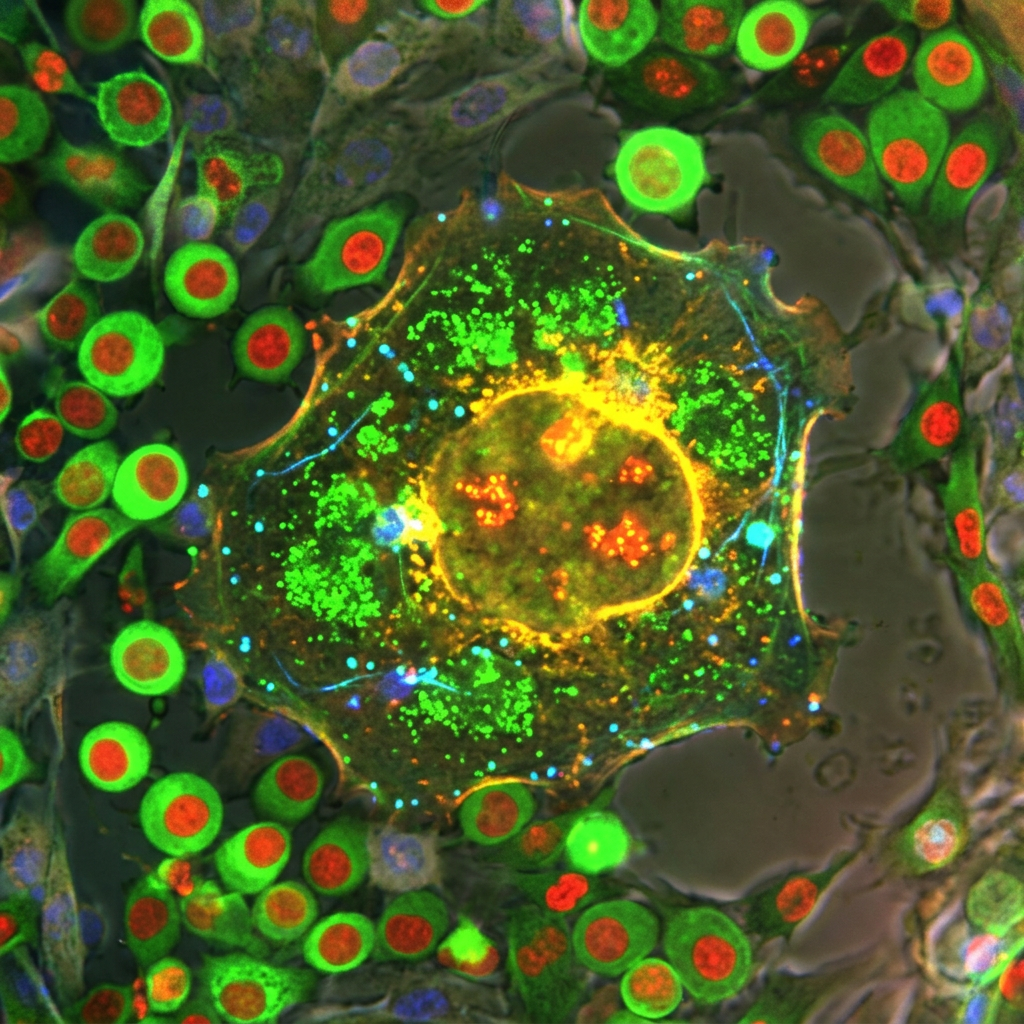
Research in mice shows mitochondria expel fragments of DNA corrupted by excess nucleotides, triggering inflammatory pathways tied to ageing. In aged kidneys, mitochondrial DNA carried abnormal components that damaged stability, prompting organelles to eject the tainted code into the cytosol. Once free, this DNA activated enzymes that drive chronic inflammation, offering a mechanistic explanation for “inflammageing.” The findings highlight how mitochondrial quality control can inadvertently worsen age-related disease. Scientists suggest that blocking or repairing this process could reduce inflammatory decline in older adults, with potential therapeutic benefits. This study deepens understanding of mitochondrial dysfunction’s role in ageing and raises questions about interventions to protect cells from self-induced immune reactions. (Nature)
Ancient artists may have experimented with elusive shades of blue
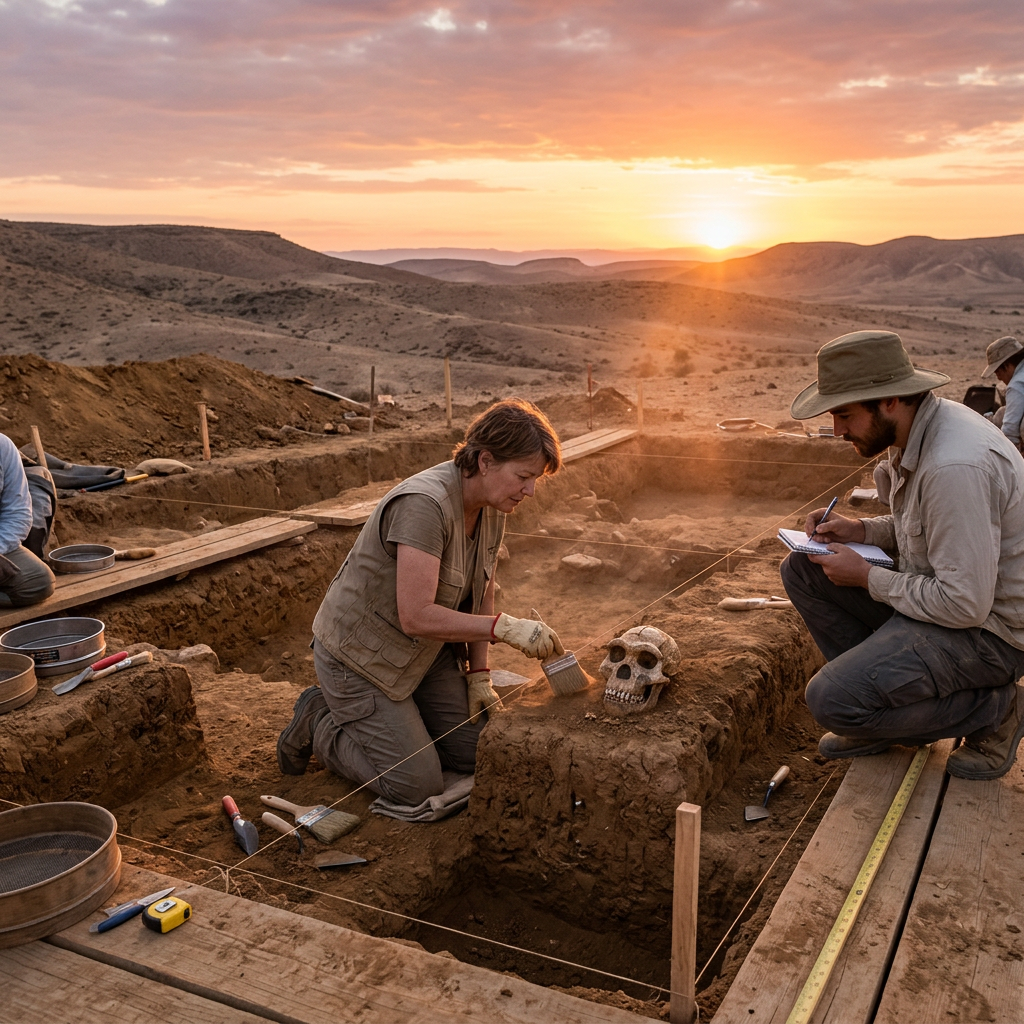
For decades, archaeologists assumed Paleolithic art lacked blue because no natural pigments were available. A new study challenges this view. At a 13,000-year-old site in central Germany, researchers found traces of azurite, a vivid blue mineral, on a flat stone originally thought to be a lamp. Microscopy confirmed the pigment was ancient, suggesting the rock may have served as a palette. Meanwhile, 33,000-year-old grinding stones from Georgia contained fibers from indigo plants, hinting at early dye processing. These discoveries suggest prehistoric people knew about and experimented with blue pigments, even if they left no evidence in cave paintings. Scholars caution against broad conclusions but propose blue may have been used on perishable materials, such as wood, cloth, or skin. (Science)
One-million-year-old skull reshapes human origins timeline
Reanalysis of a crushed skull discovered in China suggests Homo sapiens may have emerged much earlier than previously believed. Using advanced imaging and digital reconstruction, scientists propose the fossil belongs to Homo longi (dragon man), closely related to Denisovans, rather than Homo erectus. This interpretation places the skull near the evolutionary split between modern humans, Neanderthals, and Denisovans, potentially doubling the timeline for Homo sapiens origins to about one million years ago. The findings challenge the dominant Africa-first model, hinting at western Asia as a possible birthplace of our lineage. While controversial, researchers call the work a landmark in resolving the “muddle in the middle” of human evolution. (The Guardian)
Modeling the chaos of turbulence to make flying safer
As severe, hard-to-predict clear-air turbulence increases, mathematician Bjorn Birnir—who leads UC Santa Barbara’s Center for Complex and Nonlinear Science—has built an advanced model to tame the chaos. Working with Luiza Angheluta-Bauer, he merges Lagrangian and Eulerian perspectives: following individual particles (a leaf swept through eddies) and measuring flow at fixed points (water around a rock). The approach, published in Physical Review Research, aims for sharper forecasts and much safer flights, a need underscored by a recent Delta incident over Wyoming. Experts note turbulence’s intrinsic unpredictability—many interacting factors, rapidly changing conditions, and chaotic divergence—long labeled an unsolved physics problem. Even so, improved modeling could guide pilots and engineers, from anticipating intermittent bursts to adjusting power during rough patches, expanding aviation’s toolkit despite the phenomenon’s inherent complexity. (New York Times)

Leave a Reply