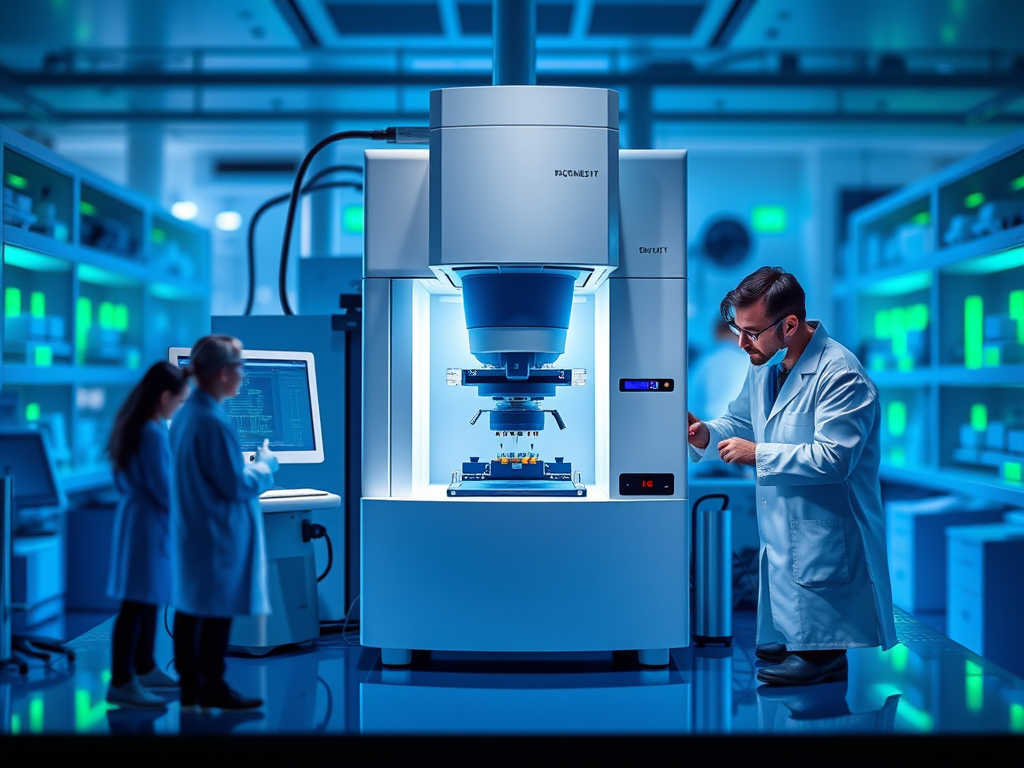
A team of researchers from the Keck School of Medicine of USC has developed an advanced tool for analyzing chimeric antigen receptor (CAR) T cells, including how they evolve during manufacturing and which ones are most effective at killing cancer. Using the platform, which leverages a laser-based technology known as spectral flow cytometry, researchers have already found one key insight: CAR T cells are better equipped to fight cancer after a shorter five-day expansion process than at the 10-day mark.
The study was just published in the 25th anniversary special issue of Molecular Therapy, the flagship journal of the American Society of Gene & Cell Therapy.
CAR T cell therapies, which reprogram a patient’s own immune cells to recognize and attack cancer, represent a major advance in treating blood cancers such as leukemia and lymphoma. But not all patients respond equally well, and researchers believe one key to optimizing treatment is to understand how various T-cell features relate to patient outcomes down the line.
“Just as every person has a fingerprint that identifies them, T cells also have fingerprints. By measuring the expression of markers on a cell’s surface, we can learn more about what distinguishes one CAR T cell therapy from another,” said Mohamed Abou-el-Enein, MD, PhD, the study’s senior author and executive director of the USC/Children’s Hospital of Los Angeles (CHLA) Cell Therapy Program.
The new platform’s power lies in its ability to simultaneously capture data on 36 characteristics from a single cell. Seeing all 36 features at once gives researchers a clearer, more holistic view of how a cell behaves—something that’s lost when the data is split across multiple methods and experiments that rely on standard tools. This integrated view is critical for identifying the precise conditions that maximize CAR T cell potency and persistence.
“My lab has been on a mission to understand how to improve CAR T cell performance in cancer patients,” said Abou-el-Enein, who is an associate professor of clinical medicine, pediatrics, stem cell biology and regenerative medicine, population and public health sciences, and regulatory and quality sciences at the Keck School of Medicine. “We now have a much clearer picture of when these cells are at their strongest—and a tool to help us act on that information.”
Sign up for the Daily Dose Newsletter and get every morning’s best science news from around the web delivered straight to your inbox? It’s easy like Sunday morning.
The new cellular analysis system uses a spectral flow cytometer, a state-of-the-art tool that can analyze the physical and chemical properties of individual cells. First, cells are tagged with fluorescent markers—antibodies attached to fluorescent dyes—which can bind to specific molecules that make up the cell’s “fingerprint.”
Next, cells are passed through the cytometer, where lasers cause the fluorescent tags to emit light that can then be detected and measured. This indicates whether a specific molecule is present and how strongly it is expressed. Compared to standard tools, which can only measure about 10 markers at a time, the spectral flow cytometer provides a more comprehensive picture of each cell.
Abou-el-Enein and his team carefully selected 36 markers that capture a range of T cell characteristics—including activation, metabolism, memory and cytotoxicity—related to their ability to identify and kill cancer. After pairing each marker with a fluorescent tag, they used sophisticated mathematical modeling to ensure that each could be detected separately during analysis.
Once the panel was set, researchers conducted an experiment with CAR T cells, collecting data at two points in the manufacturing process: day five and day 10. They found that day-five cells more closely resembled stem-like cells and had higher metabolic activity than those tested on day 10. Both cell types can kill cancer, but the day-five cells had qualities that prior research has linked to better long-term outcomes in patients.
“This work fills a critical gap in our understanding of how manufacturing conditions shape the therapeutic potential of CAR T cells,” Abou-el-Enein said. “By pinpointing when CAR T cells acquire—or lose—functional fitness, we can now tailor the timing of cell manufacturing, which could have an immediate impact on clinical decision-making and patient outcomes.”
A range of applications
The team’s initial study provides a glimpse of what insights are possible with the new platform. Abou-el-Enein points to other ways it can help optimize the manufacturing process, such as by comparing the commonly used viral vector technology, which uses modified viruses to inject genetic material into cells, with other ways of engineering CAR T cells.
Beyond manufacturing, the platform can be used to study the behavior of other cell types, compare different gene editing technologies and production platforms and—most importantly—identify predictive biomarkers that link cell characteristics to patient outcomes. Clinical trial centers could apply the panel to track how CAR T cells evolve during and after treatment, offering a clearer window into factors that drive long-term success.
“This is just the beginning,” Abou-el-Enein said. “Our platform is not only designed for discovery—it’s built for scalability, collaboration and clinical translation. We’re excited to open new avenues for partnership with academic and industry partners who are committed to advancing next-generation immunotherapies.”



Leave a Reply