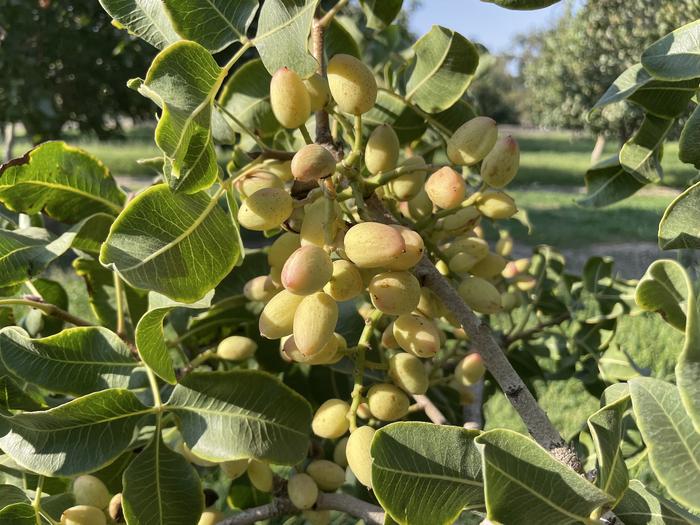
California produces 99% of the nation’s pistachios, generating nearly $3 billion in economic value in the state. But pistachios have been slightly understudied in part because of the lack of a high-quality map of their DNA. University of California, Davis, researchers have now generated the most comprehensive genome sequence of the pistachio, allowing plant breeders to create better — perhaps more nutritious — varieties. They’ve also detailed how pistachio nuts develop, which will help farmers manage their crop more sustainably.
Scientists have sequenced the DNA of pistachios before, but co-corresponding author J. Grey Monroe, an assistant professor with the Department of Plant Sciences, said this new genetic map is vastly more detailed and accurate.
“The improvement in accuracy of the new reference genome is like going from a hand-drawn map of a landscape to a satellite image from Google Earth,” he said.
Monroe and the research team sequenced the genome of the Kerman cultivar, the most common pistachio variety grown in California.
Climate change challenges pistachio yields
Pistachio trees are resilient to drought and salinity, but they require cold winters to flower properly. As climate change brings warmer winters, growers need new pistachio varieties that can thrive in higher temperatures. Warm winters, combined with the dissipation of fogs that cool California’s Central Valley, have caused significant losses for pistachio growers.
Given that establishing a pistachio tree requires a commitment of up to 50 years, researchers said California growers are understandably concerned about the impacts of climate change on their crops.
Sign up for the Daily Dose Newsletter and get every morning’s best science news from around the web delivered straight to your inbox? It’s easy like Sunday morning.
A nutty development
The study also identifies four key stages of nut growth from flower to harvest, providing a complete physiological assessment, including shell hardening and kernel growth.
“Knowing how the nut changes through development will help farmers make better decisions, like when to water their trees, leading to more sustainable pistachio production,” said co-corresponding author Bárbara Blanco-Ulate, an associate professor with the Department of Plant Sciences.
A more accurate assessment of its development could also help provide growers better strategies for harvest and avoid issues such as insect damage and fungal infections.
Blanco-Ulate said it was important to also detail not just the physical changes of the pistachios, but also the genetic and molecular drivers of those characteristics. The genomic sequence includes precedent-setting information on how different genes behave in nuts over the growing season.
Nutritious nut
Pistachios have always been a nutritious food, but researchers have now discovered the genes and pathways that influence their nutritional value. This includes insights into how protein and unsaturated fatty acids accumulate, which is crucial for both their shelf life and dietary benefits.
“We’re getting information about how all these nutritional characteristics are gained in pistachios and how we can improve that from a management perspective,” said Blanco-Ulate.
This understanding could help scientists breed more nutritional pistachios in the future.
IMAGE CREDIT: Bárbara Blanco-Ulate / UC Davis



Leave a Reply