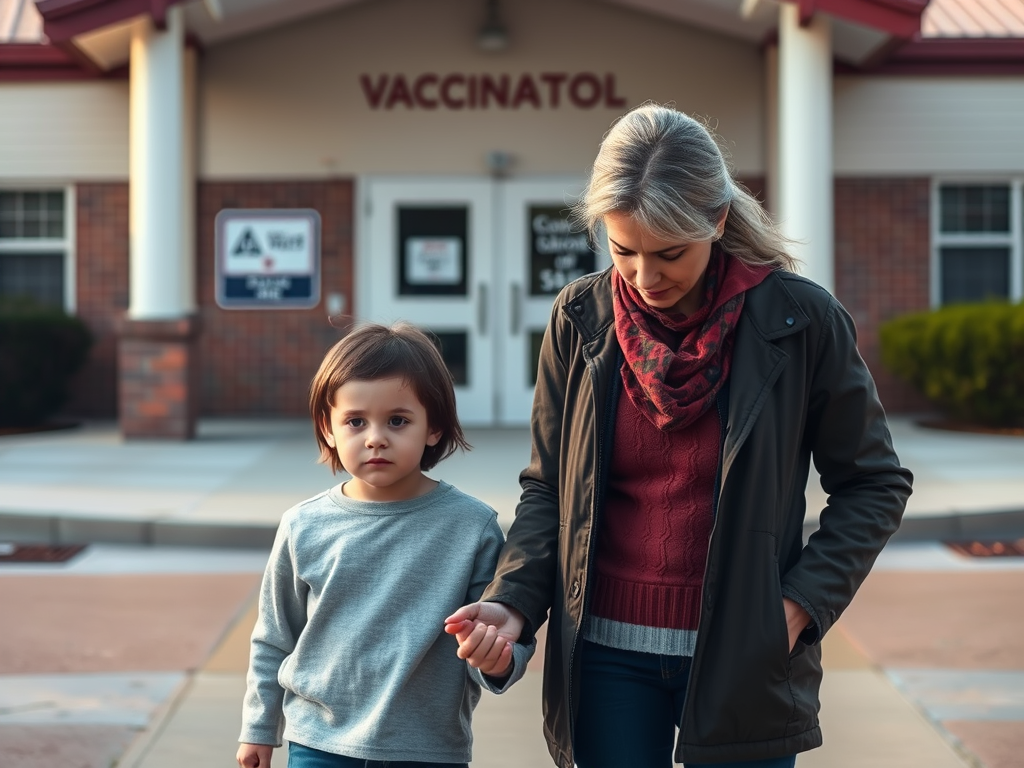
MEASLES OUTBREAK SPREADS IN KANSAS AMID VACCINE DECLINE
Measles has reemerged in Kansas, rapidly spreading in communities with low vaccination rates. The first case, reported on March 13 in Stevens County, marked the state’s first since 2018. As of March 21, four cases have been confirmed in Stevens County, with more expected. Local school districts in Stevens County have vaccination rates well below the 95% threshold needed to prevent measles spread, with kindergarten vaccination rates at 83% and 80% in Hugoton and Moscow schools, respectively. The outbreak has extended to neighboring Morton and Grant Counties, with three confirmed cases in Morton and three in Grant, though Grant’s 100% vaccination rate offers better protection. Nationwide, declining vaccination rates have led to outbreaks, with 378 measles cases reported in 2025 so far, and outbreaks in Texas, New Mexico, and Oklahoma. The U.S. risks losing its measles elimination status, making the virus potentially endemic again. (Ars Technica)
MEASLES OUTBREAKS WORSEN IN TEXAS NEW MEXICO AND BEYOND
The measles outbreak in Texas has worsened, with the Texas Department of State Health Services reporting 30 new cases, bringing the total to 309. Most cases are in Gaines County, where the outbreak began in a Mennonite community with low vaccination rates. New Mexico also reported 4 additional cases, raising its total to 42. Meanwhile, the Centers for Disease Control and Prevention (CDC) has documented 378 cases in 2025, surpassing the 285 cases in 2024. The majority of these cases are linked to three main outbreaks, including the Texas one. Health officials are closely tracking exposures, especially in areas like New Mexico and Alabama, where travelers have potentially spread the virus. The CDC’s update highlights cases in Kansas, Ohio, and Michigan, all connected to international travel. Experts emphasize vaccination as the best defense, with one dose offering 93% effectiveness and two doses 97% effectiveness against measles. (CIDRAP)
VACCINE HESITANCY RISES AMID MEASLES OUTBREAKS AND DEATHS
Vaccine hesitancy in the U.S. has become more prominent, particularly in conservative communities, where anti-vaccine sentiments are now intertwined with political activism. In west Texas, a measles outbreak has resulted in two deaths, marking the first fatalities in nearly a decade. The spread of conspiracy theories, influenced by figures like Robert F. Kennedy Jr., has brought anti-vaccine beliefs into the mainstream. In Sarasota, Florida, activists like Vic Mellor, who opposed Covid-19 vaccines, now reject all vaccines, contributing to plummeting measles vaccination rates in the area. In 2023, Sarasota’s vaccination rate dropped to 84%, similar to rural Texas, where a severe outbreak has sickened 279 people. Despite the effectiveness of vaccines, misinformation—particularly the 1999 fraudulent study linking vaccines to autism—has fueled public fear. Measles, one of the most contagious diseases, can lead to severe complications, yet vaccine opposition continues to rise, threatening public health and leading to outbreaks. (The Guardian)
TESLA FACES DECLINING SALES AND COMPETITION IN KEY MARKETS
Tesla is facing significant challenges this year, with a decline in sales across major markets, including the U.S., China, and Europe. In February, the company’s stock price fell nearly 50%, and its sales dropped by 76% in Germany due to Elon Musk’s political affiliations, as well as a 6% decrease in the U.S. and a 49% decline in China. Despite expanding into emerging markets like India and Saudi Arabia, Tesla faces fierce competition from local and Chinese rivals, particularly in India, where Tata Motors dominates with a 60% market share. Tesla’s pricing and limited product options may hinder its success in these regions. Chinese competitors, like BYD, are rapidly innovating with new models and competitive pricing, while Tesla struggles to maintain its appeal. Although Tesla is expanding its presence in markets like Saudi Arabia and South Africa, the company must address declining sales in its established markets before pursuing further expansion. (Rest of the World)

NOVO NORDISK’S CAGRISEMA DRUG FACES SETBACKS AFTER TRIAL FAILURES
Novo Nordisk’s CagriSema drug, which was expected to revolutionize obesity treatment, has faced setbacks following disappointing trial results. In the REDEFINE-2 trial, CagriSema helped obese patients with type 2 diabetes lose 15.7% of their weight after 68 weeks, falling short of expectations. A prior trial showed similar results, with a 22.7% weight loss in obese patients without diabetes, below the forecasted 25%. These results caused Novo’s stock price to drop by 50%. CagriSema combines cagrilintide and semaglutide, aiming to improve weight loss in diabetic patients, but competition from other treatments, including Zepbound, remains strong. Additionally, questions about the drug’s tolerability persist, with only two-thirds of patients reaching the highest dose. Despite these challenges, a future study in 2026 may provide insights into the drug’s long-term efficacy. The obesity treatment market, worth over $100 billion by 2030, continues to attract other pharmaceutical companies, including Roche. (CNBC)
TRUMP ADMINISTRATION CUTS NIH GRANTS TO SOUTH AFRICAN RESEARCHERS
The Trump administration has begun terminating or putting on hold grants from the U.S. National Institutes of Health (NIH) to South African HIV/AIDS researchers, citing a shift in agency priorities, especially concerning diversity, equity, and inclusion (DEI) components. Researchers, such as HIV clinician Ian Sanne, are concerned that these cuts endanger ongoing trials and undermine global health initiatives. The terminations are linked to broader political actions, including executive orders targeting DEI, though NIH has been instructed not to mention them in official communications. The U.S. Department of Health and Human Services (HHS) has directed the termination of 945 grants, some related to LGBT health in the U.S., and placed grants to South Africa and China on hold. South African researchers, like Glenda Gray, are alarmed by the potential destruction of medical research infrastructure in the country, which heavily relies on NIH funding. This move raises concerns about the future of HIV and TB research globally. (Science)
NEUROSAFE PROSTATE CANCER SURGERY PRESERVES ERECTILE FUNCTION WITH PROMISING RESULTS
A new prostate cancer surgery technique, called NeuroSafe, has shown promising results in preserving erectile function after surgery, nearly doubling the chances compared to standard procedures. In a comprehensive trial involving 344 men, NeuroSafe, which involves checking prostate tissue during surgery to ensure the removal of cancerous cells while preserving nerves, resulted in 38% of men experiencing no or mild erectile dysfunction after a year, compared to 23% with standard surgery. The procedure allows surgeons to spare more nerves, which are vital for erectile function. However, while NeuroSafe offers hope for reducing post-surgery erectile issues, more research is needed to confirm its effectiveness in providing a complete cure for prostate cancer. Experts, such as Dr. Matthew Hobbs from Prostate Cancer UK, emphasize the need to evaluate the technique’s long-term results and its potential for broader application in healthcare systems like the NHS. (The Guardian)
NASA’S PARKER SOLAR PROBE SET FOR SECOND CLOSE PASS OF SUN
NASA’s Parker Solar Probe is set to make its second close pass through the sun’s scorching atmosphere, following its record-breaking first flyby in December, when it came within 3.8 million miles (6 million kilometers) of the sun. The spacecraft, traveling at 430,000 mph (690,000 kph), is set to reach its closest point on Saturday, but will be out of communication range until Tuesday afternoon. Launched in 2018, Parker has already flown through the sun’s outer atmosphere, the corona. Scientists aim to use the data gathered by the probe to better understand the mysteries of the sun, including why its outer atmosphere is so much hotter than its surface and the mechanisms driving the solar wind, a stream of charged particles released from the sun. (AP)
PENN STATE DEVELOPERS CREATE TARGETED SOUND TECH FOR PRIVATE LISTENING
Researchers from Pennsylvania State University have developed a technique to send sounds directly to a specific person, without anyone else hearing it. This is achieved by using two beams of inaudible ultrasound that surround the recipient’s head, interacting to produce sounds, such as the “Hallelujah” chorus from Handel’s *Messiah*. The technique, dubbed “audible enclaves” or “whispering beams,” has potential applications in public spaces like museums or libraries, where personalized audio messages could be delivered without headphones. It could also improve virtual reality, provide silent communication in noisy environments, and enhance military operations. However, the technology has limitations, including low sound quality and distance constraints. The ultrasonic waves used attenuate quickly in air, making long-range applications challenging. Experts also caution about potential health concerns due to high energy levels required for ultrasonic loudspeakers. While the innovation is promising, further development is needed before practical use. (El Pais)
Thanks for reading. Let’s be careful out there.
WORDS: The Biology Guy.




Leave a Reply