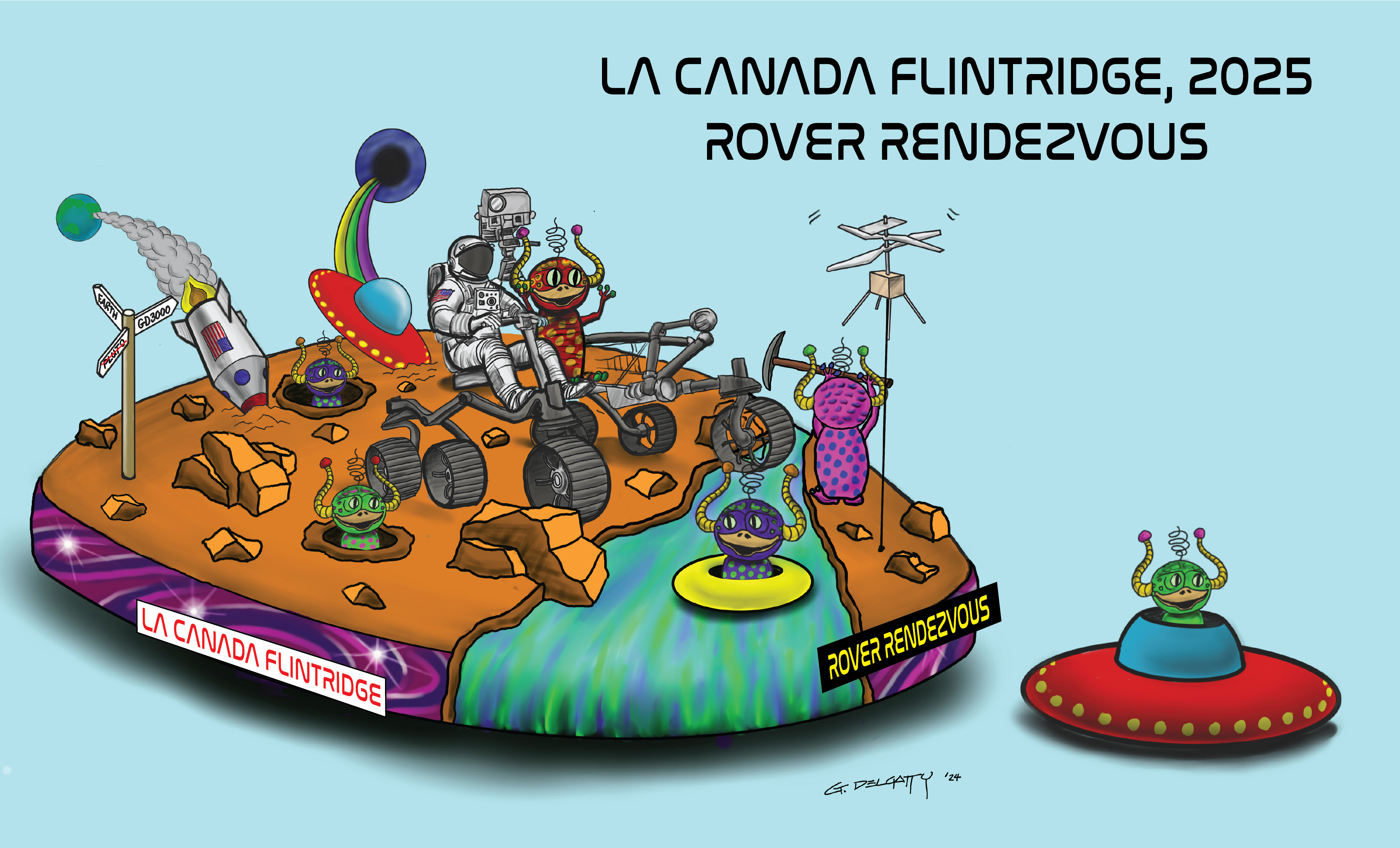
The following Q&A delves into the innovative work and inspiring vision of Ernest Koeppen and La Cañada Flintridge Tournament of Roses Association (LCFTRA), a volunteer-driven organization renowned for its groundbreaking floats in the annual Tournament of Roses Parade. Through this conversation, we explore how LCFTRA merges artistic creativity, engineering ingenuity, and sustainability to craft one-of-a-kind parade entries. From pioneering the use of electric vehicle bases and live drone technology to fostering youth education through hands-on learning in disciplines like robotics and fabrication, the organization exemplifies a commitment to community and innovation. This exchange provides a glimpse into the passion, challenges, and collaborative spirit that drive LCFTRA’s incredible achievements.
The TechNovation Center seems like an incredible initiative. Can you tell us more about your vision for the center and how it bridges the gap between artistic creativity and technical education for youth?
Our organization offers a community resource for teaching and learning. Our all-volunteer crew and staff guide participants through the D.R.E.A.M. curriculum (Design, Research, Engineering, Art, Maker), embracing a “never say no” mindset and a “fail to 100%” approach to exploring the intersection of art and engineering. With mentorship from a unique pool of engineers and creative artists, we use a design-based methodology: ideate, design, and solve challenges to achieve whimsical targets. This open-field creativity employs logic and project management to bring novel ideas to life. Often, we create solutions to problems that have never been addressed before, making the results both memorable and rewarding. Plus, the world gets to see the outcomes every January 1st.
Your float is the first to feature an electric vehicle base, live drone technology, and color-changing floral robotics. What inspired you to incorporate these groundbreaking elements, and what challenges did you face in bringing them to life?
As mentioned, thinking outside the box—and then pushing the box out of the way entirely—is essential. Every year, we raise the bar, incorporating new technologies that may not have existed the year before. Each float tells a story in 40-second cycles, demanding creativity and ingenuity to captivate audiences.
This year, we scaled up ideas tested on our smaller “satellite” float, which served as a test mule, driving around the neighborhood to refine concepts. Challenges included finding safe, battery-powered solutions for a 30,000-lb vehicle with diverse voltage requirements to operate moving parts flawlessly for over five hours. With no off-the-shelf solutions available, we engineered everything from scratch, often facing skepticism.
We’ve been fortunate to partner with organizations like JPL, Aerovironment, EV West, and TRL Systems. For instance, Aerovironment, creators of the Mars Ingenuity helicopter, built a live flying replica for our Mars-themed float, and EV West helped us tackle electrification challenges. The sense of satisfaction in achieving the “impossible” is unparalleled.
The float is made from 85% recycled materials. How does sustainability factor into your overall approach, and what message do you hope to convey about environmental responsibility?
Social responsibility and resource stewardship are central to our mission. Sustainability often starts small—like a battery-powered leaf blower—and grows into larger-scale innovations. Events like the Tournament of Roses Parade offer high-profile opportunities to demonstrate big thinking.
In this case, the floral parade itself exudes a “green” ethos, which we expand upon by showcasing creative, sustainable techniques developed by youth learning valuable trade skills. This fosters community and knowledge-sharing while encouraging friendly competition, raising the bar for all participants. The grand collaboration culminates in an advanced float displayed on the world stage, exemplifying the D.R.E.A.M. philosophy.

The La Cañada Flintridge Tournament of Roses Association emphasizes community learning and involvement. How do you see projects like the float encouraging young people to pursue careers in design, engineering, and the arts?
The float site serves as an open classroom, offering a free resource to replace industrial arts programs no longer available in public schools. Students can learn welding, CAD, fabrication, robotics, hydraulics, and electrical work, among other disciplines, under the “maker” umbrella.
With our D.R.E.A.M. approach, the float becomes a community endeavor, integrating contributions from everyone. This process inspires students to view challenges not as hurdles but as stepping stones to greater horizons. By triggering this mindset, both mentors and students share a deeply rewarding experience. Our guiding formula encapsulates this philosophy: (D.R.E.A.M. + Community) x ‘Fail to 100%’ = TechNovation.

You’ve described the float as both an artistic exercise and a means to build resources for youth. How do you balance these passions, and what motivates you to prioritize youth education through this platform?
Hands-on, industrial vocational education that blends engineering and art is the holy grail for preparing youth for the future. Engineers and artists often don’t realize how much they need each other. My goal is to offer a space where they can collaborate with minimal limitations, building an incubator of technology and innovation: TechNovation.
LCFTRA has a rich history of creating innovative floats since 1978. How have the design and construction processes evolved over the years, and what significant milestones stand out to you?
Over time, our floats have grown in ambition and complexity. What began as floral bouquets on wheels evolved to include mechanical motion, hydraulics, and propane-powered engines. Today, we leverage cutting-edge technologies like robotics, micro-hydraulics, and AI-assisted design to push boundaries further.
Milestones include the introduction of our satellite unit five years ago, which allows us to test ideas year-round. AI has accelerated our design process, enabling us to focus more time on solving engineering challenges. Each new development attracts curious, big-thinking collaborators, making our journey one of continuous growth and excitement.
LCFTRA relies heavily on volunteers for float construction and decoration. Can you share insights into the volunteer experience and how community members can get involved in upcoming projects?
We are an all-volunteer, donation-driven organization, supported by scout troops, church groups, corporate outreach programs, and dedicated community professionals. The “pay-it-forward” spirit drives our success, sparking creativity and fostering a sense of ownership among participants.
Our doors are open year-round, and there’s always something to do. Community members can schedule visits via our website or drop by to chat—but beware, you may catch the bug and never want to leave!
If you enjoy the content we create and would like to support us, please consider becoming a patron on Patreon! By joining our community, you’ll gain access to exclusive perks such as early access to our latest content, behind-the-scenes updates, and the ability to submit questions and suggest topics for us to cover. Your support will enable us to continue creating high-quality content and reach a wider audience.
Join us on Patreon today and let’s work together to create more amazing content! https://www.patreon.com/ScientificInquirer


Leave a Reply