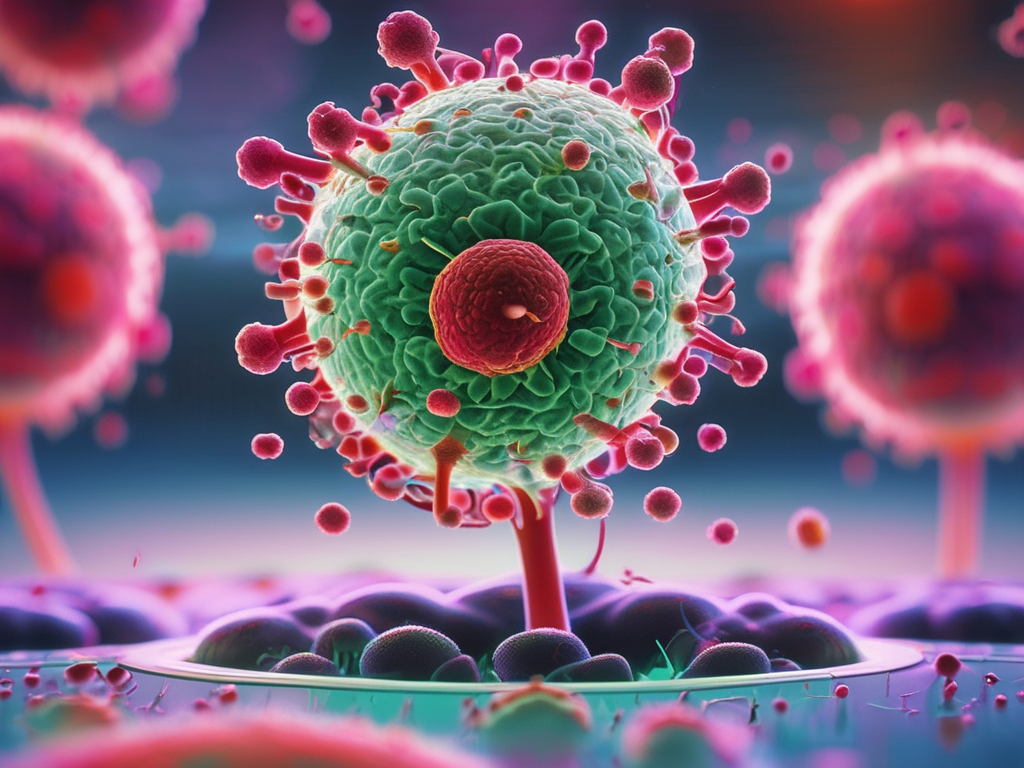
GERMAN PATIENT CHALLENGES HIV CURE THEORY WITH STEM CELLS
A 60-year-old man in Germany, who has been free of HIV for nearly six years, represents the seventh person cured of HIV after a stem-cell transplant. Unusually, this patient received stem cells with only one mutated copy of the CCR5 gene, unlike previous cases where donors had two mutations, making their cells resistant to HIV. This new case, revealed at the 25th International AIDS Conference, challenges the notion that CCR5 resistance is essential for HIV cure. The patient, diagnosed with HIV in 2009 and acute myeloid leukemia in 2015, received a stem-cell transplant from a donor with one mutated CCR5 gene. Following the transplant, the patient ceased antiretroviral therapy in 2018, and researchers have found no evidence of HIV. This finding suggests that alternative factors beyond CCR5 may contribute to HIV eradication and broadens potential treatment options, though stem-cell transplants remain a high-risk procedure. (Nature)
HIGH COURT UPHOLDS PUBERTY BLOCKER BAN FOR MINORS
A High Court judge has upheld the legality of a ban on prescribing puberty blockers to children with gender dysphoria in England, Scotland, and Wales. This emergency order, enacted on May 29, 2024, followed a review by Dr. Hilary Cass, which highlighted concerns about the risks and benefits of puberty blockers. The legislation restricts these medications to clinical trials only, responding to criticisms from the advocacy group TransActual and a young claimant who argued the decision was hasty and influenced by personal views of former Health Secretary Victoria Atkins. Mrs. Justice Lang ruled that Atkins acted within the law, stating that the emergency measure was rational given the review’s findings on the risks of puberty blockers. Despite recognizing the ban’s impact on over 1,000 minors, the judge emphasized that the issue lies in implementation, not legality. The current Health Secretary, Wes Streeting, is considering making the ban permanent. (The Guardian)
If you’re enjoying the Daily Dose, sign up for the Daily Dose Newsletter and get the morning’s best science news from around the web delivered straight to your inbox? It’s easy like Sunday morning.
COLORADO REPORTS TWO NEW HUMAN AVIAN FLU CASES
The Colorado Department of Public Health and Environment (CDPHE) reported two additional human avian flu infections linked to H5N1 outbreaks at poultry farms in Weld County. These infections are among workers involved in poultry culling efforts, with nine cases now reported at the layer farms and a total of ten cases including a dairy farm worker. The Centers for Disease Control and Prevention (CDC) confirmed three of these cases, noting that all patients have mild illness and have been treated with the antiviral drug oseltamivir. The CDC maintains that the public risk remains low, though the cases highlight the dangers of working with infected poultry. Colorado will launch a new tracker for human avian flu cases and update it twice a week. The state is also dealing with ongoing outbreaks in dairy cows, with a total of 51 dairy farms affected and new testing requirements in place. (CIDRAP)
COLORADO REPORTS TWO NEW HUMAN AVIAN FLU CASES
In 2021, about 75,000 individuals in the U.S. died from violence-related injuries. The CDC’s National Violent Death Reporting System (NVDRS) collected data on 68,866 fatal incidents, including 70,688 deaths from 48 states, the District of Columbia, and Puerto Rico. Of these deaths, 58.2% were suicides, 31.5% were homicides, and the rest were due to undetermined intent, legal interventions, or unintentional firearm injuries. The report highlights demographic patterns: suicide rates were highest among males, particularly non-Hispanic American Indian or Alaska Native individuals, with firearms being the most common method. Homicide rates were highest among non-Hispanic Black males, often involving firearms and occurring in contexts like arguments or intimate partner violence. The report emphasizes that violence is preventable and suggests using NVDRS data to guide public health strategies and interventions aimed at reducing violent deaths. (CDC)

SNOWBALL EARTH HYPOTHESIS LINKS ICE AGES TO MULTICELLULAR LIFE
The “Snowball Earth” hypothesis suggests that during extreme ice ages, glaciers and sea ice covered the globe, potentially even reaching the equator. This icy period is linked to the early emergence of multicellular life. Carl Simpson posits that the increased viscosity of seawater during these times may have pressured microscopic organisms to evolve. His experiments with green algae in high-viscosity environments showed that the algae formed larger, coordinated groups to move and feed more effectively. These clusters maintained their multicellular form even in less viscous conditions, indicating a possible evolutionary shift. This theory suggests that the physical challenges posed by thick, cold water might have driven the development of complex life forms. Though still under debate, Simpson’s work provides a novel perspective on how extreme environmental conditions could have influenced early multicellular evolution. (Quanta Magazine)
NASA ROVER FINDS ROCK WITH SIGNS OF ANCIENT MARTIAN LIFE
At a Berlin trade fair, Waltraud Berg discovered compact solar panels designed for easy installation on balconies. Thrilled by their potential to generate independent power, she set up several panels on her apartment’s south-facing balcony. These panels, which produce enough energy to charge a laptop or run a small fridge, are part of a broader trend in Germany where over 500,000 such systems have been installed. The country’s push for renewable energy has led to a significant increase in solar capacity, with new laws easing installation restrictions. Despite most panels being produced in China, the DIY appeal is strong, with German startup Solago thriving on this demand. Recent advancements like small-scale batteries and monitoring apps are boosting interest, making personal solar systems a popular choice among Germans seeking to reduce energy costs and environmental impact. (New York Times)
NASA’S PERSEVERANCE ROVER FINDS PROMISING MARTIAN ROCK EVIDENCE
Yesterday, NASA revealed that the Perseverance rover discovered a Martian rock with promising signs of ancient microbial life. The rock, named Cheyava Falls, shows evidence of water, organic compounds, and chemical reactions potentially linked to energy sources for life. Laurie Leshin, director of JPL, described the find as thrilling, but caution is warranted as the rock’s full implications remain uncertain. Historically, Martian rocks, like the infamous Allan Hills 84001 meteorite, have sparked excitement but later faced skepticism. Perseverance, which lacks the advanced lab capabilities of its predecessor Curiosity, collected this sample for future analysis on Earth, contingent on the now-delayed Mars Sample Return mission. Although the rock’s organic and mineral features are intriguing, they could also be explained by non-biological processes. The announcement has stirred debate, with some questioning its timing given the project’s funding challenges.Thanks for reading. Let’s be careful out there. (Science)
WORDS: The Biology Guy.


Leave a Reply