As energy and environmental crises rampage, sustainable solutions like ground source heat pump (GSHP) systems gain traction. GSHP systems use consistent geothermal energy below the earth’s surface to provide heating and cooling for buildings. So, they are an eco-friendly alternative to traditional heating, ventilation, and air-conditioning or HVAC systems. Specifically, in constructing smart cities, using energy piles—structures that support buildings and function as a part of GSHP systems—and analyzing the soil thermal dynamics is vital for sustainable urban development.
While most studies focus on the technical and economic aspects of GSHP systems in temperate climates, few cover tropical regions such as Southeast Asia. This is important to consider because soft marine clays in Southeast Asia vastly differ from temperate soils, which could impact the efficiency of GSHP systems. High temperatures and urban heat island effects are also significant challenges in tropical regions.
Against this backdrop, a team of scientists, led by Professor Shinya Inazumi from the College of Engineering at Shibaura Institute of Technology, Japan, examined how GSHP systems can be optimized for sustainable urban development in tropical regions. They specifically focused on the impact of soil thermal conductivity and density on the system performance in Southeast Asia. Their findings were published in Smart Cities on June 12, 2024.

Prof. Inazumi explains, “Several critical factors and environmental concerns drove us to conduct this research. These include an increased demand for energy due to rapid urbanization, heavy reliance on fossil fuels, the urban heat island effect, and a growing push for sustainable urban development. So, we looked into how integrating GSHP systems with energy piles could address these challenges effectively to promote environmental benefits and meet urban energy needs.”
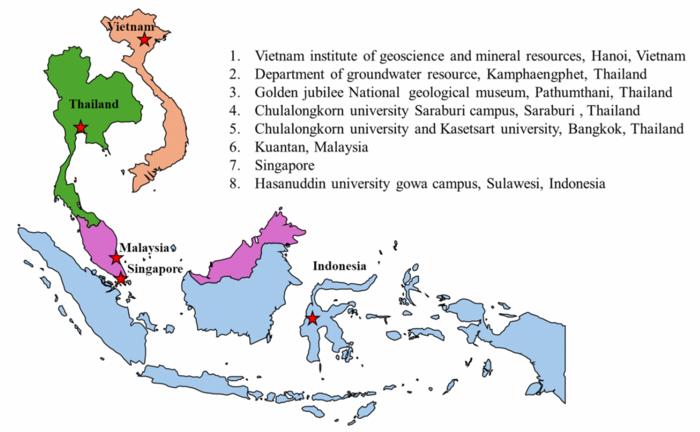
To this end, researchers developed a one-dimensional finite difference model to predict soil temperatures around energy piles across different distances and time periods. Its input parameters include the physical and thermal properties of materials and soil. Relevant data was extracted from extensive studies on GSHP systems in Southeast Asia, as well as credible textbooks and design manuals. Notably, soil thermal conductivity and soil density were the critical parameters analyzed to understand their impact on the soil temperature around energy piles.
Sign up for the Daily Dose Newsletter and get every morning’s best science news from around the web delivered straight to your inbox? It’s easy like Sunday morning.
Researchers found that temperature distribution around energy piles remained stable over one month, three months, and a year despite changes in soil thermal conductivity. This resilience of the system’s thermal behavior to these changes indicates that GSHP systems can be designed flexibly despite minor variations in soil thermal conductivity.
“The soil temperature decreased as the soil density increased from 1400 to 1800 kg/m3. Specifically, with each increment in soil density, temperature decreases of 0.02 ◦C, 0.01 ◦C, and 0.0025 ◦C were found over specific periods (three months, six months, and one year, respectively). So, the proportional relationship between soil density and soil temperature shows that high-density soil improves thermal conductivity and, in turn, system performance,” elaborates Prof. Inazumi.
Furthermore, for every 10% increase in soil density, the average temperature decreases by 0.007 °C at 0.3 meters, 0.003 °C at 0.6 meters, and 0.0009 °C at 1.0 meter from the energy pile. However, this indicates that the effect of high-density soil on soil temperature diminishes as the distance from energy piles increases.
Overall, these results suggest that using stable ground temperatures, GSHP systems—specifically when integrated with energy piles—are efficient in heating and cooling urban environments. Such integration reduces urbanites’ dependence on traditional heating and cooling systems, drastically reducing electricity consumption and greenhouse gas emissions. It also offers a way to mitigate the urban island effect in heavily populated areas. Thus, smart cities can be sustainable if urban infrastructures are integrated with GSHP systems.
Prof. Inazumi emphasizes, “The long-term effectiveness of GSHP systems could be affected by Southeast Asia’s hot and humid climate. Nonetheless, the study’s findings highlight the need to conduct further research, and it must include field experiments and advanced modeling techniques to refine GSHP configurations and enhance system performance. Overall, the study provides a comprehensive understanding of geothermal energy utilization in tropical urban areas and paves the way for future innovations in the sustainability in smart cities.”
IMAGE CREDIT: Shinya Inazumi from SIT, Japan https://www.mdpi.com/2624-6511/7/3/58
If you enjoy the content we create and would like to support us, please consider becoming a patron on Patreon! By joining our community, you’ll gain access to exclusive perks such as early access to our latest content, behind-the-scenes updates, and the ability to submit questions and suggest topics for us to cover. Your support will enable us to continue creating high-quality content and reach a wider audience.
Join us on Patreon today and let’s work together to create more amazing content! https://www.patreon.com/ScientificInquirer




Leave a Reply