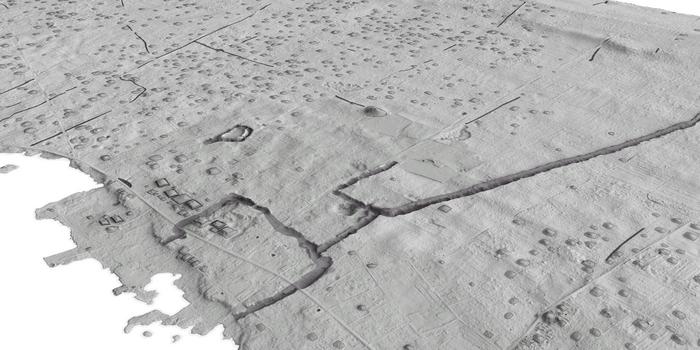
New evidence of one of the first cities in the Pacific shows they were established much earlier than previously thought, according to new research from The Australian National University (ANU).
The study used aerial laser scanning to map archaeological sites on the island of Tongatapu in Tonga.

Lead author, PhD scholar Phillip Parton, said the new timeline also indicates that urbanisation in the Pacific was an indigenous innovation that developed before Western influence.
“Earth structures were being constructed in Tongatapu around AD 300. This is 700 years earlier than previously thought,” Mr Parton said.
Sign up for the Daily Dose Newsletter and get every morning’s best science news from around the web delivered straight to your inbox? It’s easy like Sunday morning.
“As settlements grew, they had to come up with new ways of supporting that growing population. This kind of set-up – what we call low density urbanisation – sets in motion huge social and economic change. People are interacting more and doing different kinds of work.”
Mr Parton said traditionally, studying urbanisation in the Pacific has been tricky due to challenges collecting data, but new technology has changed that.
“We were able to combine high-tech mapping and archaeological fieldwork to understand what was happening in Tongatapu,” he said.
“Having this type of information really adds to our understanding of early Pacific societies.
“Urbanisation is not an area that had been investigated much until now. When people think of early cities they usually think of traditional old European cities with compact housing and windy cobblestone streets. This is a very different kind of city.
“But it shows the contribution of the Pacific to urban science. We can see clues that Tongatapu’s influence spread across the southwest Pacific Ocean between the 13th and 19th centuries.”
According to Mr Parton, the collapse of this kind of low-density urbanisation in Tonga was largely due to the arrival of Europeans.
“It didn’t collapse because the system was flawed; it was more to do with the arrival of Europeans and introduced diseases,” he said.
“This is just the beginning in terms of early Pacific settlements. There’s likely still much to be discovered.”
IMAGE CREDIT: Phillip Parton/ANU.
If you enjoy the content we create and would like to support us, please consider becoming a patron on Patreon! By joining our community, you’ll gain access to exclusive perks such as early access to our latest content, behind-the-scenes updates, and the ability to submit questions and suggest topics for us to cover. Your support will enable us to continue creating high-quality content and reach a wider audience.
Join us on Patreon today and let’s work together to create more amazing content! https://www.patreon.com/ScientificInquirer


Leave a Reply