Cosmic dust—like dust on Earth—comprises groupings of molecules that have condensed and stuck together in a grain. But the exact nature of dust creation in the universe has long been a mystery. Now, however, an international team of astronomers from China, the United States, Chile, the United Kingdom, Spain, etc., has made a significant discovery by identifying a previously unknown source of dust in the universe: a Type Ia supernova interacting with gas from its surroundings.
The study was published in Nature Astronomy on Feb. 9, and was led by Prof. WANG Lingzhi from the South America Center for Astronomy of the Chinese Academy of Sciences.
Supernovae have been known to play a role in dust formation, and to date, dust formation has only been seen in core-collapse supernovae—the explosion of massive stars. Since core-collapse supernovae do not occur in elliptical galaxies, the nature of dust creation in such galaxies has remained elusive. These galaxies are not organized into a spiral pattern like our Milky Way but are giant swarms of stars. This study shows that thermonuclear Type Ia supernovae, the explosion of white dwarf stars in binary systems with another star, may account for a significant amount of dust in these galaxies.
The researchers monitored a supernova, SN 2018evt, for over three years using space-based facilities like NASA’s Spitzer Space Telescope and NEOWISE missions, ground-based facilities like the Las Cumbres Observatory’s global network of telescopes, and other facilities in China, South America, and Australia. They found that the supernova was running into material previously cast off by one or both stars in the binary system before the white dwarf star exploded, and the supernova sent a shock wave into this pre-existing gas.

During more than a thousand days of monitoring the supernova, the researchers noticed that its light began to dim precipitously in the optical wavelengths that our eyes can see and then started glowing brighter in infrared light. This was a telltale sign that dust was being created in the circumstellar gas after it cooled following the supernova shock wave passing through it.
“The origins of cosmic dust have long been a mystery. This study marks the first detection of a significant and rapid dust formation process in the thermonuclear supernova interacting with circumstellar gas,” said Prof. WANG, first author of the study.
The study estimated that a large amount of dust must have been created by this one supernova event—an amount equal to more than 1% of the Sun’s mass. As the supernova cools, the amount of dust created should increase, perhaps tenfold. While these dust factories are not as numerous or efficient as core-collapse supernovae, there may be enough of these thermonuclear supernovae interacting with their surroundings to be a significant or even dominant source of dust in elliptical galaxies.
“This study offers insights into the contribution of thermonuclear supernovae to cosmic dust, and more such events may be expected to be found in the era of the James Webb Space Telescope (JWST),” said Prof. WANG Lifan from Texas A&M University, a co-first author of the study. The Webb telescope sees infrared light that is perfect for the detection of dust.
“The creation of dust is just gas getting cold enough to condense,” said Prof. Andy Howell from Las Cumbres Observatory and the University of California Santa Barbara. Howell is the Principal Investigator of the Global Supernova Project whose data was used in the study. “One day that dust will condense into planetesimals and, ultimately, planets. This is creation starting anew in the wake of stellar death. It is exciting to understand another link in the circle of life and death in the universe.”
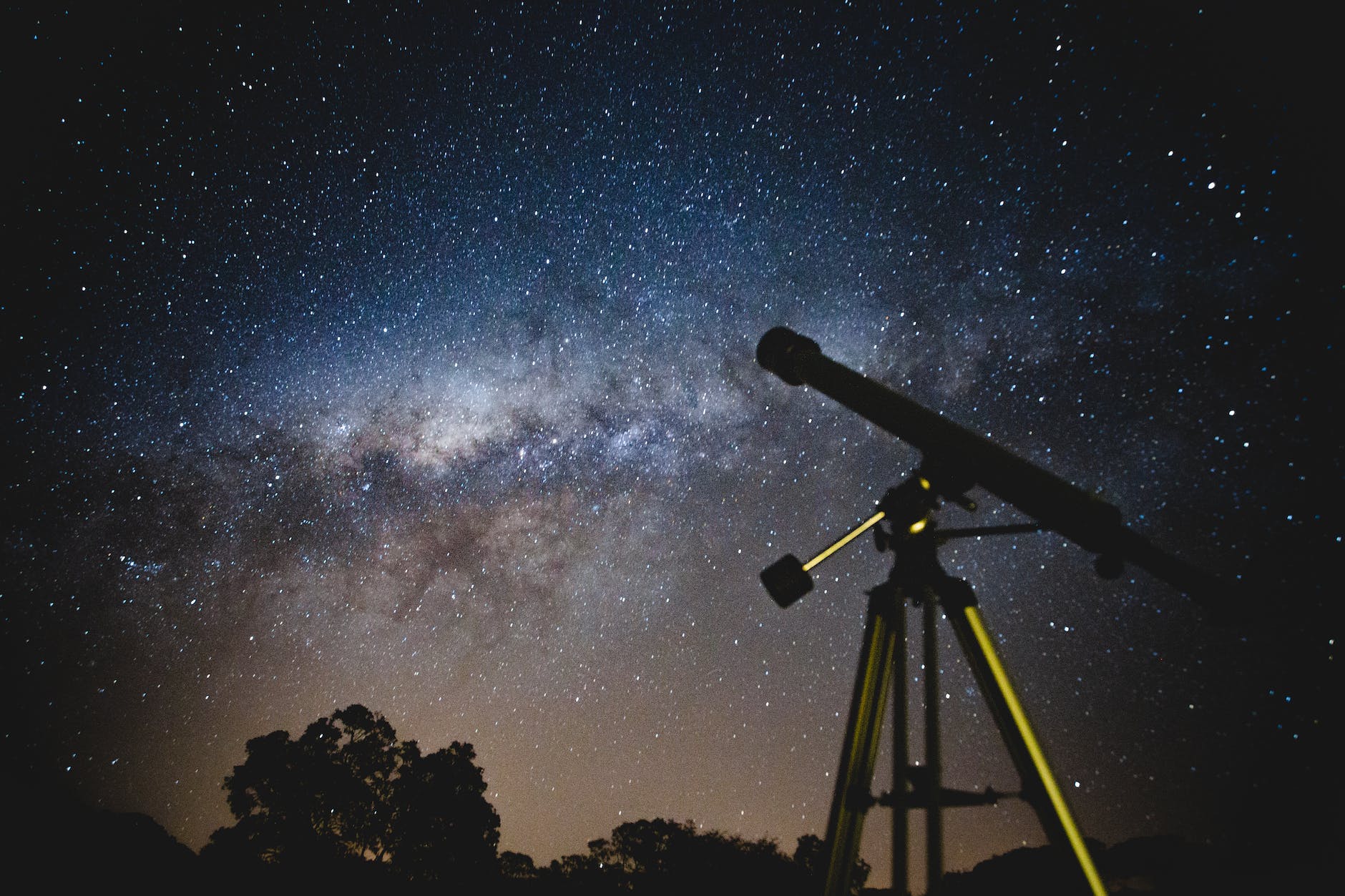
IMAGE CREDIT: Lucas Pezeta.
Sign up for the Daily Dose Newsletter and get the morning’s best science news from around the web delivered straight to your inbox? It’s easy like Sunday morning.

Leave a Reply