STEM CELL THERAPY FOR MS.
A recent early-stage trial has shown promising results for a new stem cell therapy for multiple sclerosis (MS). In this trial, neural stem cells were injected into the brains of 15 patients with secondary progressive MS, a more advanced stage of the disease where few treatments are effective. The primary aim was to assess safety, and the results were encouraging, indicating the treatment is safe and potentially protective against further disease progression. Patients experienced no worsening of symptoms or disability over a year, and those with higher doses of stem cells showed less brain shrinkage, suggesting reduced inflammation. The therapy also resulted in increased levels of neuron-protecting compounds in the cerebrospinal fluid. While some side effects were reported, they were successfully treated. The study, although small and preliminary, is a significant step towards developing a new treatment for MS. Further research is necessary to confirm the therapy’s long-term effectiveness and to ensure it’s not influenced by other medications used during the trial. The MS Society recognizes the study’s potential but calls for more extensive clinical trials. (The Guardian)
BE OUR FRIEND PLEASE.
The number of top researchers affiliated with Saudi Arabian universities has sharply decreased following revelations of a scheme where these institutions paid eminent scientists abroad for a Saudi affiliation to boost their global rankings. Siris Academic’s analysis shows a drop from 109 highly cited researchers (HCRs) in 2022 to 76, indicating a potential decline in global university rankings for these institutions. The decrease stems from heightened scrutiny by European and other global research institutions and Clarivate, the analytics firm responsible for compiling the annual HCR list. This response emerged after it was discovered that scientists were listing Saudi affiliations, often in exchange for money or minimal consulting roles. The practice, which began as early as 2011, aimed to artificially elevate Saudi universities in rankings like the influential Shanghai Ranking. Efforts to correct these affiliations, including disciplinary actions against researchers and stricter filtering criteria by Clarivate, have led to this significant drop. The change may affect the standing of several Saudi universities in global rankings, with potential implications for their academic reputation and funding strategies. (Science)
If you’re enjoying the Daily Dose, sign up for the Daily Dose Newsletter and get the morning’s best science news from around the web delivered straight to your inbox? It’s easy like Sunday morning.
TAKE THAT.
Tesla is suing Sweden and its Transport Agency, responding to local unions disrupting its business amid a dispute over workers’ rights. The conflict revolves around Tesla’s refusal to sign a collective agreement with mechanics, crucial in Sweden where workers’ rights are mostly governed by such agreements. Unions, considering this a pivotal battle, have implemented various measures: refusing to deliver license plates and mail to Tesla, clean showrooms, repair charging points, or unload Tesla cargo. This has significantly impacted Tesla’s operations, including its ability to sell new cars in Sweden, its fifth-largest European market. Tesla’s lawsuits, against both the Swedish state and PostNord, are part of a broader crisis with more unions joining the action. Elon Musk has criticized the blockade as “insane.” The Swedish Transport Agency, while having received the lawsuit, maintains a neutral stance but disagrees with Tesla’s claims. The conflict has escalated with additional unionized workers joining the blockade, affecting Tesla’s supply chain. (Wired)
DIRTY AIR.
A BBC investigation has revealed that gas flaring in oil drilling, particularly in the Gulf region, is causing severe air pollution and putting millions at risk. This practice, which involves burning waste gas, is widespread even in countries like the United Arab Emirates, despite existing bans. The released pollutants, including PM2.5, Ozone, NO2, and benzo(a)pyrene, are linked to major health issues such as strokes, cancer, asthma, and heart disease. Satellite imagery shows that these toxic pollutants are not confined locally but spread across vast regions, affecting air quality in countries like Dubai, Abu Dhabi, Kuwait, Iran, and Iraq. The study highlights that a significant portion of the Gulf’s air pollution is man-made, primarily from oil industries, challenging the belief that it mainly stems from natural dust storms. Oil companies involved in these regions, like BP and Shell, recognize the problem and claim efforts to reduce flaring. However, the ongoing environmental and health crisis calls for more effective measures to address the impact of gas flaring. (BBC)

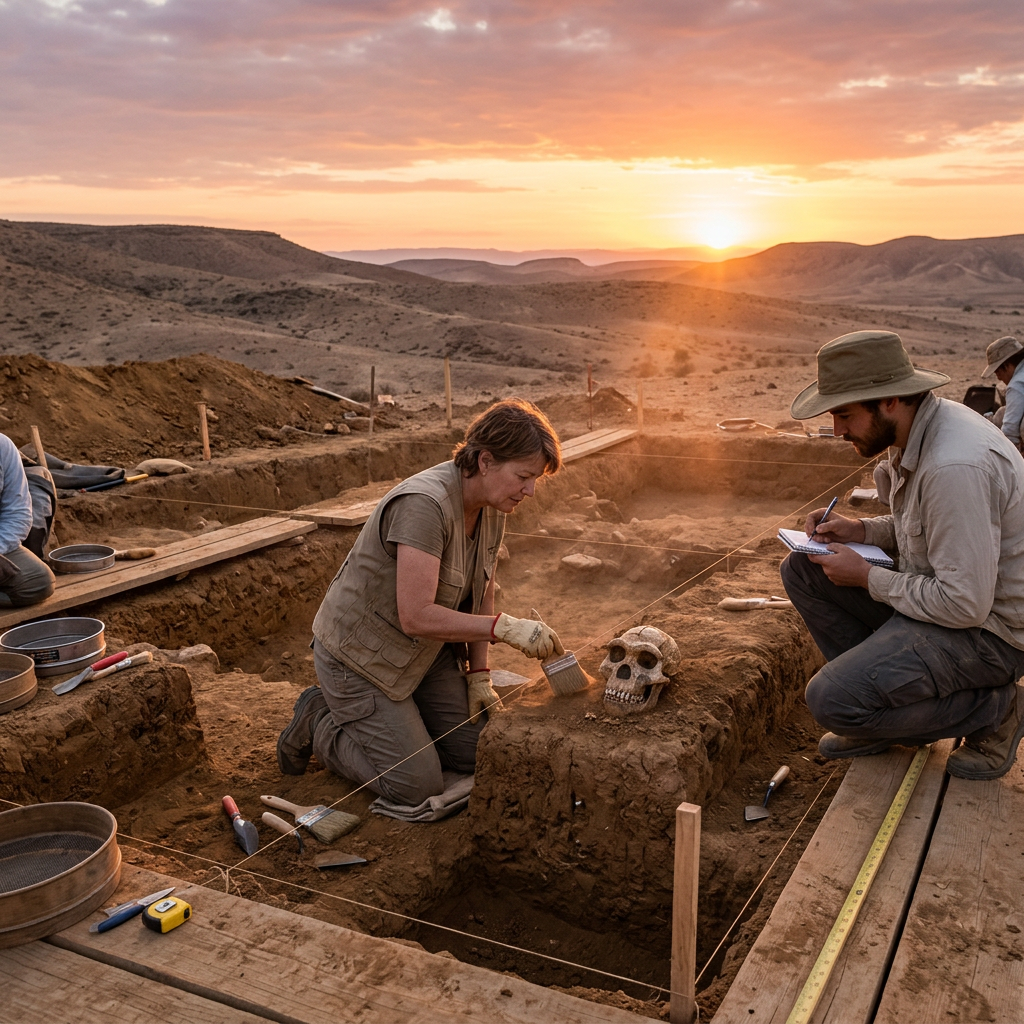
MESSY EVOLUTION.
The discovery of 300,000-year-old Homo sapiens fossils in Jebel Irhoud, Morocco, by Jean-Jacques Hublin and his team, has significantly altered our understanding of human evolution. Previously thought to have originated in southern Africa, this finding suggests a broader geographical spread. Hublin, a renowned paleoanthropologist and director at the Max Planck Institute for Evolutionary Anthropology, emphasizes the blurring of boundaries between humans and other hominids, challenging the notion of a distinct divide between human and non-human. His work explores the implications of prehistory on contemporary issues like climate change and technology. Hublin, now holding a chair at the Collège de France, stresses that human evolution is ongoing, with modern humans still differing from their ancient counterparts. The discovery in Jebel Irhoud questions the traditional ‘Garden of Eden’ model of human origin and highlights the complexity of defining ‘Homo sapiens’. This breakthrough, part of a continually evolving field, underscores the dynamic and multifaceted nature of human evolution. (El Pais)
PURE COSMIC DUST.
A teaspoon of 4.6 billion-year-old dust from asteroid Bennu, brought to Earth by NASA’s Osiris-Rex mission, has reached London’s Natural History Museum for analysis. This sample, the largest since the Apollo era, offers insights into the solar system’s origins. Researchers found the asteroid material rich in carbon and water, raising questions about asteroids’ role in delivering water to planets. The study will compare hydrogen isotopes in Bennu’s water with Earth’s, exploring how the solar system formed and possibly informing strategies against asteroid threats. The first two years of research will involve non-destructive tests like X-ray diffraction and electron microscopy, focusing on Bennu’s mineral composition. This pristine sample, unlike meteorites altered by Earth’s atmosphere, provides a unique glimpse into unaltered asteroid material. The researchers at the museum, housing a leading meteorite collection, are prepared to unlock the secrets of this small, yet invaluable sample, which could offer years of scientific discovery. (The Guardian)
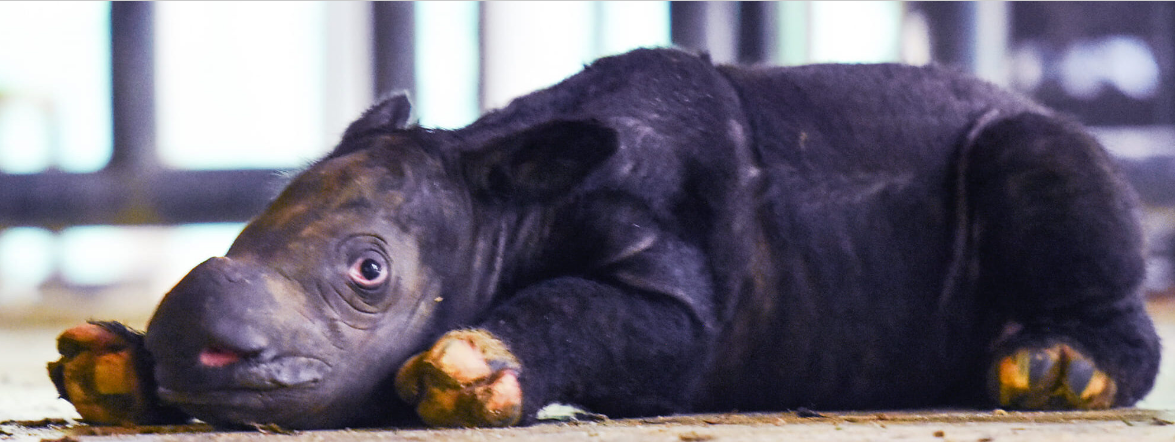
A STAR IS BORN.
In a significant boost for conservation efforts, a critically endangered Sumatran rhino was born in Sumatra, Indonesia, marking the second birth of this species in the country in 2023. The female rhino, Delilah, gave birth to a 25-kilogram male calf at Way Kambas National Park. This calf, fathered by Harapan, a male born in Cincinnati Zoo and later repatriated to Indonesia, represents a vital addition to the Sumatran rhino population, which numbers fewer than 50. The birth emphasizes Indonesia’s commitment to Sumatran rhino conservation, with the Way Kambas sanctuary recording five live births from semi-natural breeding. Delilah and her newborn, found 10 days before the expected delivery date, are in good health, with the calf already able to stand, walk, and breastfeed. The Sumatran rhino is legally protected in Indonesia and classified as critically endangered by the IUCN, with only about 30 mature individuals remaining. Delilah, born in 2016, represents the successful conservation breeding efforts, being the second calf of her mother, Ratu, who also gave birth earlier in September. These developments are crucial for the survival of a species with an average lifespan of 35 to 40 years. (Associated Press)
Thanks for reading. Let’s be careful out there.
WORDS: The Biology Guy.
IMAGE CREDIT: Screenshot.
Leave a Reply