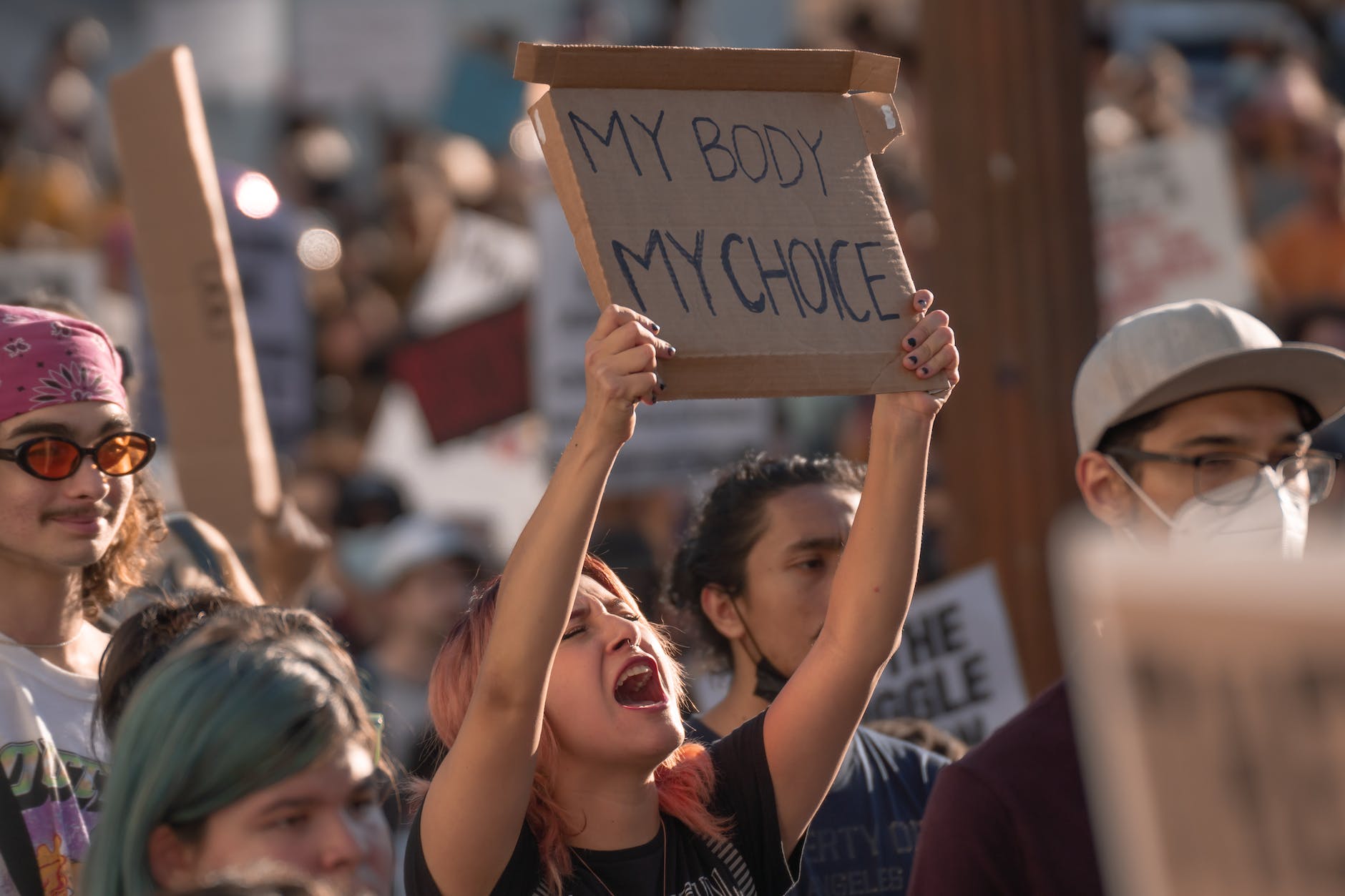
During the five decades that followed Roe v. Wade, lawsuit after lawsuit in states across the country chipped away at abortion rights. And again and again, the people who went to court to defend those rights were physicians who often spoke in clinical and abstract terms.
“The entirety of abortion rights history is a history of doctors appearing in court to represent their own interests and the interests of pregnant people,” said Elizabeth Sepper, a law professor at the University of Texas-Austin.
But in July, in a Texas courtroom, the case for abortion was made by women themselves who had been denied abortions and sued the state to clarify the exceptions to its ban, which makes it illegal to perform an abortion unless a patient is facing death or “substantial impairment of a major bodily function.”
The aspiring mothers described in vivid, harrowing detail how the state’s abortion ban had endangered their health, traumatized them, and, in the case of Samantha Casiano, forced her to carry and give birth to a baby girl without a formed skull or brain only to watch her die a tortured death four hours later.
“She was gasping for air,” Casiano testified on the witness stand. She described how her baby turned purple and her eyeballs were bleeding. “I just kept telling myself and my baby that ‘I’m so sorry that this has happened to you.’ I felt so bad. She had no mercy. There was no mercy there for her.”
Casiano had been denied an abortion months earlier after she found out her baby had anencephaly, a fatal condition. She had wanted her daughter, whom she named Halo, to be spared from suffering and to “go to rest sooner.” She described abortion as an act of compassion, mercy, and love.
For decades, Christian anti-abortion groups have deployed ultrasound fetal images and grisly photos of what they say are aborted fetuses on highway billboards, protest signs, and online ads to garner sympathy for “unborn children” and advance their religious and political aims. But the Texas hearing, for the first time since the early 1970s, according to legal scholars and historians, trained the camera upward, away from the high-resolution fetal images to the faces of sympathetic women who say they suffered grievously under the state’s abortion ban.
Women have long shared abortion stories privately, and at public speak-outs, through #ShoutYourAbortion and the nonprofit group WeTestify. But the formality of the Austin courtroom focused unblinking attention on their experiences. The black-robed judge and court stenographer leaned in to hear plaintiffs as their testimony under oath was recorded for a national television audience. It put anti-abortion activists on the defensive.
“We’re in this moment where all of the stories are coming out and it’s raw,” said Greer Donley, an associate professor of law at the University of Pittsburgh School of Law. “All of these secrets — abortion, miscarriage, the blurring of miscarriage and abortion — that’s something people viscerally appreciate now.”
Before the Supreme Court’s conservative majority eliminated a federal right to abortion last June, polls showed that nationwide support for abortion care was “pathetically stagnant,” Donley said. Compare that stagnation, she said, to the support for same-sex marriage rights, which broadened as gay people and their families shared their stories publicly.
“Storytelling is the future,” Donley said. “That’s how you change hearts and minds
If you enjoy the content we create and would like to support us, please consider becoming a patron on Patreon! By joining our community, you’ll gain access to exclusive perks such as early access to our latest content, behind-the-scenes updates, and the ability to submit questions and suggest topics for us to cover. Your support will enable us to continue creating high-quality content and reach a wider audience.
Join us on Patreon today and let’s work together to create more amazing content! https://www.patreon.com/ScientificInquirer
The pregnancy complications and medical emergencies described by the plaintiffs both “subvert ideas about motherhood” and “support ideas about motherhood,” said Mary Ziegler, a professor of law at the University of California-Davis who has written books about the history of abortion.
Soon after the Supreme Court held that women had the right to abortion in 1973, the anti-abortion movement began a concerted effort to narrow that newly established constitutional right. Movement leaders spoke in gruesome detail about abortions later in pregnancy, coining medically inaccurate phrases, such as “partial-birth abortion,” that infused the language of the abortion debate with emotional and provocative imagery.
“Usually, the story is women versus fetuses, and that people having abortions are selfish or don’t care,” Ziegler said. “But these women in court are saying, ‘What was best for my child was the abortion. I was denied that, but so was my child.’”
Some Catholics and conservative Christians who oppose abortion proffer the notion of “natural womanhood,” Ziegler said — the religious belief that God created women to complement men, and “that abortion is forcing women to be like men” and “disrupts nature.”
That belief was expressed by Ingrid Skop, a Texas OB-GYN who opposes abortion and testified last month as an expert witness for the state. When asked on the stand about Casiano’s description of watching her baby die, Skop said inducing a birth is “a much more holistic way to progress through the grieving process than to dismember your child and not have a way to grieve.”
Infant deaths have spiked in Texas since the government mandated births of nonviable pregnancies. In September 2021, Texas banned abortions after six weeks of pregnancy and then instituted a prohibition on all abortions from the moment of fertilization unless a woman was experiencing “a life-threatening physical condition aggravated by, caused by, or arising from a pregnancy.” The Texas law makes no exception for nonviable pregnancies.
In 2022, preliminary infant mortality data from the Texas Department of State Health Services, first obtained by CNN, showed a 21.6% increase in infant deaths caused by severe genetic and birth defects. That increase reversed a 15% decline in infant deaths from 2014 to 2021.The case in Austin comes as abortion rights and civil liberties groups and state Democratic parties are mounting a series of legal and electoral challenges to the Supreme Court’s ruling in Dobbs v. Jackson Women’s Health Organization, which overturned Roe last summer. In November, Ohio voters will take up a proposed constitutional amendment that would ensure “every individual has a right to make and carry out one’s reproductive decisions.”
Litigation against abortion bans is ongoing in at least 17 states, according to KFF.A new poll by the nonpartisan research firm PerryUndem that explored the impact of a “viability limit” on support for abortion ballot measures found that voters were 15 percentage points more likely to support ballot measures when they contained no government regulations on abortion over those that restricted abortion later in pregnancy.
The Texas lawsuit has highlighted the myriad reasons women and their families (at least two husbands were in the Austin courtroom) require abortion care throughout an entire pregnancy, Donley said.
In considering doing away with any limits on abortion, “we don’t have to trust that women are perfect, benevolent mothers,” Donley said. “We just have to believe they are rational actors.”
After 24 weeks, most abortions require induced birth, she added. “So, we’re imagining a person who, for no good reason, endured the burdens of pregnancy, watched her body change completely, and went through labor and delivery of a stillborn baby just because she couldn’t get around to an abortion earlier? People have abortions late because horrible things happen.”
Texas District Judge Jessica Mangrum on Aug. 4 ruled in favor of the plaintiffs, but the Texas attorney general has appealed the decision, blocking the order. The state’s assistant attorney general, Amy Pletscher, had asked the court to dismiss the case. She told Mangrum that the “plaintiffs sustained their alleged injuries as a direct result of their own medical providers failing them.”
But while the outcome of the case is uncertain, legal scholars said it marked the beginning of a new strategy for the abortion rights movement in the United States.
“We had a 50-year fight to get rid of Roe,” Ziegler said. “This is the beginning of the 50-year fight to get rid Dobbs.”
WORDS: Sarah Varney (svarney@kff.org, @SarahVarney4)
IMAGE CREDIT: Derek French.



Leave a Reply