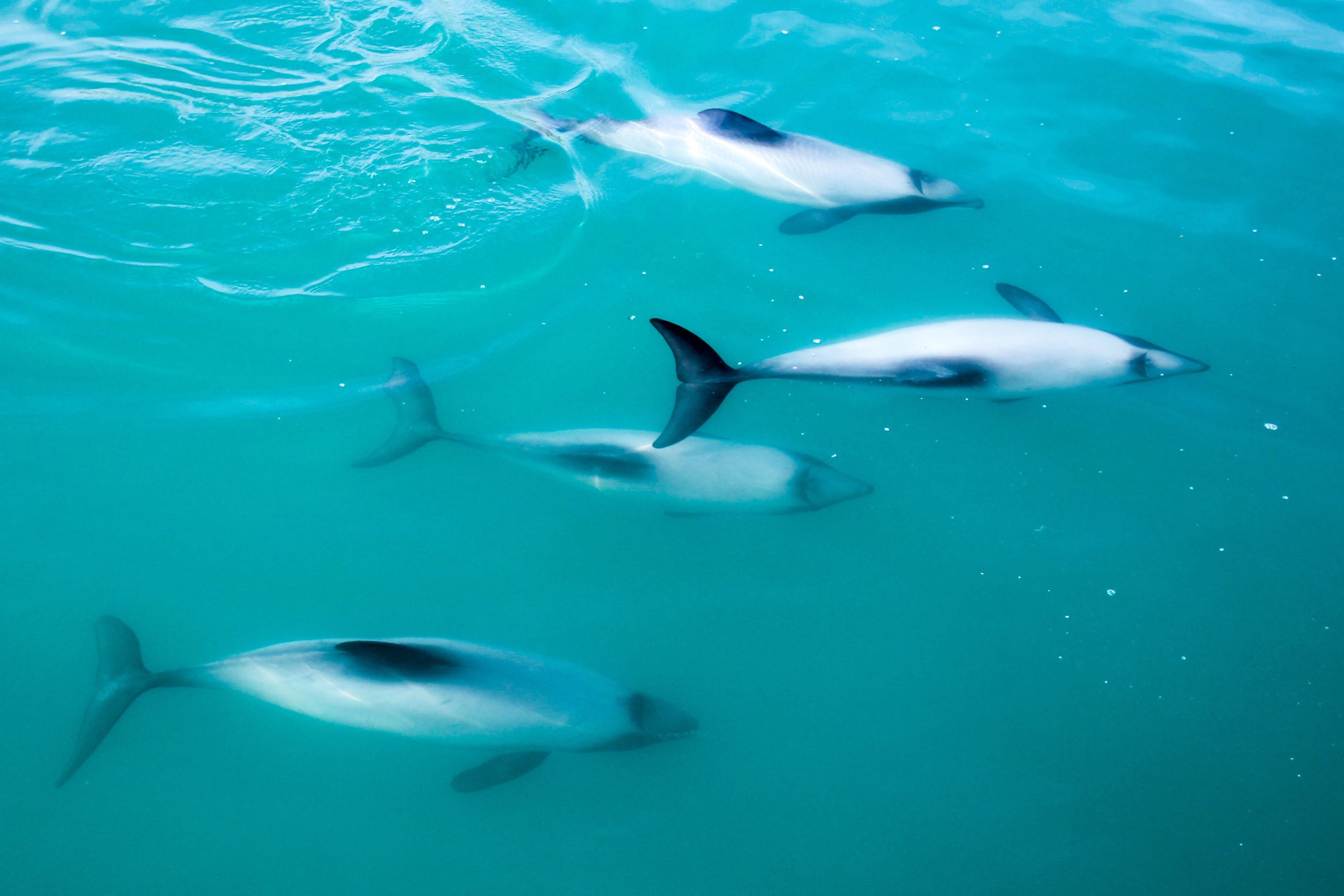
Scientists are learning more about the diets and groupings of little-studied Hector’s dolphins at the top of the South Island.
Scientists have learned for the first time that groups of Hector’s dolphins at the top of the South Island have distinctly different diets, suggesting sub-populations which don’t intermingle.
That information, discovered by University of Auckland scientists in collaboration with the Department of Conservation, may aid in monitoring and protecting the endangered dolphins, which probably number only a few hundred individuals in the area.
If you enjoy the content we create and would like to support us, please consider becoming a patron on Patreon! By joining our community, you’ll gain access to exclusive perks such as early access to our latest content, behind-the-scenes updates, and the ability to submit questions and suggest topics for us to cover. Your support will enable us to continue creating high-quality content and reach a wider audience.
Join us on Patreon today and let’s work together to create more amazing content! https://www.patreon.com/ScientificInquirer
The Hector’s dolphins in Golden Bay don’t seem to mingle with those on the opposite coast at Queen Charlotte Sound and Cloudy Bay in the Marlborough Sounds.
“We’ve known virtually nothing about the Hector’s dolphins at the top of the South Island,” says Professor Rochelle Constantine, a co-author of a study published in the journal Marine Ecology Progress Series. “Small and isolated sub-populations can be more vulnerable to environmental risks, so this is very useful information to know.”
Hector’s dolphins, one of the world’s smallest marine dolphins, are found only in Aotearoa New Zealand. They have grey, white and black markings and a black dorsal fin that looks like one of Mickey Mouse’s ears.
Analysing chemical markers in tissue samples allowed PhD student Courtney Ogilvy and her fellow scientists to deduce what the dolphins were eating and where. The different diets suggested that the groups were staying apart, targeting different prey.
Clear or deep water between Golden Bay on the west coast and Queen Charlotte Sound and Cloudy Bay on the east coast may be deterring movement between the coasts. Hector’s dolphins prefer turbid, shallow coastal water over clear, deep water.
“There certainly seems to be an ecological boundary that prevents the movement of Hector’s dolphins between the two regions,” says Ogilvy, who is in the School of Biological Sciences.
She analysed 111 skin samples collected over 11 years by the Department of Conservation – Te Papa Atawhai (DOC) and Waipapa Taumata Rau – University of Auckland as part of a genetic monitoring programme.
“We are using genetics to better understand the connections between dolphins across the top of the South Island,” says Constantine. “This, combined with the diet study will allow us to better inform measures to help these dolphin populations thrive.”
Carbon and nitrogen isotopes in animals’ tissues reflect their prey, which in the case of Hector’s dolphins is small fish and squid. The chemical analysis doesn’t reveal which exact species a dolphin is eating.
The total population of Hector’s dolphins is estimated at more than 15,000 individuals.
IMAGE CREDIT: Mai Moeslund on Unsplash


Leave a Reply