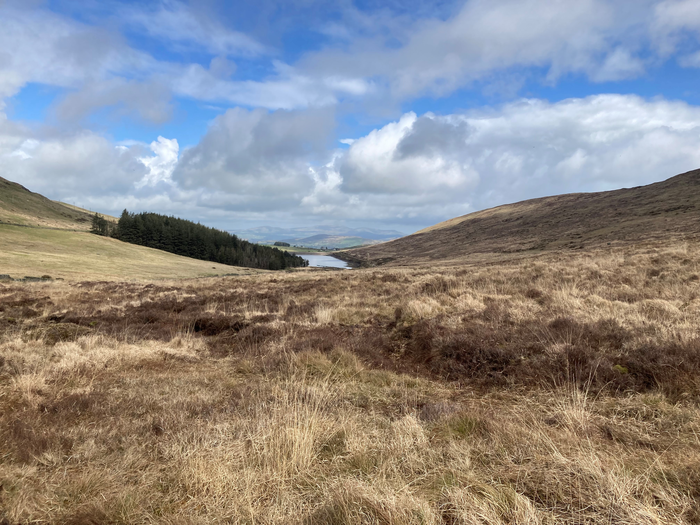
A remote community in Ireland was adaptable enough to persist through a millennium of environmental change, according to a study published April 27, 2022 in the open-access journal PLOS ONE by Gill Plunkett and Graeme Swindles of Queen’s University Belfast, Northern Ireland, U.K.

There are numerous examples of past societies severely impacted by environmental changes, including climate change, natural disasters, and other dramatic ecological shifts contributing to food crises, epidemics, and other calamities. However, it’s more difficult to determine long-term effects of environmental disturbances. In this study, the authors examine environmental and community changes over a thousand years of occupation in the Antrim Plateau in the north of Ireland.
This study analyzed a peat core recording environmental changes over the last millennium at a site called Slieveanorra. The authors inferred environmental and human occupation changes with data from microbes, natural plants, and crop plants, and they established fine-scale dating with ash layers, organic remains, and historical accounts. Their record provided no evidence of long-term disruption to human occupation related to environmental changes.
These results reflect a community that was able to either escape the effects of environmental change, or to rebound quickly. This surprising resilience from a relatively remote occupation was likely the result of social factors – such as agricultural and trade practices – which made the community flexible and adaptable. In the face of environmental change, the authors suggest, not all human communities respond the same way, and this variation is largely linked to social conditions of each respective population. Understanding this complexity is key to understanding what conditions make communities vulnerable to cultural collapse in the face of environmental change.
The authors add: “Ireland’s uplands today seem barren, but they were occupied and farmed for centuries, despite climate change, famines and plague.”
IMAGE CREDIT: Helen Essell, CC-BY 4.0 (https://creativecommons.org/licenses/by/4.0/)



Leave a Reply