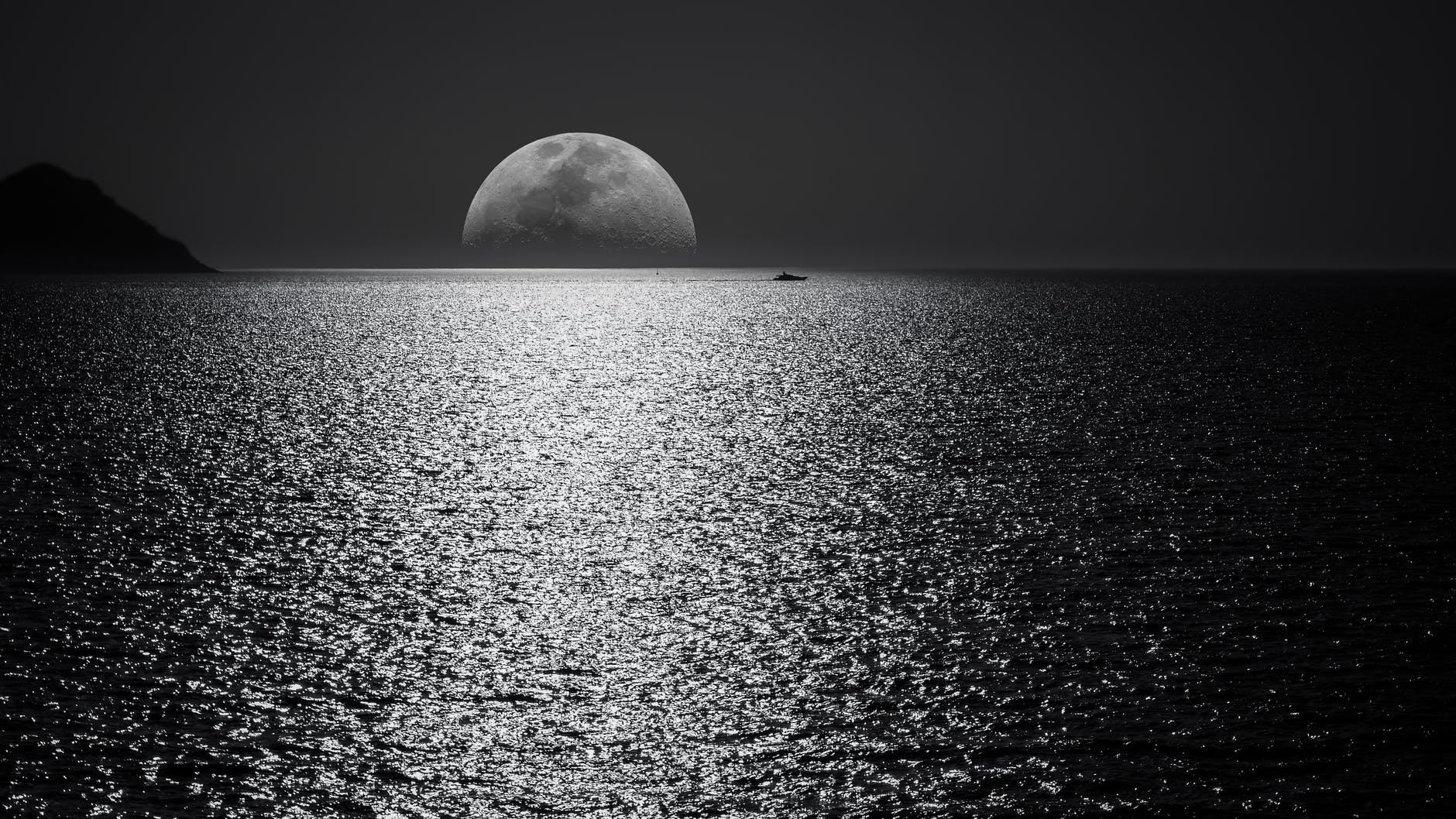
Reading about and seeing images of Hong Kong as it struggles to contain its latest Covid-19 outbreak drives home the idea that, as many countries around the world are ditching its mitigation efforts, the pandemic is far from done. The cosmopolitan city is really suffering and the pictures coming from there are eerily reminiscent of the pandemics early months. Per the Associated Press, “As a COVID-19 outbreak overwhelms Hong Kong, it’s hard for its 7.4 million residents to know what’s next. Uncertainty is the only certainty as store shelves are stripped of goods, mainland Chinese companies throw up sprawling isolation and testing centers and the government sends mixed messages on whether it will lock down the population for a citywide mass testing. Pandemic restrictions have sucked much of the energy out of a cosmopolitan city known for its neon lights and dense crowds. The latest closure, announced Wednesday, is public beaches. An overburdened health system means those who get infected often have to fend for themselves. And the death toll, particularly among the elderly, keeps rising.” How local politicians did not prepare for the eventuality of the virus taking hold is beyond comprehension. Governments lifting all restrictions also boggles the mind. https://bit.ly/3IeBuEr
Racism is alive and well in British Science, especially if you are the sole Black chemistry professor in the entire country. Per the BBC, “In the 15 years Robert Mokaya has been a professor at Nottingham university, he has had all his applications for funding for research projects turned down by Britain’s main chemistry funding body, now called the UK Research and Innovation agency. ‘That is not typical for a professor,’ he tells me phlegmatically. ‘I have had research papers published which I would have expected would have enabled me to obtain funding to do follow-up research. I wonder if this is typical for someone of my sort of surname.’” He may be on to something. https://bbc.in/3ieUI24
Climate change affects more than the weather. It has an effect on water availability on the planet. A recent study in the Proceedings of the National Academy of Sciences models a grim future on earth when it comes to water. Per the PNAS, “Here we use an archive of large ensembles run under a high-emissions scenario to determine how decadal ‘megadrought’ and ‘megapluvial’ events—and shorter-term precipitation extremes—will vary relative to that changing baseline. When the trend is retained, mean state changes dominate: In fact, soil moisture changes are so large in some regions that conditions that would be considered a megadrought or pluvial event today are projected to become average. Time-of-emergence calculations suggest that in some regions including Europe and western North America, this shift may have already taken place and could be imminent elsewhere: Emergence of drought/pluvial conditions occurs over 61% of the global land surface (excluding Antarctica) by 2080.” Expect swings between extremes to be the norm. https://bit.ly/3wcu8PB
China’s lunar mission and the return of rock samples from the moon have yielded immediate results. Per Nature, “About half a dozen papers have been published on the Chang’e-5 samples in the past six months. And last week, at the Lunar And Planetary Science Conference in Houston, Texas, a session on China’s lunar missions saw roughly a dozen studies presented. “There are a lot of young Chinese researchers getting involved,” says Clive Neal, a geoscientist at the University of Notre Dame in Indiana, who has worked on Chang’e-5 samples with collaborators in China. Several postgraduate researchers and students presented work on the lunar samples at the conference in Houston, he says. The rocks are exciting because they “represent a window into a very different era of lunar magmatism” compared with those gathered previously, says Neal.” As we’ve said before, it’s an exciting time in the history of space exploration. https://go.nature.com/3ig59Tf
Thanks for reading. Let’s be careful out there.
Leave a Reply