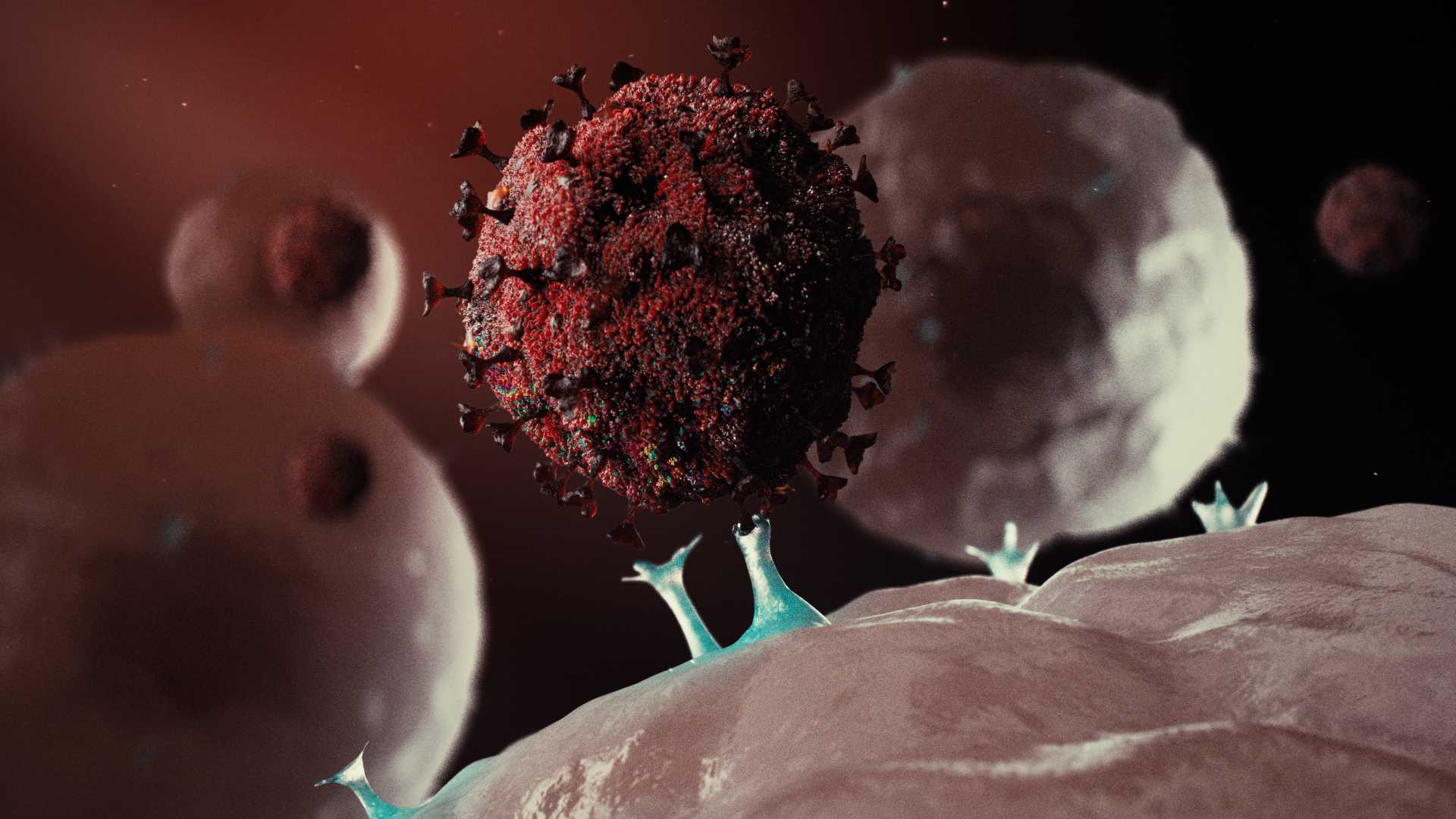
Many experts now predict that COVID-19, which so far has killed more than 5.5 million people worldwide, will remain endemic as new, infectious variants of SARS-CoV-2 emerge. These new variants could pose a greater risk of reinfection—infecting people who have already had COVID19—than previous ones. The rapid identification of reinfection cases and surges could improve public health responses and reveal variants that escape the protection offered by vaccination.
A study published this week in mBio, by collaborators from the Broad Institute, MIT, Harvard Medical School, and the company SpaceX, suggests a way to keep track of those cases. In the work, a multi-institutional group of researchers have identified immunological blood biomarkers that correspond to reinfection and re-exposure to the virus.
“In the setting of waning natural and vaccine immunity, reinfections have emerged across the globe, even amongst previously infected and vaccinated individuals,” noted the immunologists, virologists, biologists, and others who worked on the study.
Previous studies have reported that rhesus macaques have a clinical response to SARS-CoV-2 infection similar to that of humans. For the new study, the researchers studied a group of rhesus macaques that had previously been infected with the virus. They exposed the primates to a different variant of the virus—at varying doses—and collected blood samples before and after both the original infection and the rechallenge.

Notably, analyses of the blood samples revealed distinct biomarkers of reinfection. Those included increased levels of immunoglobulin antibodies that bind to the Spike protein, nucleocapsid protein, or other parts of the virus particle. Animals exposed to higher doses of the virus showed higher SARS-CoV-2 immunoglobulin responses.
The authors reported that those immunological features differentiated primary infection from re-exposure and reinfection in the macaques. The researchers then analyzed blood samples from a small group of humans who were participating in a community-based surveillance cohort at SpaceX and had been reinfected with the coronavirus. The study on humans confirmed the findings from the one on macaques.
Simple, inexpensive, and widely accessible surveillance tools are needed to identify new hotspots of infection, the authors noted. The new work, they added, shows how simple titers might be used as readily available markers of reinfection. “Our ability to monitor and control both infection and reinfection hinges on the development of simple, immunologically sound screening strategies,” they wrote.



Leave a Reply