WATCH OUT FOR THAT OFF-RAMP.
We’ve been watching China’s progress with their zero-Covid strategy. They’ve clearly succeeded in keeping cases to a minimum thanks to draconian mitigation measures and a fair amount of surveillance-state muscle flexing. The question that has never really been whether they can keep Covid-19 at bay during this phase of the pandemic. The uncertainty has always been around how Beijing will maneuver its citizens toward re-opening their borders. At this point, Omicron has added even more uncertainty whether zero-Covid has been the appropriate response. Per Nature, “The approach — which was introduced by the central government early in the pandemic and has involved large-scale lockdowns, mass testing and international travel bans — has been under pressure since China’s first Omicron cases were reported in mid-December. The highly infectious variant has been detected in at least 14 provinces and cities including Tianjin and Beijing, and scientists fear that fresh outbreaks might occur after next week’s events.” https://go.nature.com/3g5Uf1h
WHAT WE DON’T KNOW CAN HURT US.
If having a global pandemic driven by a single type of virus hasn’t been enough to shake your confidence, consider this: scientists only know a fraction of the viruses circulating in the wild, many of which can infect humans, causing unknown diseases. A recent study highlights just how much is unknown. Per Science, “By sifting through unprecedented amounts of existing genomic data, scientists have uncovered more than 100,000 novel viruses, including nine coronaviruses and more than 300 related to the hepatitis Delta virus, which can cause liver failure. ‘It’s a foundational piece of work,’ says J. Rodney Brister, a bioinformatician at the National Center for Biotechnology Information’s National Library of Medicine who was not involved in the new study.” https://bit.ly/3rXB1R0
WHO’S NEXT?
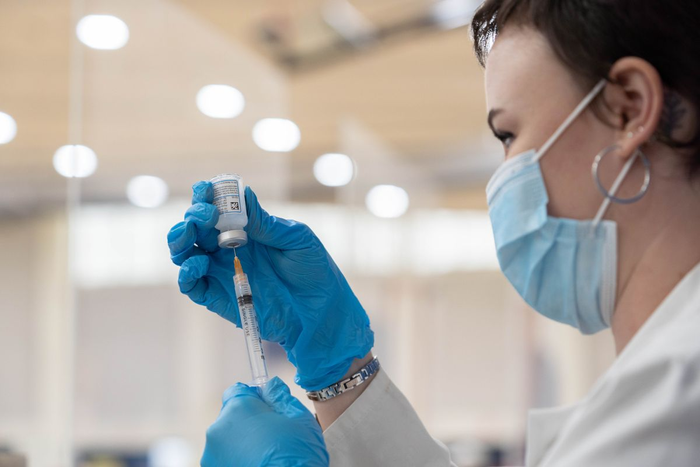
The pharmaceutical world celebrated the relative safety and effectiveness of Pfizer/BioNTech and Moderna’s mRNA vaccines when they were first deployed against Sars-CoV-2. Both vaccines represent the future of vaccine technology. One of the positives of the mRNA platforms was the speed with which vaccines could be produced for specific conditions. Now, pharmaceutical companies are taking aim at other diseases. Per FierceBiotech, “Moderna and Excision BioTherapeutics are stepping into a battle with HIV, a 41-year epidemic that has confuddled drug developers and vaccine makers the world over. The COVID-19 vaccine maker has started applying its mRNA technology to deliver a jab for HIV on the same day Excision says it’s begun investigating a CRISPR-based therapy for the immune-system attacking virus. The companies are attempting to upend the landscape for fighting HIV, as currently approved treatments, known as antiretroviral therapies, reduce the viral load to levels that can’t spread to others, but the meds must be taken daily for life and the virus lives on hidden in the genome of T cells.” The one thing that can get in the way of this quickly evolving class of vaccines? The growing anti-vaccination movement. https://bit.ly/3g7QE2S
A PRIUS ON THE MOON.
One of the world’s largest automakers is set to take its expertise to the moon. Per the Associated Press, “Toyota is working with Japan’s space agency on a vehicle to explore the lunar surface, with ambitions to help people live on the moon by 2040 and then go live on Mars, company officials said Friday. The vehicle being developed with the Japan Aerospace Exploration Agency is called Lunar Cruiser, whose name pays homage to the Toyota Land Cruiser sport utility vehicle. Its launch is set for the late 2020’s.” But how will it be powered since there probably aren’t any gas or charging stations on the moon (at least, not yet). Probably in a way similar to the Mars Rovers. https://bit.ly/3KNFoqx
Thanks for reading. Let’s be careful out there.




Leave a Reply