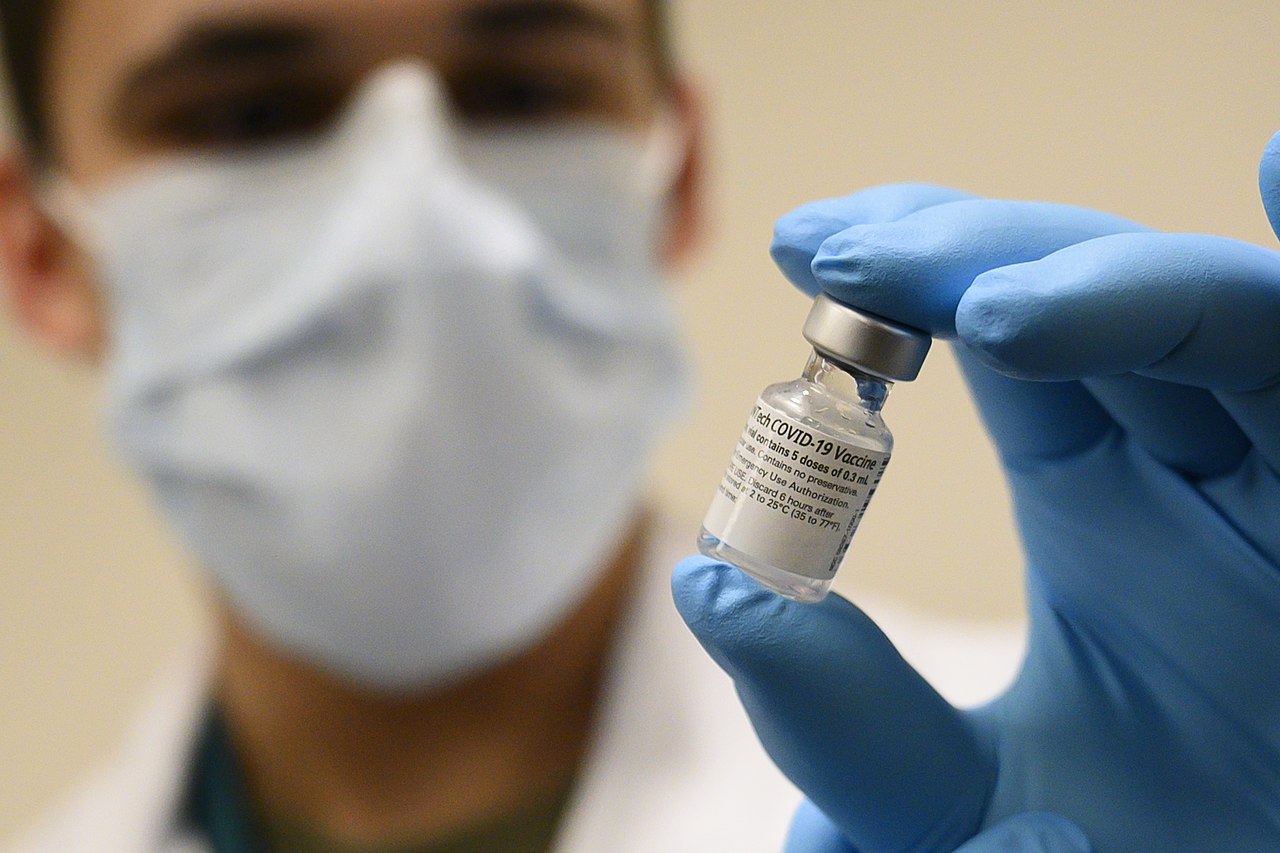
In a U.S. and Swiss study, nearly all patients with cancer developed good immune response to the COVID-19 mRNA vaccines three to four weeks after receiving their second dose, but the fact that a small group of the patients exhibited no response raised questions about how their protection against the virus will be addressed moving forward.
Among the 131 patients studied, 94% developed antibodies to the coronavirus. Seven high-risk patients did not. “We could not find any antibodies against the virus in those patients,” said Dimpy P. Shah, MD, PhD, of the Mays Cancer Center, home to UT Health San Antonio MD Anderson. “That has implications for the future. Should we provide a third dose of vaccine after cancer therapy has completed in certain high-risk patients?”
Dr. Shah is corresponding author of the study, published in the high-impact journal Cancer Cell. Coauthors are from the Mays Cancer Center and the University of Geneva.
“With other vaccines and infections, patients with cancer have been shown not to develop as robust an immune response as the general population,” said study senior coauthor Ruben Mesa, MD, FACP, executive director of the Mays Cancer Center. “It made sense, therefore, to hypothesize that certain high-risk groups of patients do not have antibody response to COVID-19 vaccine.”
“Patients with hematological malignancies, such as myeloma and Hodgkin lymphoma, were less likely to respond to vaccination than those with solid tumors,” said Pankil K. Shah, MD, PhD, of the Mays Cancer Center, who served as co-lead author of the study with Alfredo Addeo, MD, senior oncologist at the Geneva University Hospital.
Among the high-risk groups, patients receiving a therapy called Rituximab within six months of vaccination developed no antibodies. Rituximab is a monoclonal antibody used in the treatment of hematological cancers and autoimmune diseases.
Patients on chemotherapy that is toxic to cells developed antibody response, but it was muted compared to the general population. “How that relates to protection against COVID-19, we don’t know yet,” Dr. Dimpy Shah said.
The Delta variant and other mutants of the COVID-19 virus were not examined in the study. The team also did not analyze the response of infection-fighting T cells and B cells in the patients with cancer.
The median age of patients in the study was 63. Most of the patients (106) had solid cancers as opposed to hematological malignancies (25). The study population was 80% non-Hispanic white, 18% Hispanic and 2% Black.
“We recommend that future studies be done in Black, Asian and Hispanic patients, as well, to see if there are any differences in vaccination immune response,” Dr. Mesa said.
In countries where there is lack of vaccination, there is talk that one dose might confer adequate protection, but this may not be true in the case of patients with cancer, Dr. Dimpy Shah said.
“We observed a significant difference in response when two doses were given,” Dr. Shah said. “At least for patients with cancer, two doses are very important for robust antibody response.”
Dr. Pankil Shah said the study is unique because, unlike a few studies conducted in the past that evaluated immune response on the day of the second dose or within seven days of it, this study waited three to four weeks to obtain results.
Patients with high-risk cancers, especially those receiving anti-CD20 antibodies, should continue to take precautions even after being vaccinated, the study implies. “They still need to have that awareness that they could potentially be at risk because their body has not responded to vaccination,” Dr. Pankil Shah said.

Leave a Reply