“Don’t eat the first plate of autumn sashimi.”
A late-summer warning from Guokr, drawn from Dingxiang Doctor and timed to the first raw-fish posts of the season, is blunt: Chinese-style freshwater sashimi—yusheng—is not a harmless novelty. In Zhengzhou, five people who shared a plate of raw freshwater fish all tested positive for the liver fluke Clonorchis sinensis; four had measurable liver damage. People’s Daily and disease-control authorities told the public to stop eating it.
The dish looks like ceremony. Grass carp or similar freshwater fish is sliced as thin as cicada wings, dressed with ginger and soy, and served without heat. In Guangdong, Guangxi, and Fujian that has long been a local taste. What is newer is the packaging. Short-video mukbang accounts treat the first raw bite as autumn content. Restaurants from Shunde to Chaoshan, then Beijing, Shanghai, Jiangsu, Zhejiang, and Zhengzhou, sell it as a “new middle-class delicacy” at 150–350 yuan a plate. The selling point is freshness. The hidden cost is a parasite that treats humans as a final host.
That is the biological distinction the reporting keeps returning to. Saltwater fish live in an osmotic world unlike the human gut; many of their parasites never mature in people. Freshwater metacercariae do. Swallowed larvae travel the gut to the bile ducts and can live 20–30 years. The World Health Organization lists C. sinensis as a Group 1 carcinogen. Long-term infection drives cholangitis, stones, biliary cirrhosis, and a 4.5- to 6.1-fold rise in cholangiocarcinoma risk. One live cyst in one slice is enough.
The Zhengzhou meal was not an exotic one-off. Investigators found the fish—grass carp, red-eye, and Spinibarbus—came mainly from Shunde in Foshan, held in the restaurant’s tanks, then sliced. The kitchen separated raw and cooked tools but only rinsed them in tap water. Two tablemates who skipped the raw fish stayed uninfected. Henan is a historically low-prevalence province; officials called the cluster the first documented local outbreak of its kind in such an area. The phrase circulating with the case reports is “south worms moving north.”
That northward move is the real shape of the fad. Yusheng was never invented in 2024. In the Pearl River Delta, especially Shunde, raw grass carp has been a banquet and family dish for generations. What changed is distribution and prestige. Ice, floral plating, tea pairings, and phone cameras recast a village practice as urban luxury. National Cantonese rooms and independent “Shunde kitchens” then carried the format inland, often still sourcing fish from southern ponds rather than local rivers. Urban diners treat price and white tablecloths as a hygiene guarantee. Marine sashimi in regulated markets is typically frozen to kill parasites. Freshwater yusheng generally is not.
Surveys explain why that bet is poor. Historic sampling found C. sinensis in nearly half the grass carp used for yusheng around Shunde. Some Guangxi townships once recorded male infection rates above 71 percent. Spatial studies still map human cases onto places where raw fish is culturally normal. Even as China’s overall parasitic-disease rates collapsed with sanitation, food-borne flukes held on or rose. Small cyprinids across several provinces still carry cysts. China’s 2024–2030 parasitic-disease plan now names food-borne trematodes as a priority and sets cuts in liver-fluke infection in key provinces—an admission that culture and supply chains outran earlier control work.
Folk defenses do not close the gap. Vinegar, baijiu, mustard, and garlic do not pierce the cyst wall in the seconds a slice sits on a chopstick. Albendazole is the wrong drug; it targets nematodes, not flukes. Praziquantel is the treatment. Taking the wrong pill can blunt early signs and delay a stool-egg test. Infection is often quiet for months or years. Fatigue and a poor appetite look like a mild stomach bug. When symptoms finally force a workup, patients can bounce among hospitals for a long time.
The only reliable kill step is heat. Thorough cooking destroys metacercariae. Hot-pot fish and fully cooked fillets carry none of the romance of the first autumn plate, and none of the roulette. The last turn is not culinary snobbery. It is a request to drop the idea that expensive, photogenic, or “southern authentic” raw freshwater fish is safe—and to tell the next person reaching for it before travel season does the rest of the marketing.
ENDPOINTS
1. Guokr / Dingxiang Doctor feature on freshwater yusheng and clonorchiasis (published 2026-09-12)
2. China CDC Weekly / provincial CDC investigation of the Zhengzhou cluster (meal 2025-12-31; confirmed 2026-02): five of five raw-fish eaters infected; fish traced to Shunde; first reported cluster in a low-prevalence northern province
3. Follow-on national CDC and municipal explainers on food-borne flukes, freshwater vs. marine raw fish, and cooking as the only reliable control.
4. Epidemiologic background: Shunde/Guangxi prevalence, spatial clustering, national 2016–2020 and 2024–2030 parasitic-disease plans. Tang et al., Infect Dis Poverty (2016); IARC Monographs Vol. 100B (2012)
5. CDC clinical overview of Clonorchis
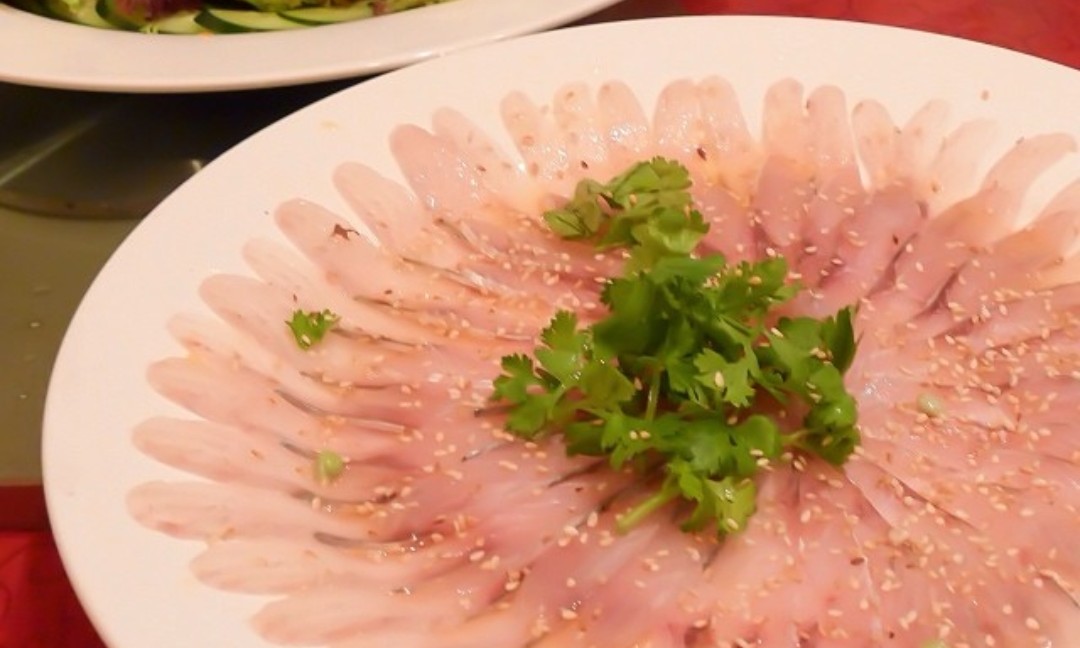
Sashimi fad in China sparks public health debate.
A warning against consuming freshwater sashimi highlights dangers posed by liver fluke Clonorchis sinensis, linked to serious health risks and recent infections in Zhengzhou, urging public awareness and safe food practices.
3–5 minutes




Leave a Reply