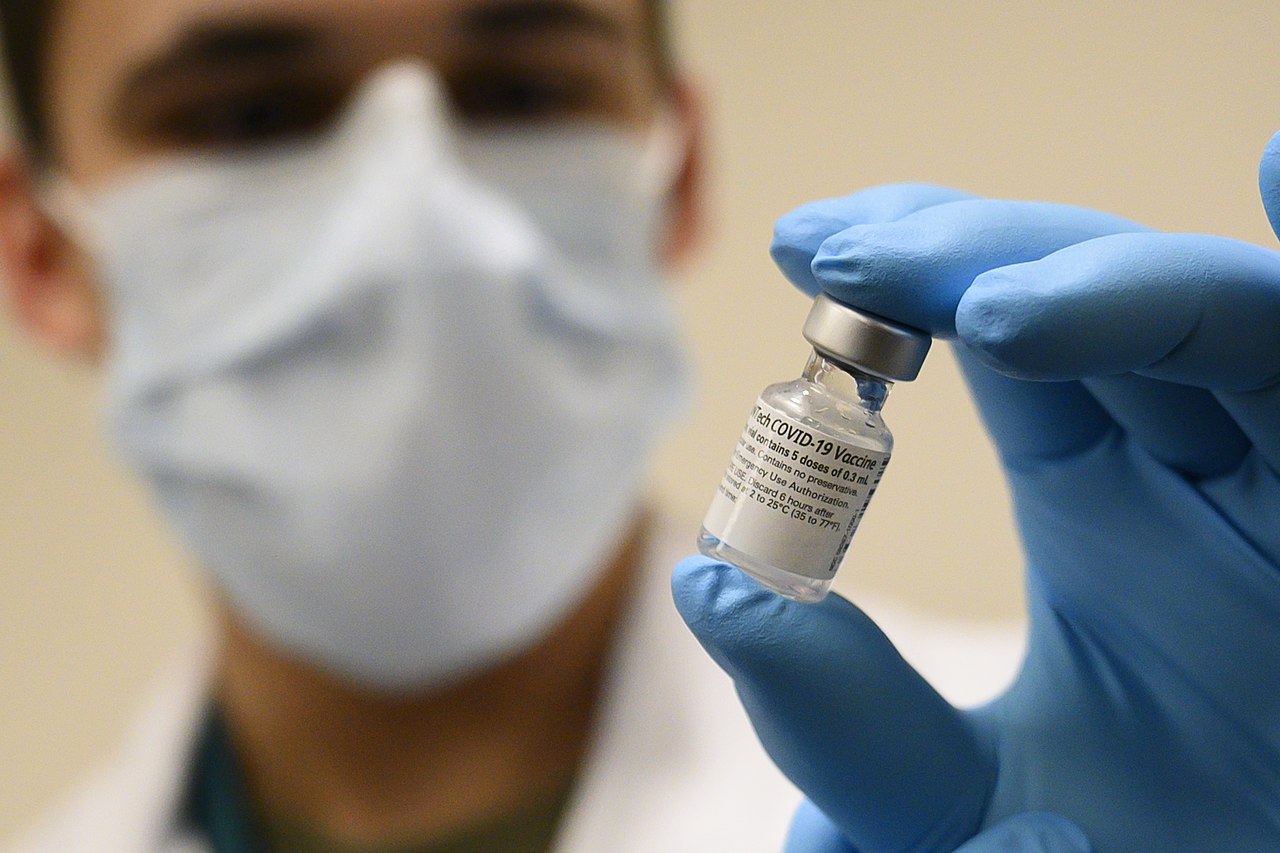
It’s been clear since the early days of the COVID-19 pandemic that vaccine access and distribution would become an issue determined by long standing global inequities. For the most part, this has come to pass. Rich countries have gobbled up available vaccines and developing countries have been left with little to nothing. One solution recently proposed is a radical solution that would go a long way toward fighting the virus. According to the Associated Press, “Across Africa and Southeast Asia, governments and aid groups, as well as the World Health Organization, are calling on pharmaceutical companies to share their patent information more broadly to meet a yawning global shortfall in a pandemic that already has claimed over 2.5 million lives. Pharmaceutical companies that took taxpayer money from the U.S. or Europe to develop inoculations at unprecedented speed say they are negotiating contracts and exclusive licensing deals with producers on a case-by-case basis because they need to protect their intellectual property and ensure safety.” Other proposals include pooling patents (supported by WHO) or a complete suspension of intellectual rights altogether (opposed by pharmaceutical companies and their governments). And then there is COVAX… https://bit.ly/3q77t08
COVID-19 vaccinations have begun to be rolled out in Africa. Per the BBC, “African countries are starting mass Covid inoculation drives using vaccines supplied through a scheme set up to share doses fairly with poorer nations. Ivory Coast is one of the first to benefit from the UN-backed Covax distribution initiative, with injections beginning on Monday. Ghana is also launching its vaccination drive this week. Ghana’s President Nana Akufo-Addo on Monday became the first to receive a coronavirus vaccine through the scheme. Mr Akufo-Addo urged people to get inoculated and not to believe conspiracy theories casting doubt on the programme, which will see some 600,000 doses of the Oxford-AstraZeneca vaccine rolled out nationwide on Tuesday.” This is obviously good news and hopefully the programs accelerate their pace as more vaccines come online. https://bbc.in/3sDmOqZ
Exercise is good for the body. Everyone knows that. It’s an important part of preventing and mitigating many non-communicable diseases. New evidence has added to the belief that it also helps fend off communicable diseases as well. “Writing in Nature, Shen et al. have solved part of the puzzle by identifying a role for movement in stimulating communication between one type of stromal cell and immune progenitors in mice, ultimately helping the animals to fight infection… The discovery that mechanosensitive osteogenic progenitors have a role in fighting bacterial infections is exciting. It was known that movement can stimulate the immune system, but the advance in Shen and colleagues’ work provides one reason why this is the case.” This is yet another reason for people to get up and start moving. https://go.nature.com/3bUtquB
Artificial Intelligence has written its first bit of literature. According to Science, “The result is far from William Shakespeare. After a few sentences, the program starts to write things that sometimes don’t follow a logical storyline, or statements that contradict other passages of the text. For example, the AI sometimes forgot the main character was a robot, not a human. ‘Sometimes it would change a male to female in the middle of a dialogue,’ says Charles University computational linguist Rudolf Rosa, who started to work on the project 2 years ago.” AI doesn’t have the ability to understand how combinations of words have meaning yet. Instead, it pairs words according to percentages. https://bit.ly/3dWL7Mw
Thanks for reading. Let’s be careful out there.


Leave a Reply