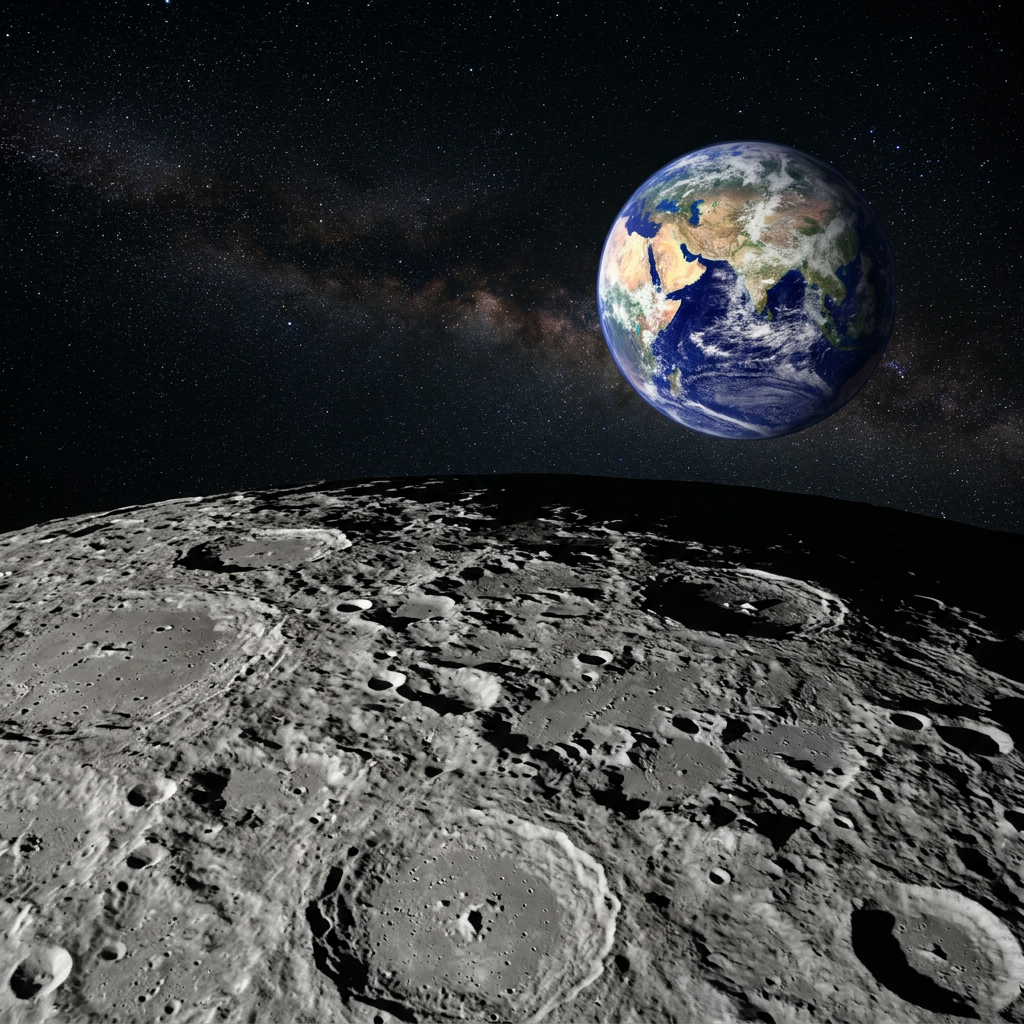
As space agencies around the world set their sights on sustained lunar exploration, a new review examines how intelligent robotic technologies could support the next generation of Moon missions, from autonomous rovers to robotic construction systems capable of operating in the Moon’s harsh and unpredictable environment.
The review surveys the state of the art in lunar robotics, covering autonomous navigation and perception, robotic manipulation, multi-robot collaboration, and human-robot interaction, all of which will be essential for building and maintaining infrastructure on the lunar surface. The authors argue that intelligent robots capable of operating with minimal human oversight will be indispensable given the communication delays and hazardous conditions involved in lunar operations.
Among the key challenges the researchers identify are the Moon’s extreme temperature swings, abrasive dust, low gravity, and lack of GPS, all of which complicate the design of robots that must operate reliably for extended periods. The review discusses how advances in machine learning, sensor fusion, and adaptive control systems are beginning to address these obstacles, enabling robots to navigate treacherous terrain, avoid hazards, and complete complex tasks with greater autonomy.
The authors also highlight the growing importance of multi-robot systems, in which teams of robots coordinate to accomplish tasks too complex or large-scale for a single machine, such as constructing habitats, deploying solar arrays, or extracting resources from the lunar regolith. Effective collaboration between robots, and between robots and human astronauts, will be critical to the success of long-duration lunar missions and eventual bases.
Looking ahead, the review outlines a roadmap for future research, emphasizing the need for more robust autonomy, improved energy efficiency, and better integration between robotic systems and human operators. The authors suggest that continued progress in these areas will be essential not only for lunar exploration but also for future missions to Mars and beyond.
Journal: Space: Science & Technology



Leave a Reply