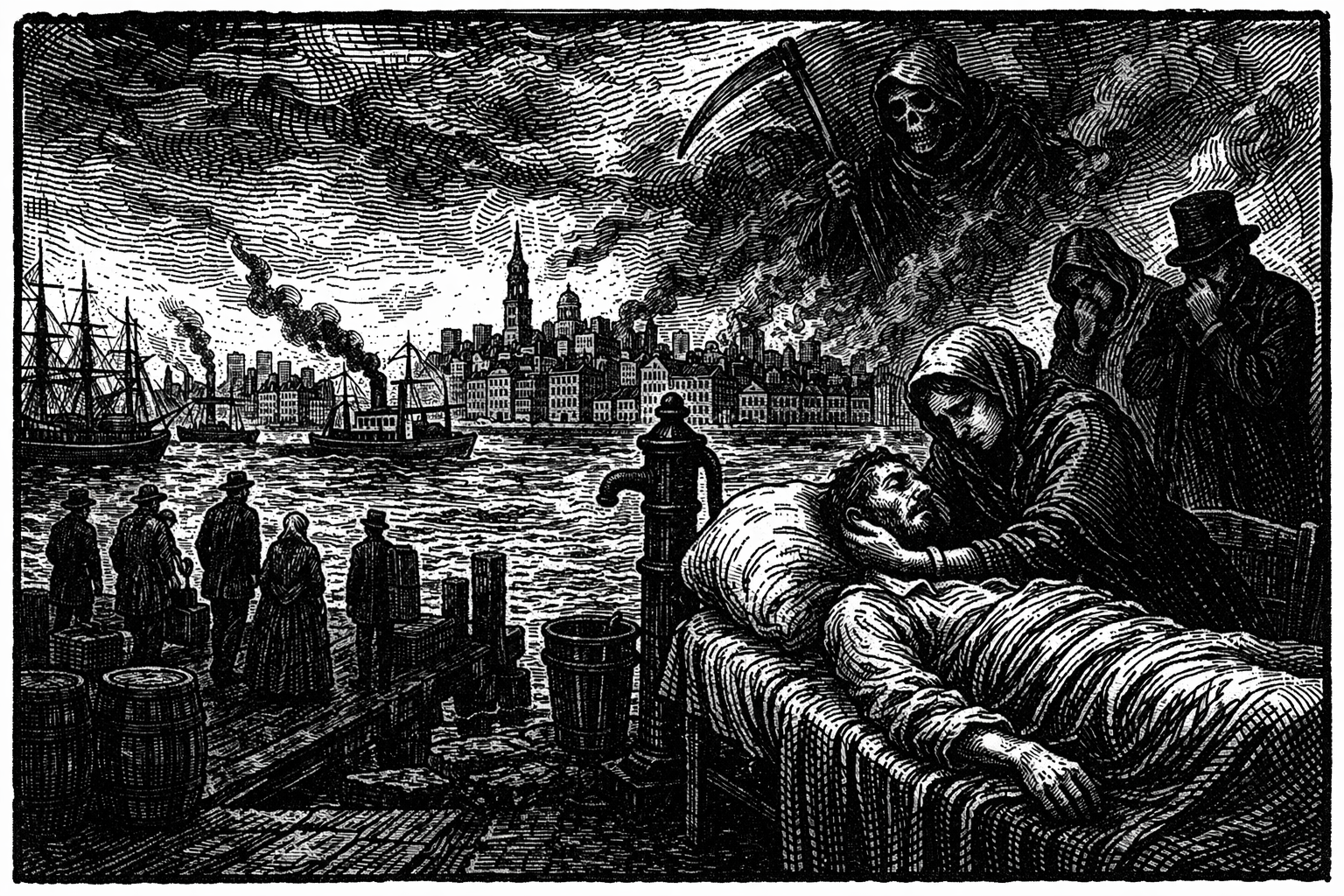
People die all sorts of ways. They always have. It’s a reality that’s unlikely to change any time soon. However, that’s not to say that discernible patterns do not exist. Different places and different eras suffer from afflictions that essentially take advantage of gaps in scientific knowledge.
The most recent example is the global COVID-19 pandemic, which ravaged the immunologically naïve global populace until science was able to formulate a plan of attack that included better therapy and prophylaxis.
Within months of the virus being sequenced in January 2020, researchers leveraged mRNA technology to develop vaccines that demonstrated over 90% efficacy against severe disease — a timeline unprecedented in vaccine history.
On the therapeutic front, antiviral drugs such as Paxlovid (nirmatrelvir/ritonavir) and remdesivir reduced hospitalization and death rates among high-risk patients, while corticosteroids like dexamethasone became standard of care for critically ill patients after clinical trials showed they significantly lowered mortality. Monoclonal antibody treatments offered additional protection to immunocompromised individuals who could not mount adequate responses to vaccination.
Meanwhile, improved clinical protocols around oxygenation, patient positioning, and ventilator management dramatically reduced intensive care fatality rates compared to the early months of the pandemic. Together, these advances transformed COVID-19 from an almost entirely uncontrollable threat into a manageable, if still serious, endemic disease.
Even with those advances, the carnage resulting from the pandemic is staggering. Over seven million confirmed COVID-19 deaths have been recorded worldwide, though excess mortality analyses suggest the true toll may fall between 19 and 36 million when accounting for indirect deaths caused by overwhelmed health systems and disrupted care. Mortality peaked globally in 2021 during the Delta wave, with the United States, Brazil, India, and Russia among the hardest hit nations. By cumulative losses, regional leaders included the United States at 1.23 million deaths, Brazil at 700,000, and India at 530,000.

During the 19th century, cholera swept across the globe in much the same way COVID-19 did in the 21st. The mid-1800s, in particular, represented the disease’s deadliest era in modern history. Deaths in India alone during the first three pandemics of the 19th century are estimated to have exceeded 15 million people. The individual outbreaks were staggering in scale: in Russia between 1847 and 1851, more than one million people died, while a two-year outbreak in England and Wales beginning in 1848 claimed 52,000 lives. City-level mortality was equally brutal — in Hamburg, almost 1.5 percent of the entire population perished during the cholera outbreak of 1892 alone. Case fatality rates reflected total medical helplessness: in 19th-century Denmark, mortality among those infected ran as high as 150 per 1,000 cases, meaning roughly 15% of confirmed cases died.
Death records from 1849 Newtown reflect the exact moment when the global cholera wave reached the dirt roads and farmlands of Queens. The first casualty was the 16-year-old son of Newtown’s most prominent and wealth Free Black citizen, Joseph Bounty. On May 6, amidst the second major U.S. cholera pandemic, Joseph Bounty Jr. died in Astoria which was still a part of Newtown Township. That the teenage son of a well-to-do businessman spoke to the indiscriminate nature of a disease that often plagued the poor and downtrodden unevenly. Bounty Jr.’s death signaled the opening act of a play that would play out locally until the dying days of summer.
*
In the autumn of 1848, a passenger ship carrying French and German emigrants docked in New York Harbor with several ill passengers aboard. Seven had already been buried at sea. Others were transferred to hospital wards on Staten Island — from which the disease escaped.1 The freezing temperatures of a New York winter slowed its advance, but cholera does not negotiate. By May 1849 it had crossed to Manhattan, and by June it had reached epidemic proportions. The city would not be free of it until the leaves turned again.
What followed was the deadliest cholera season in New York’s history. The Board of Health reported 5,017 deaths over the course of the summer, a figure that historians widely regard as an undercount.2 Deaths peaked at more than 2,600 in July alone, with 1,451 more recorded in August.3 For a city of roughly half a million people — its population having doubled in the seventeen years since the previous outbreak — the toll was staggering. It also followed a ruthless geography, concentrating overwhelmingly among the poor, the immigrant, and the Black.

The conditions that made 1849 catastrophic had been accumulating for decades. New York’s population had surged without any corresponding improvement to its sanitation infrastructure. Tightly packed tenement buildings and crowded boarding houses sheltered the city’s poor, while streets doubled the waste output of the 1832 epidemic with no new systems to manage it.4 Irish immigrants fleeing the famine at home had arrived in enormous numbers, settling into the most precarious and unhealthy housing the city offered.
The medical establishment offered little clarity. By 1849, laws requiring the licensing of physicians had been abandoned in several states, and many practitioners held credentials earned through only six months of study.5 The dominant theory of disease transmission — miasma, or the idea that illness arose from foul-smelling atmospheric vapors — remained entrenched, though it was beginning to fray. Most physicians accepted that cholera was ‘portable,’ meaning it could travel with people, but the precise mechanism of transmission remained unknown.6 That understanding would not arrive until Dr. John Snow’s landmark investigation of the 1854 Broad Street outbreak in London.
The Board of Health, constitutionally weak and resistant to anything that might alarm merchants, was largely absent from the early response. In the face of mounting evidence from Europe that an epidemic was on its way, the board set up a handful of cholera hospitals in public school buildings and declined to enforce sanitation measures.7 The city’s wealthier residents, following a pattern established in 1832, fled to the countryside — inadvertently spreading the disease along the roads leading out of Manhattan.
*
The racial dimensions of the 1849 outbreak were not incidental — they were structural. Cholera’s primary vector was contaminated water and the damp, poorly ventilated spaces where working-class New Yorkers lived. Black New Yorkers, confined to the city’s most precarious housing stock through the mechanisms of economic exclusion and residential segregation, were systematically more exposed.8

The pattern had been documented as early as 1819. In a report on that year’s epidemic, health investigators recorded that of 48 Black residents living in ten cellar dwellings, 33 had fallen ill and 14 had died — while not one of the 120 white tenants living in the floors directly above them had contracted the fever.9 The differential was not biological; it was architectural. Cellar dwellings — with no light, no ventilation, and pooling groundwater — recorded the highest infection rates in every outbreak. The origin of the 1849 epidemic itself was traced by investigators to a single cellar on Baxter Street, a space without air or light and with filthy water collecting outside the entrance.10
Completion of the Croton Aqueduct in 1842 had paradoxically worsened conditions for the poorest residents. The decline of backyard wells raised the water table, leaving cellar dwellers in damper and more hazardous circumstances than before.11 The infrastructure investment that brought clean water to middle-class New York widened the health gap rather than closing it.

Reconstructing the true mortality of 1849 is complicated by the fragility of the documentary record. Formal death registration did not exist in New York City before 1855.12 The 1850 federal mortality schedule — which captured deaths occurring in the twelve months prior to enumeration, roughly June 1849 through May 1850 — was compiled retrospectively, with enumerators canvassing households about recent deaths rather than drawing on official registrations. Local town registers, where they survive, used entirely different collection methods and time frames. Divergence between these sources should be expected.
The diagnostic terminology of the period adds further complexity. ‘Asiatic cholera,’ ‘cholera morbus,’ and ‘cholera infantum’ were applied inconsistently: cholera morbus described isolated cases not thought to be epidemic, and cholera infantum was used for any infant diarrheal death regardless of the prevailing outbreak.13 A death recorded as cholera morbus in a town register might be recorded simply as ‘cholera’ in a federal schedule, or omitted entirely. The moral stigma attached to the disease — widely understood as the affliction of the poor and dissolute — also suppressed reporting among wealthier families, for whom leaving a cause of death unstated was common practice.14
*
The 1849 epidemic did not end cholera’s hold on New York, but it accelerated the forces that eventually broke it. The city expelled more than 20,000 pigs from its streets that year, removing a significant source of contamination.15 Pressure mounted on the Board of Health and the city’s political leadership to take sanitation seriously as a matter of governance rather than charity. By 1864, a coalition of physicians had convened to survey sanitary conditions across the city; their work formed the Council of Hygiene and Public Health, whose 1865 report solidified the link between housing conditions and epidemic mortality and set the stage for the Metropolitan Board of Health, established in 1866.16
For the communities most exposed — poor Irish immigrants, Black New Yorkers in cellar and low-ground housing — the epidemic was not a discrete event but one acute chapter in an ongoing crisis of urban poverty and structural exclusion. The city’s eventual public health apparatus would arrive too late for those who died in the summer of 1849, and even after its arrival, its benefits were unevenly distributed. The geography of cholera mortality in nineteenth-century New York was, in this respect, a map of something larger than disease.

The story of cholera in nineteenth-century New York is, at its core, a story about the relationship between a society and its most vulnerable members — and about how long it takes institutions to act when the dying are poor, Black, or immigrant. The pattern is not confined to the 1800s. Every major epidemic in American history has exposed the same fault lines: inadequate infrastructure, fragmented public health authority, diagnostic confusion, and the stubborn tendency to attribute mass death to the moral failings of its victims rather than to the structural conditions that produced it.
The 1849 outbreak accelerated sanitary reform; the 1918 influenza pandemic eventually prompted investment in federal public health capacity; the HIV/AIDS crisis, after a decade of criminal governmental neglect, forced a reckoning with how the United States responds when the afflicted are deemed expendable. The COVID-19 pandemic represented merely the latest example. In each case, the arc from catastrophe to response followed roughly the same shape — delay, denial, disproportionate harm to marginalized communities, and ultimately an advance in collective knowledge purchased at enormous human cost. The cholera dead of 1849 are part of that longer ledger.
WORDS: Marc Landas and Scientific Inquire Staff.
Notes
1. The Village Sun, “Remembering New York’s Cholera Pandemic of 1832…and 1849,” April 23, 2020. https://thevillagesun.com/remembering-new-yorks-cholera-pandemic-of-1832and-1849.
2. New York Academy of Medicine Center for the History of Medicine and Public Health, “Quarantine in Nineteenth-Century New York,” April 14, 2020. https://nyamcenterforhistory.org/2020/04/14/quarantine-in-nineteenth-century-new-york.
3. The Village Sun, “Remembering New York’s Cholera Pandemic.”
4. Baruch College / CUNY, “New York City (NYC) Cholera Outbreak of 1849.” https://www.baruch.cuny.edu/nycdata/disasters/cholera-1849.html.
5. Ibid.
6. New York Academy of Medicine Center for the History of Medicine and Public Health, “Cholera Comes to New York City,” February 3, 2015. https://nyamcenterforhistory.org/2015/02/03/cholera-comes-to-new-york-city.
7. Baruch College / CUNY, “NYC Cholera Outbreak of 1849.”
8. Untapped New York, “12 Prior Epidemics That Plagued New York,” March 6, 2024. https://www.untappedcities.com/12-epidemics-that-plagued-new-york.
9. Columbia University Earth Institute, “Density, Equity, and the History of Epidemics in New York City,” June 30, 2020. https://news.climate.columbia.edu/2020/06/30/density-equity-history-epidemics-nyc.
10. Ibid.
11. Ibid.
12. The Village Sun, “Remembering New York’s Cholera Pandemic” (reader comments).
13. University of Massachusetts Lowell Libraries, “The 1849 Cholera Epidemic.” https://libguides.uml.edu/early_lowell/1849_cholera_epidemic.
14. The Village Sun, “Remembering New York’s Cholera Pandemic.”
15. The Village Sun, “Remembering New York’s Cholera Pandemic”; History.com, “How Pandemics Spurred Cities to Make More Green Space,” May 28, 2025. https://www.history.com/articles/cholera-pandemic-new-york-city-london-paris-green-space.
16. National Museum of Civil War Medicine, “The 1866 Cholera Epidemic.” https://www.civilwarmed.org/1866-cholera-epidemic.

COPY II (2-3 PARAGRAPHS)
IMAGE CREDIT: NASA.



Leave a Reply