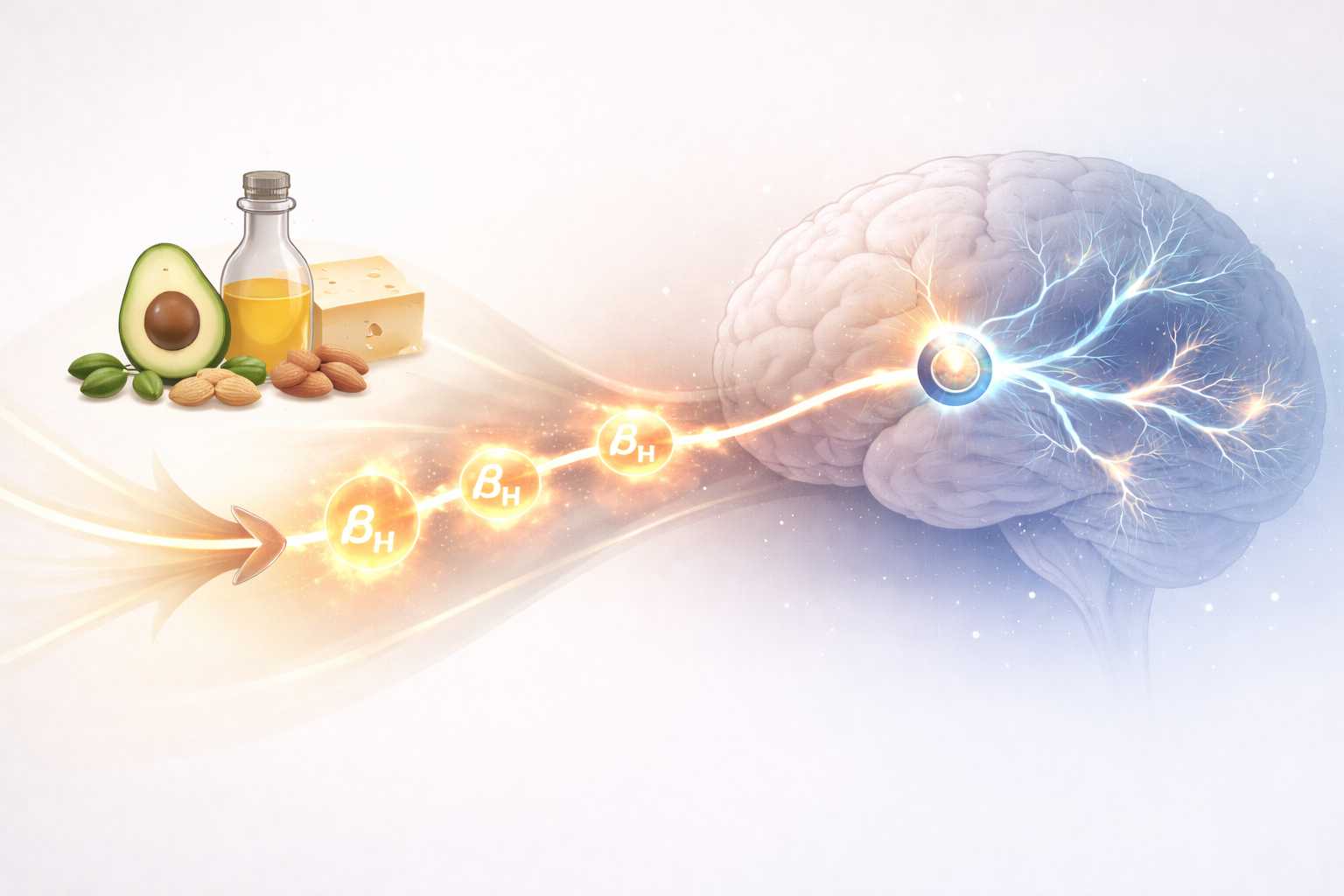
For more than a century, doctors have known that a high-fat, low-carbohydrate diet can dramatically reduce seizures in patients with epilepsy—even when powerful medications fail. What they didn’t know was exactly how this worked. Now, researchers at the University of Virginia have finally uncovered the molecular mechanism behind this therapeutic mystery, a discovery that could eventually allow patients to gain the benefits of the notoriously restrictive ketogenic diet without having to follow it at all.
The study, published in the Annals of Neurology, identifies a specific cellular receptor called hydroxycarboxylic acid receptor 2 (HCAR2) as the key player in translating the ketogenic diet’s effects into seizure protection. When the body breaks down fat for fuel—as it does on the keto diet—it produces molecules called ketone bodies. The most common of these, β-hydroxybutyrate, binds to HCAR2 receptors in the brain, calming overexcited neurons that would otherwise trigger seizures.
“The body converts the keto diet to a ketone body called β-hydroxybutyrate. We discovered that HCAR2 helps β-hydroxybutyrate reduce seizures by regulating the activity and communication of brain cells,” said Jaideep Kapur, the study’s senior author and co-director of UVA’s Brain Institute. “Many individuals are unable to tolerate the keto diet due to high fat content and side effects. This discovery helps find drugs that have the beneficial effects of the keto diet.”
A Therapeutic Tool From Ancient Times
The connection between diet and seizure control has been recognized since antiquity. Fasting as a treatment for epilepsy appears in the Hippocratic collection from the fifth century BC, where a man suffering from convulsions was reportedly cured through complete abstinence from food and drink. Biblical accounts also reference fasting as a treatment for seizures.
The modern medical application emerged in 1921, when Dr. Russel Wilder at the Mayo Clinic in Minnesota proposed that a specially designed diet might replicate the seizure-controlling benefits of fasting without requiring patients to starve themselves indefinitely. Wilder’s approach was elegantly simple: by dramatically restricting carbohydrates while increasing fat intake, the body would be forced to burn fat for fuel, producing ketone bodies in the blood—a state called ketosis. His initial trial on just three epilepsy patients marked the birth of the ketogenic diet as a medical treatment.
The results were remarkable. Dr. Mynie Peterman, Wilder’s colleague at Mayo, refined the protocol and reported in 1925 that 95 percent of 37 young patients showed improved seizure control, with 60 percent becoming completely seizure-free. Through the 1920s and 1930s, the ketogenic diet gained widespread use, with more than 400 patients enrolled in studies by the end of that decade.
Then came the pharmaceutical revolution. As new anticonvulsant drugs became available, the demanding dietary therapy fell out of favor. By the 1990s, only a handful of medical centers still offered it. The ketogenic diet had become a medical curiosity, remembered mainly as a historical footnote.
The Persistence of Drug-Resistant Epilepsy
The return to dietary therapy came from an unexpected place: the limits of modern pharmacology. Despite the development of more than 30 antiseizure medications over the past several decades, approximately 30 percent of people with epilepsy continue to experience seizures that do not respond to drug treatment. This condition, known as drug-resistant or refractory epilepsy, affects over 20 million people worldwide.
Research has shown that after two appropriately used medications fail to control seizures, the probability of achieving seizure freedom with subsequent drug trials drops dramatically. One landmark study found that while roughly half of newly diagnosed patients achieved seizure control with their first medication, only 13 percent responded to a second drug, and fewer than 4 percent responded to a third. For these patients, alternative treatments become essential.
The ketogenic diet’s renaissance began in 1994 when two-year-old Charlie Abrahams, who suffered from severe drug-resistant epilepsy and cognitive decline, was treated with the diet at Johns Hopkins Hospital. He became seizure-free within a month and never had another seizure. His father, Hollywood producer Jim Abrahams, publicized the story, creating a foundation that brought renewed attention to the treatment. A 2008 randomized controlled trial at Great Ormond Street Hospital provided rigorous scientific validation, showing that approximately 40 percent of children who started the diet experienced significant seizure reduction.
Today, clinical trials consistently demonstrate that ketogenic diet therapies can achieve what medications cannot for many patients. International consensus guidelines now recommend the diet as a first-line therapy for certain epilepsy syndromes, including glucose transporter deficiency, and for super-refractory status epilepticus when conventional treatments fail.
Unveiling the Mechanism
Despite decades of clinical success, the precise molecular mechanism underlying the diet’s effectiveness remained elusive. Researchers had proposed various explanations involving lactate dehydrogenase, ATP-sensitive potassium channels, and adenosine receptors. The UVA team took a different approach, focusing on HCAR2, a receptor that was first cloned in 2003 and was known to bind β-hydroxybutyrate.
The researchers mapped the receptor’s presence throughout the mouse hippocampus—the brain region where seizures often originate in temporal lobe epilepsy, the most common form of focal epilepsy in adults. They found HCAR2 concentrated in dentate granule cells, which function as “gatekeepers” controlling the flow of information into the hippocampus. When these neurons become too excitable, they can trigger seizures. The receptor was also present in microglia, the immune cells that patrol and protect brain tissue.
To test whether HCAR2 was truly responsible for the ketone body’s antiseizure effects, the team created mice lacking the receptor using CRISPR gene-editing technology. The results were striking. In normal mice, β-hydroxybutyrate calmed neurons by hyperpolarizing their resting membrane potential, raising the threshold required to trigger firing, and reducing overall neuronal excitability. In mice lacking HCAR2, the ketone body had no effect whatsoever.
The same pattern emerged in seizure models. When researchers induced status epilepticus—a life-threatening condition of prolonged seizures—in normal mice, β-hydroxybutyrate administration reduced both the duration and severity of seizures. In mice without HCAR2, the treatment produced no benefit. Similarly, in a kindling model that mimics chronic epilepsy, both β-hydroxybutyrate and niacin (vitamin B3, which also activates HCAR2) temporarily suppressed seizures in normal mice but not in those lacking the receptor.
Beyond the Diet
Perhaps the most exciting implication of the discovery is the possibility of developing drugs that activate HCAR2 directly, providing the brain benefits of ketosis without requiring patients to maintain an extremely restrictive diet. The ketogenic diet demands that roughly 90 percent of calories come from fat, with minimal carbohydrates—a regimen that many find intolerable. Common side effects include gastrointestinal distress, dyslipidemia, and micronutrient imbalances.
The researchers noted that niacin, an FDA-approved medication long used to treat cholesterol disorders, activates HCAR2 and showed antiseizure effects in their experiments. While more research would be needed to determine whether this benefit translates to human patients, the finding suggests a potential pathway to keto-like protection through a simple vitamin supplement.
“We are now exploring how this receptor modulates brain immune responses through microglia,” Kapur said. “These studies would allow us to come up with novel therapies for drug-resistant epilepsy and potentially other disorders such as multiple sclerosis and Alzheimer’s disease.”
The connection to neurodegenerative diseases is particularly intriguing. Hyperactive neurons are a hallmark not only of epilepsy but also of early Alzheimer’s disease and other conditions including autism. Previous research has shown that HCAR2 activation can reduce inflammation and protect brain cells through multiple pathways. The receptor appears to influence both the immediate electrical activity of neurons and the longer-term immune responses that shape brain health.
For the millions of people living with drug-resistant epilepsy, this discovery offers renewed hope. After a century of knowing that the ketogenic diet works without understanding why, scientists may finally have the molecular target needed to develop more accessible and tolerable treatments. The ancient wisdom that fasting could control seizures has been translated into modern molecular biology—and the implications extend far beyond epilepsy to a broader understanding of how metabolism shapes brain function.
Endnotes
- Naderi S, Williamson J, Sun H, et al. Hydroxycarboxylic Acid Receptor 2 Mediates β-hydroxybutyrate’s Antiseizure Effect in Mice. Annals of Neurology. 2025. DOI: 10.1002/ana.78098
- University of Virginia Health System. “Discovery reveals how keto diet can prevent seizures when drugs fail.” EurekAlert! January 15, 2026.
- Höhn S, Dozières-Puyravel B, Auvin S. History of dietary treatment from Wilder’s hypothesis to the first open studies in the 1920s. Epilepsy & Behavior. 2019;101:106588.
- Martin-McGill KJ, Bresnahan R, Levy RG, Cooper PN. Ketogenic diets for drug-resistant epilepsy. Cochrane Database of Systematic Reviews. 2020;6:CD001903.
- Thakur KT, Probasco JC, Hocker SE, et al. Ketogenic diet for adults in super-refractory status epilepticus. Neurology. 2014;82:665-670.
- Moutinho M, Puntambekar SS, Tsai AP, et al. The niacin receptor HCAR2 modulates microglial response and limits disease progression in a mouse model of Alzheimer’s disease. Science Translational Medicine. 2022;14:eabl7634.
- International League Against Epilepsy. “Food for thought: The ketogenic diet as epilepsy treatment.” Epigraph. 2020;22(5).



Leave a Reply