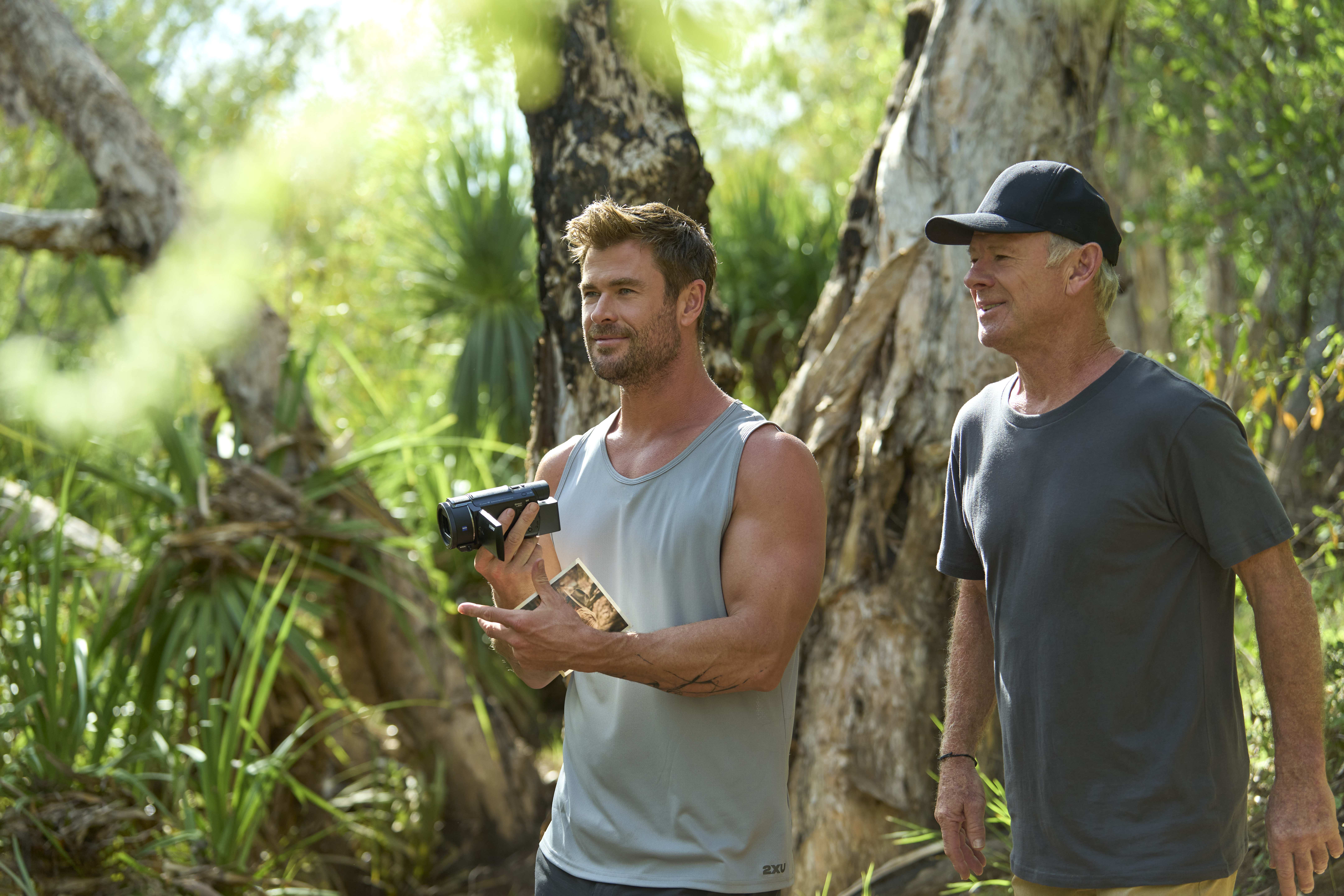
Today, more than 57 million people worldwide are living with dementia, with Alzheimer’s disease the most common cause. Against that stark backdrop, Chris Hemsworth: A Road Trip To Remember follows the actor on his most personal journey yet: an intimate motorcycle trip across Australia with his father, Craig, who was recently diagnosed with Alzheimer’s. Together they revisit people and places from their shared past—from suburban Melbourne to the wide open stretches of the Northern Territory—to see whether memory, connection, and nostalgia can act as a kind of medicine, stimulating mental activity while strengthening their bond.
Beneath the emotional surface of the film runs a serious current of science. Guided by dementia specialist and clinical psychologist Dr. Suraj Samtani of UNSW’s Centre for Healthy Brain Ageing, the documentary explores how social connection, reminiscence therapy, and community engagement can help protect brain health. Samtani’s research suggests that older adults experiencing “social frailty”—shrinking social networks and weakened support systems—face a roughly 50% higher risk of developing dementia, while those who maintain regular social ties can cut their risk in half. His work also extends into early pilot studies with Viv and Friends, emotionally attuned AI companions codesigned with women living with dementia, which aim to spark reminiscence, ease anxiety, and provide steady “social scaffolding” for people at risk of isolation.
In our Q&A, we speak with the film’s director, Tom Barbor-Might, about the challenge of turning these ideas into cinema. He discusses how the team worked with Samtani to “super-size” reminiscence therapy into a visual journey, the ethical and emotional stakes of filming a family confronting Alzheimer’s in real time, and the small, unscripted moments that stayed with him long after production wrapped. It’s a conversation about storytelling, science, and what it means to hold on to each other when memory itself becomes uncertain.
Marc Landas: Can you explain what reminiscence therapy involves?
Tom Barbor-Might: Reminiscence therapy is a type of therapy specifically aimed at people with dementia or aging brains in general. Alzheimer’s, obviously, is part of that.
It’s the therapeutic practice of working with people living with those conditions and using cues from their past—using the power of reminiscence—to reignite parts of the brain, to re-animate people, and to strengthen neural connections. By accessing our memories, it’s like giving the brain a workout. It activates areas of the mind that might not otherwise be engaged.
Recalling is actively good for us, and talking through those memories—reliving and re-experiencing them—is beneficial for our brain health. Reminiscence therapy connects to that principle.
In practice, it often involves an individual therapist or a carer talking with a patient or a group. They might listen to old songs together, look at photographs, talk about wedding days, share stories about when their kids were little. It can take many forms, but the key is active, attentive listening and therapeutic engagement that explores an individual’s past.
Often you see real improvements. People can become more vocal, and there can be a general uplift in quality of life and happiness and a greater sense of well-being.
Marc Landas: Does it tend to work better for people in the early stages of dementia as opposed to later stages?
Tom Barbor-Might: I think the reality is that, yes, it is probably more effective in the earlier stages. But that doesn’t mean it isn’t a powerful tool later on for people struggling with more serious aspects of the disease.
Dr. Suraj Sontani, who appears in the film and researches this, has remarkable anecdotes from therapeutic sessions with people who are close to nonverbal and whose disease is very advanced. Using these techniques can really bring people back—maybe only momentarily, maybe for a few hours, maybe for a period of time—but it can have a real, tangible impact.
Reminiscence and conversation can have meaningful, immediate effects even for people who are further along in the progression of the disease.
Marc Landas: In terms of pre-production, what kind of planning went into putting this together? How were the experiences chosen? What sort of consultation was involved?
Tom Barbor-Might: There was a long period of exploring what aspect of cutting-edge brain science we wanted to look at. What form of brain health or brain science were we going to explore?
We considered pharmaceutical interventions and asked, “What’s new, interesting, exciting, maybe even surprising—what’s delivering interesting results in the world of aging brains, Alzheimer’s, and dementia?”
When we came across reminiscence therapy, it very quickly became clear that this was really exciting new research. One of the interesting things about doing science television is when you find something that’s incredibly simple but very effective. As an intervention, it costs almost nothing. You need a therapist, a practitioner, or family members, of course, but this isn’t a hard, invasive intervention in someone’s body. That was really enticing.
As we went on and reminiscence therapy became the focus, we reached out to a wide range of field leaders—psychologists, researchers, universities. Eventually we met Suraj, whose work seemed absolutely perfect for the story we were telling.
We worked very closely with him to design a case study: What is reminiscence therapy, and what would a “super-sized,” cinematic version of it look like that still remains faithful and relevant, and clearly illustrates the power of the intervention?
So it was very much a collaboration with a wider group of experts, and then specifically with Dr. Suraj Sontani.
Marc Landas: Prior to going into full production, what was most important for you to get right? And what were some of your concerns?
Tom Barbor-Might: One of the key things was telling a story that was specific and honest to Chris, his father, and their wider family. I wanted it to be very true to their circumstances—who they are and what their relationships are like—but also relatable more broadly.
I wanted to find the universal in the specific. That was central to why we made the film. Hopefully the film will do some good. As you said, you’ve had personal experience with this, and I have as well. I think, as a culture and as communities and families, we don’t always talk about it very much.
So that was the ambition: that the film might help open up those conversations.
In terms of concerns, you’re putting someone else’s life on camera. That comes with a huge amount of responsibility. You have to do it properly, judiciously, and ethically.
One of the realities we discussed—Craig, Leonie, the rest of the family, and the team—was that filming someone with Alzheimer’s meant the disease would likely manifest at some point during the shoot. Then the question becomes: are we going to include that?
It felt disingenuous not to, and it also felt like that was the point of why Craig was doing this—to be brave enough to show the reality of the disease, how scary and difficult it is, but also to show how we can talk about it.
We spent a long time creating our “rules of engagement”: what consent looked like, how consent would continue all the way through the edit, how and when anyone could stop the cameras. There was a whole framework in place.
That was one of my main concerns: this is a vulnerable situation. How do we behave responsibly?
Marc Landas: What moments stand out to you?
Tom Barbor-Might: There are a few. There’s a fun one: I absolutely love Chris’s first film, The Crocodile Hunter. It still makes me laugh.
But there are also emotional moments that really stand out. There are a couple of scenes where viewers will see manifestations of Alzheimer’s, which are difficult and moving.
One of my favorite moments is when Leonie, Chris’s mum, describes how frightening it is to feel that the relationship might be changing. She says something along the lines of, “I want to be his partner, not his carer.”
I think that’s a side of things we don’t talk about enough—the impact on family members and the wider circle around the person with the disease. I find that moment very moving and honest.
And then, without spoiling it, Chris’s final moments in the film are, to me, really revelatory and beautiful.
Marc Landas: You mentioned “rules of engagement,” and you’ve already touched on part of my next question. How did you go about navigating the really intimate moments?
You obviously have something you need to capture as a director, but you’re also literally putting a camera in people’s faces at very vulnerable times. The rules are there, but I’m sure you pushed up against them at times. How did you navigate that?
Tom Barbor-Might: Trust becomes incredibly important. I’d spent a lot of time with the family and had worked with Chris before, so that sense of trust was key.
We had a shared understanding that we were going to film and keep the cameras rolling, but ultimately they could stop everything at any time. That was one of the core rules.
You’re right: the nature of being a director is that you want to get the material, and that can put you right up against ethical decisions. But we always felt that Craig and the situation came first; the film came second.
One way we tried to be transparent about that was by allowing those moments where the cameras do cut to be visible in the film. Showing that the set was “open” in that way was important—not just to be honest with the audience, but to be open and honest with the family as well.
So we allowed them to stop at any moment, to cut at any moment, and we were determined never to get close to creating distress. That was an absolute rule.
Marc Landas: You’ve kind of answered my last question already, but I’ll ask it anyway: what do you want audiences to take away from the film?
Tom Barbor-Might: Two things. First, I hope it shines a light on something a lot of people experience but don’t necessarily talk about very much. I really admire Craig for being so brave in sharing this.
Second, I hope people see that relatively simple, straightforward interventions—like reminiscence therapy—can have profound impacts on quality of life, and potentially even on the progression of the disease.
There’s also a thread in the film, which you’ll know, Marc, from having seen it: Chris talks about wanting to have a conversation with his father but not quite being able to. There’s his father’s stoicism, the desire not to confront things or make people uncomfortable.
I hope people take away the idea that time is very precious; the present is what we have. Have the conversations you want to have.
“Chris Hemsworth: A Road Trip To Remember” premiers tonight on National Geographic.
IMAGE CREDIT: National Geographic/Craig Parry



Leave a Reply