First drug approved for mitochondrial disease hints at a new era for rare genetic disorders
Regulators have cleared the first medication specifically for a primary mitochondrial disease, a milestone that could unlock investment and clinical trial momentum across a historically neglected field. Researchers note that dozens of mitochondrial conditions—caused by mutations in nuclear or mitochondrial DNA—lack treatments; the newly approved therapy validates disease mechanisms and trial endpoints that could translate to others. Scientists are also testing nucleoside bypass, allotopic expression, and mitochondrial base-editing approaches. Patient advocates say standardized outcome measures and natural history data built over the past decade helped tip the balance. While not a cure, the approval reframes mitochondrial disease as tractable, with combination strategies and earlier diagnoses expected to expand impact. (Science)
“I was off the grid”: Fred Ramsdell reacts to Nobel after backcountry trip
WIRED’s interview captures the human side of a genetics-driven immunology breakthrough. Co-laureate Fred Ramsdell describes learning about the Nobel while emerging from a three-week backpacking trek. The piece recounts how he and Mary Brunkow traced a lethal mutation in “scurfy” mice to FOXP3, cementing regulatory T cells as the immune system’s genetic brakes. Ramsdell reflects on the path from biotech benchwork to today’s Treg-engineered therapeutics and on how basic gene discovery can ripple into clinical practice years later. It’s a reminder that seminal advances often begin with odd animal phenotypes and careful genetic sleuthing—and that the people behind them are, well, people. (WIRED)
How genome “loops” may have enabled complex life to arise
Quanta reports on new work arguing that the physical folding of DNA—bringing far-flung genes and enhancers into contact—was a turning point in life’s complexity. The study connects 3D genome architecture to developmental gene regulation, proposing that long-range control circuits emerged early and were refined across animal lineages. By mapping chromatin loops and regulatory topology, researchers show how spatial genome organization can switch, combine, or insulate programs that build tissues. The piece situates the findings within debates on when and how regulatory innovation outpaced new genes themselves, suggesting that folding-driven logic circuits helped multicellularity flourish. It’s a genetics-meets-physics narrative with implications for evolution and disease. (Quanta Magazine)
A “social network” of bacterial genes reveals antibiotic targets
A new technique called Dual Tn-seq maps pairwise genetic interactions across bacterial genomes at scale, revealing vulnerabilities that single-gene screens miss. By barcoding two transposon insertions per cell and using Cre recombinase to stitch barcodes, researchers profiled ~73% of 1.3 million possible gene-pair deletions in Streptococcus pneumoniae. The network exposes synthetic-lethal partnerships—gene pairs bacteria “can’t live without” together—pinpointing combo-therapy targets resilient to resistance. Published in Science, the approach generalizes to pathogens and stress conditions (e.g., antibiotic exposure), offering a roadmap for next-gen antimicrobials rooted in systems genetics rather than single nodes. (Phys.org)
Lizard color genetics plus a finance-inspired model recast evolution’s tempo
A University of Queensland team pairs vivid lizard coloration genetics with a mathematical framework borrowed from finance to link microevolution (short-term selection) and macroevolution (long-term diversification). The model suggests how trait shifts observed within species can compound into lineage-level patterns over millions of years, addressing a long-standing debate on whether microevolution fully explains macroevolution. By quantifying selection on color morphs and projecting its effects, the work offers a testable bridge between population genetics and phylogenetics. It adds rigor to “how small changes add up,” with potential to generalize to other traits and clades. (Phys.org)
Genomic forensics link pet and human infections in One Health warning
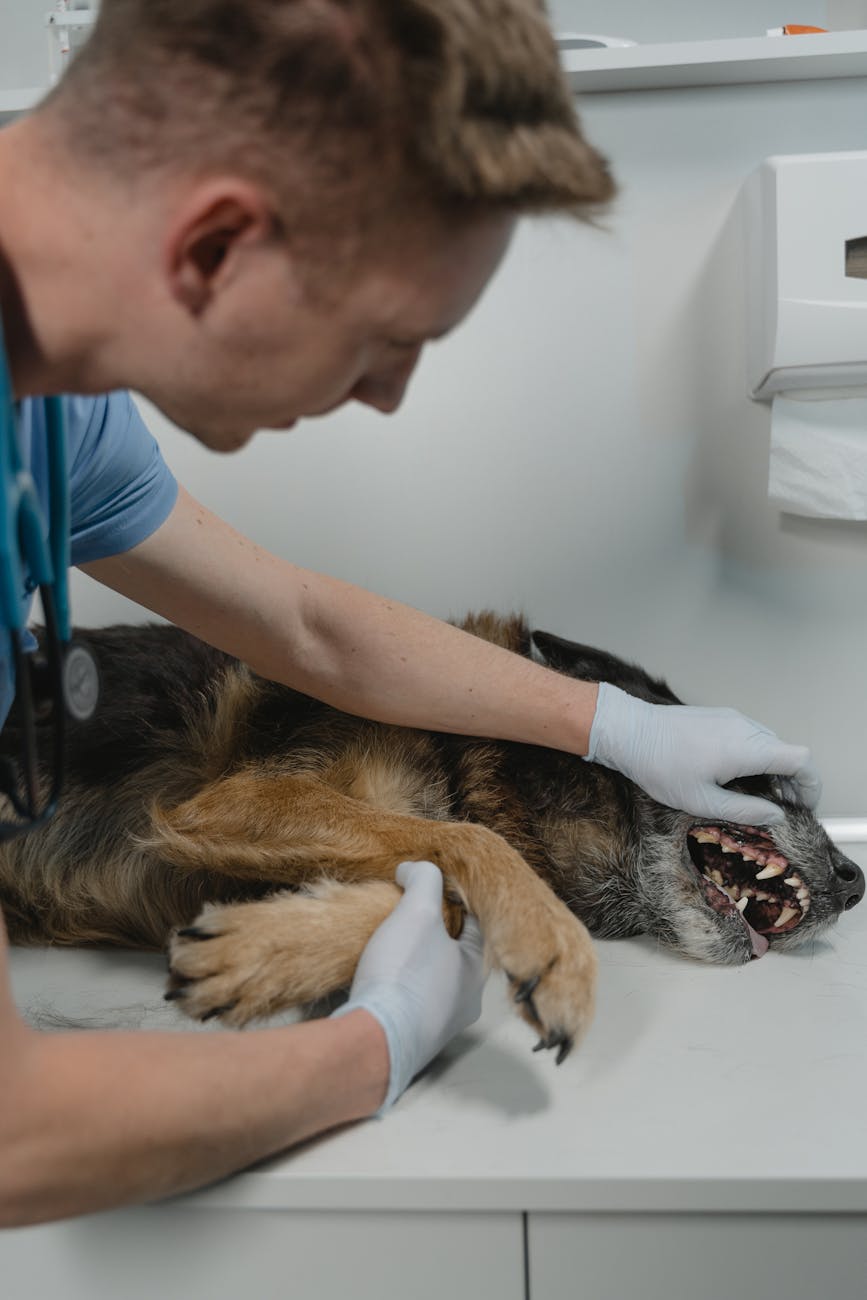
Two investigations in Massachusetts trace multidrug-resistant E. coli clusters across veterinary and human settings, finding closely related strains that point to pet–owner transmission. Using molecular typing and epidemiologic interviews, teams mapped overlapping exposures and antimicrobial histories, underscoring how companion animals can serve as reservoirs or conduits for resistance genes. The findings, reported in Clinical Infectious Diseases, bolster calls for integrated surveillance that spans clinics, hospitals, and households—and for stewardship policies that coordinate veterinarians and physicians. For genetics watchers, it’s a reminder: plasmids and mobile elements ignore species lines. (CIDRAP)
Why the Nobel matters scientifically: a clear explainer on Tregs and tolerance
Scientific American walks through how Tregs keep self-reactive T cells in check, why FOXP3 is central, and where therapies are headed. Beyond autoimmunity, the piece notes transplant tolerance and even cancer contexts, where dialing Tregs down can boost anti-tumor immunity. The article synthesizes decades of genetics and mouse-to-human translation into a crisp primer, situating today’s cell-therapy pipelines. It also highlights how recognizing basic regulatory circuits—encoded in gene programs and reinforced by epigenetics—can yield precision interventions that modulate, rather than blunt, immunity. (Scientific American)
Some neuronal genes accumulate mutations with age—others don’t
Profiling brains from ages 1 to 104, researchers show that somatic mutations do not accrue uniformly: certain neuronal genes pick up changes disproportionately, potentially shaping late-life vulnerability. The study, summarized by The Scientist, used targeted sequencing to chart mutation burdens, flagging pathways tied to synaptic function and neurodegeneration. The pattern suggests selection and repair biases across the neuronal genome, with implications for Alzheimer’s and Parkinson’s biology and for therapeutic targeting of genomic maintenance. While correlative, the work strengthens the case that aging is, in part, a gene-specific mutational story—not just a genome-wide drift. (The Scientist)
How Treg genetics reshaped medicine
Ars Technica recaps the Nobel’s scientific arc: puzzling mouse phenotypes led to FOXP3’s identification, revealing a master regulator that programs regulatory T cells. By defining the genetic circuitry of immune tolerance, the laureates created a platform for targeted therapies—expanding beyond blanket immunosuppression toward cell-based precision. The piece places Tregs within broader immuno-oncology and autoimmunity landscapes, where modulating these cells—either boosting or inhibiting—has become a central clinical strategy. It’s a concise overview of how gene discovery, model organisms, and translational immunology converged into today’s pipelines. (arstechnica.com)




Leave a Reply