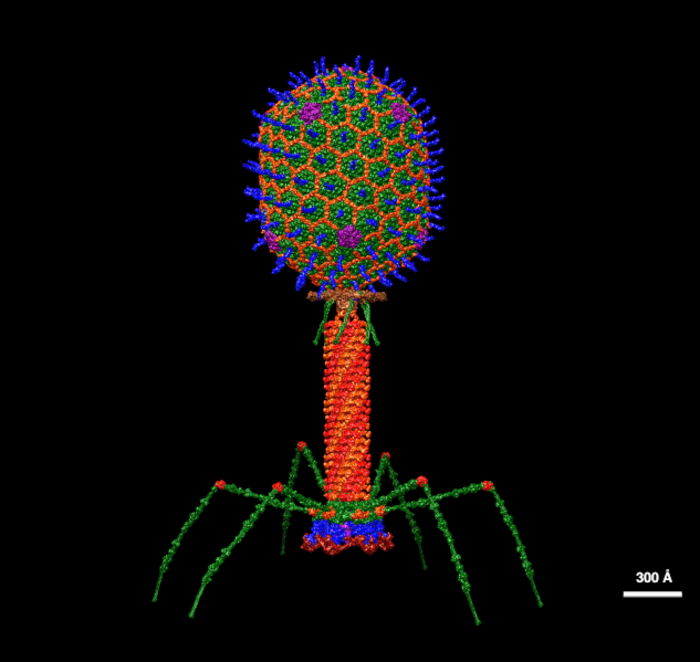
In a major advance for infectious disease treatment, researchers from Monash University and The Alfred have developed a bespoke phage therapy product that uses bacterial viruses, known as ‘bacteriophages’, to combat a highly problematic, antimicrobial resistant bacteria.
The treatment, named Entelli-02, is a five-phage cocktail designed specifically to target Enterobacter cloacae complex (ECC), a group of bacteria responsible for severe, often difficult-to-treat infections.
The study, published in Nature Microbiology, was led by Professor Jeremy J. Barr from the Monash University School of Biological Sciences, with Professor Anton Peleg from the Department of Infectious Diseases, The Alfred and Monash University as co-senior author, and represents a new approach for precision medicine in hospitals battling antimicrobial resistance (AMR).
“This is the first time we’ve designed and developed a clinical-ready phage therapy product tailored to an AMR bacterial pathogen at a local hospital,” said Professor Barr, senior author of the study. “Entelli-02 is not just a scientific achievement, it’s a clinical tool built for frontline use against deadly, drug-resistant, bacterial pathogens.”
Enterobacter infections are notoriously difficult to treat and have been linked to over 200,000 deaths globally in 2019. They have emerged in hospitals around the world and have the capacity to develop resistance to many of the last-line antibiotics.
Using a decade’s worth of bacterial isolates, lead author on the study Dr Dinesh Subedi said the research team developed and produced Entelli-02 through a rigorous process of phage isolation, genetics and preclinical testing.
Sign up for the Daily Dose Newsletter and get every morning’s best science news from around the web delivered straight to your inbox? It’s easy like Sunday morning.
“We initially began with three phages in our cocktail, but through iterative design, we improved the cocktail by genetically adapting the viruses to expand their host range, followed by selection of two additional phages with improved treatment outcomes,” Dr Subedi said.
“The final product, Entelli-02, contains five phages that can kill a broad range of Enterobacter isolates and reduce bacterial loads in infected mice by over 99 per cent.”
Entelli-02 was manufactured as a therapeutic-grade phage product at the Monash Phage Foundry, meeting sterility and safety standards for intravenous use under Australia’s Therapeutic Goods Administration Special Access Scheme.
“This is a blueprint for how hospitals can respond to AMR outbreaks with precision therapies,” Professor Barr said.
Professor Peleg said: “We’re bridging the gap between broad-spectrum antimicrobial treatments and personalised phage therapy to deliver a ready-to-use solution that’s both targeted and scalable. We are now ready with an off-the-shelf product to promptly support the treatment of some of our most difficult infections”.
The research was a collaboration between Monash University’s Centre to Impact AMR, the Department of Infectious Diseases at The Alfred, and the Monash Biomedicine Discovery Institute. Lead contributors include Dr Dinesh Subedi, Dr Fernando Gordillo Altamirano and Professor Anton Peleg.
Entelli-02 is now available for compassionate use and sets the stage for future clinical trials using phage products. The team hopes this hospital specific phage cocktail model can be replicated in other hospitals facing similar AMR threats.
“Antibiotic resistance is one of the biggest challenges in modern medicine,” Professor Barr said. “With Entelli-02, we’re showing that phage therapy can be precise, powerful, and ready for clinical deployment.”

Leave a Reply