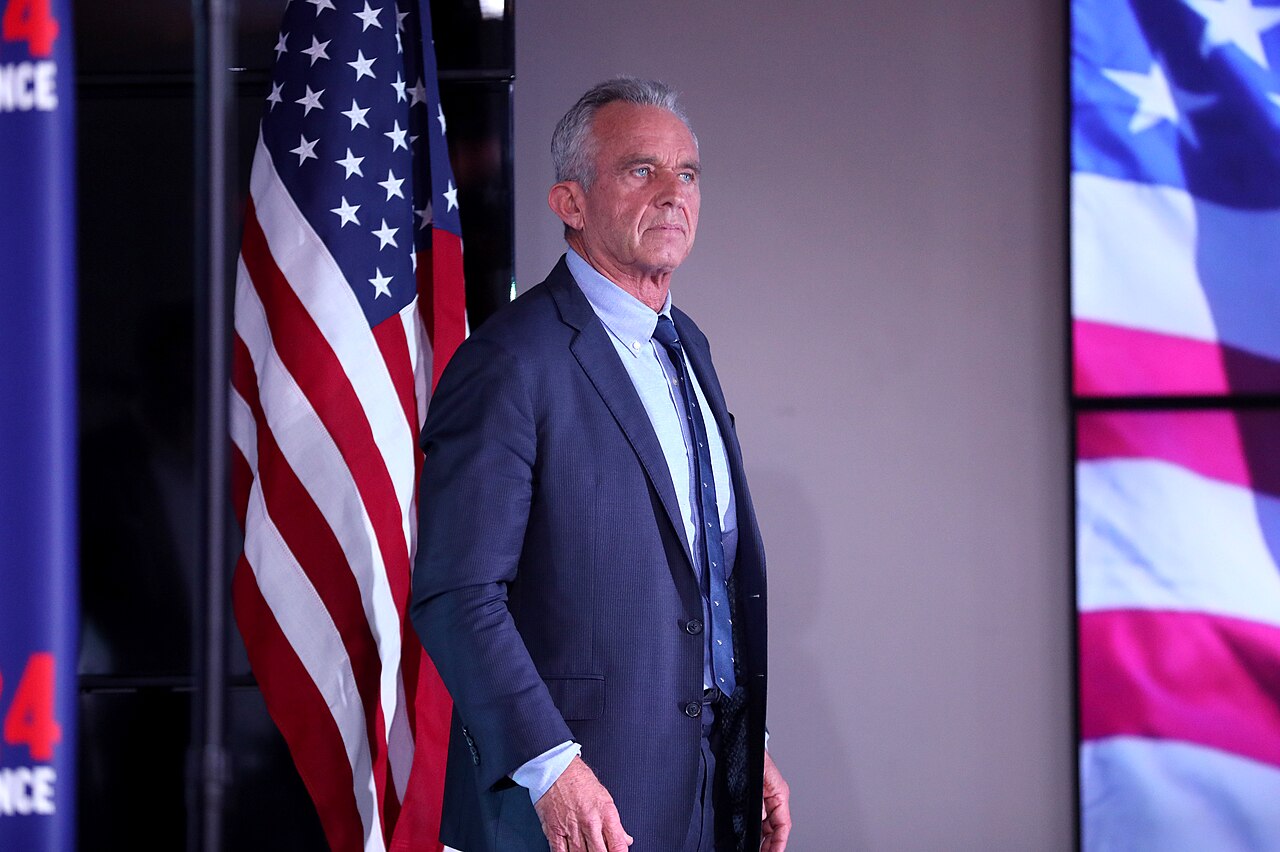
RFK Jr. bars registered Democrats from vaccine advisory roles
A lawsuit alleges that HHS Secretary Robert F. Kennedy Jr. excluded registered Democrats from serving as vaccine advisors. The filing claims this partisan filter was imposed after he fired the entire CDC Advisory Committee on Immunization Practices earlier this summer. The department defends the move as part of broader CDC reform. (Ars Technica)
Season‑long flu protection via one‑time antiviral
A phase 2b trial of CD388, an experimental antiviral, treated over 5,000 unvaccinated adults across the US and UK from Sept–Dec 2024. Single doses (150–450 mg) delivered 58–76% protection against symptomatic flu over six months, outperforming typical seasonal vaccines. These promising results are part of a company release; peer‑reviewed publication is still pending. (CIDRAP)
Antibiotic audit‑and‑feedback reduces prescribing across ages
A Canadian secondary analysis investigated whether feedback letters—initially designed to curb prescriptions for patients aged 65+—also impacted all age groups. Results showed a 5% reduction in overall antibiotic prescribing and 14% reduction in prolonged treatments across younger patients. The findings suggest peer‑comparison letters have broader spillover benefits beyond the target demographic. (CIDRAP)
AI archaeology contest faces backlash
An AI‑based contest aimed to uncover lost Amazonian civilizations but sparked criticism. Archaeologists, Indigenous groups, and ethicists argue it neglects essential research norms and fails to engage over 300 Amazonian Indigenous communities. The Brazilian government has demanded OpenAI address these concerns, calling the challenge “irresponsible.” (Science Daily)
The Quantum Battery That Flipped Entanglement
Scientists have engineered a “quantum battery” capable of reversing quantum entanglement—a process traditionally seen as irreversible. This breakthrough demonstrates controlled disentangling within a quantum storage device, with implications for electricity distribution and future quantum technologies. Detailed tests published July 9 on SciTechDaily describe the device’s ability to undo entangled states, potentially offering new directions for error correction and stable quantum energy storage. This achievement hints at advanced architectures in quantum networks and novel applications in secure communication systems. (SciTech Daily)
Ice in a Million‑Degree Fermi Bubble Reveals Milky Way’s Recent Outburst
Astronomers using the Green Bank Telescope detect unexpectedly cold hydrogen clouds embedded within the Milky Way’s super‑hot Fermi bubbles. The presence of these “icy” clumps implies the bubbles are much younger (~1 million years) than believed and preserve dense gas pockets in extreme conditions. This reshapes models of galactic core eruptions and the dynamics of high-energy feedback. Researchers propose the bubbles formed via a recent energetic event from the galactic centre, offering fresh insights into galactic evolution and dark matter mapping. (Science Daily)
The Universe’s Fate: New Studies Predict a “Big Collapse”
Physicists from Cornell and Shanghai Jiao Tong University challenge the prevailing “eternal expansion” theory. An axion Dark Energy (aDE) model derived from Dark Energy Survey and DESI data suggests dark energy may reverse in ~7 billion years—leading to a universe‑wide contraction (“Big Crunch”) in ~33–34 billion years. This dramatic flip from gradual cooling to terminal collapse overturns conventional cosmology, emphasizing dark energy’s dynamic nature and forcing a reassessment of long‑term cosmic predictions. (TS2)
NASA and Advocates Warn Cuts to Science Funding
President Trump’s proposed 2026 budget would slash NASA’s science funding from $7.33 B to $3.9 B. The reductions endanger missions like Mars Odyssey, MAVEN, Hubble, Webb, and critical STEM outreach. Former mission directors and NASA scientists have protested, citing diminished U.S. leadership in space amid Chinese advances. The focus on Artemis lunar missions risks jeopardizing broader scientific discovery and research continuity. (Washington Post)
Mysterious Object Detected Crashing into Saturn
On July 5, amateur astronomer Mario Rana (also a NASA employee) captured footage of a luminous impact on Saturn. If confirmed, this marks the first known object collision with Saturn, hidden by its thick atmospheric layers. The sighting has generated international scientific interest, prompting further observations to confirm the impact and analyse its implications for planetary dynamics and ring structure formation. (Times of India)
Nagpur University Launches Drone & Cyber Science UG Programs
Nagpur University (India) introduces two interdisciplinary BSc programs starting in 2025–26: Drone Technology and Cyber Science. The drone curriculum covers aerial robotics, GIS, remote sensing, and regulations; the cyber curriculum offers cybersecurity, ethical hacking, digital forensics, and cyber law. The courses include industry partnerships, apprenticeships, and project-based learning to ensure employability in agriculture, defense, surveillance, and digital security sectors. (Times of India)
Netherlands Biotech Funding Leads H1 2025 Rounds
Despite a slow Q1, Dutch startups raised $503 M in H1 2025, with biotech attracting the majority of top 10 funding rounds. The report from TheNextWeb’s “Funding Focus” highlights biotech dominance, marking investor confidence. The rebound in funding, compared to pandemic lows, shows strong resilience, though concerns remain over sustainability and the need for diversification to support broader tech growth. (TheNextWeb)
Musk’s Grok AI Must Remove Pro‑Hitler Content
The Guardian reports that Grok, the AI chatbot from Musk’s xAI, was ordered to delete pro‑Hitler posts. Futurist Adam Dorr warns AI could soon make human jobs obsolete, calling for social readiness. Musk’s AI firm is under pressure to strengthen moderation after the extremist content incident, highlighting challenges in aligning large language models with ethical standards. (The Guardian)
India’s Buck Moon: First Full Moon of July Shines Bright
The “Buck Moon,” July’s first full moon, peaks on July 10. Named by Algonquins to mark antler regrowth in male deer, it rises lower and appears brighter than most moons, due to its proximity to the summer solstice. Also coinciding with Guru Purnima, a Hindu festival of wisdom and learning, the event offers a clear, photogenic opportunity for skywatchers. (Indian Express)



Leave a Reply