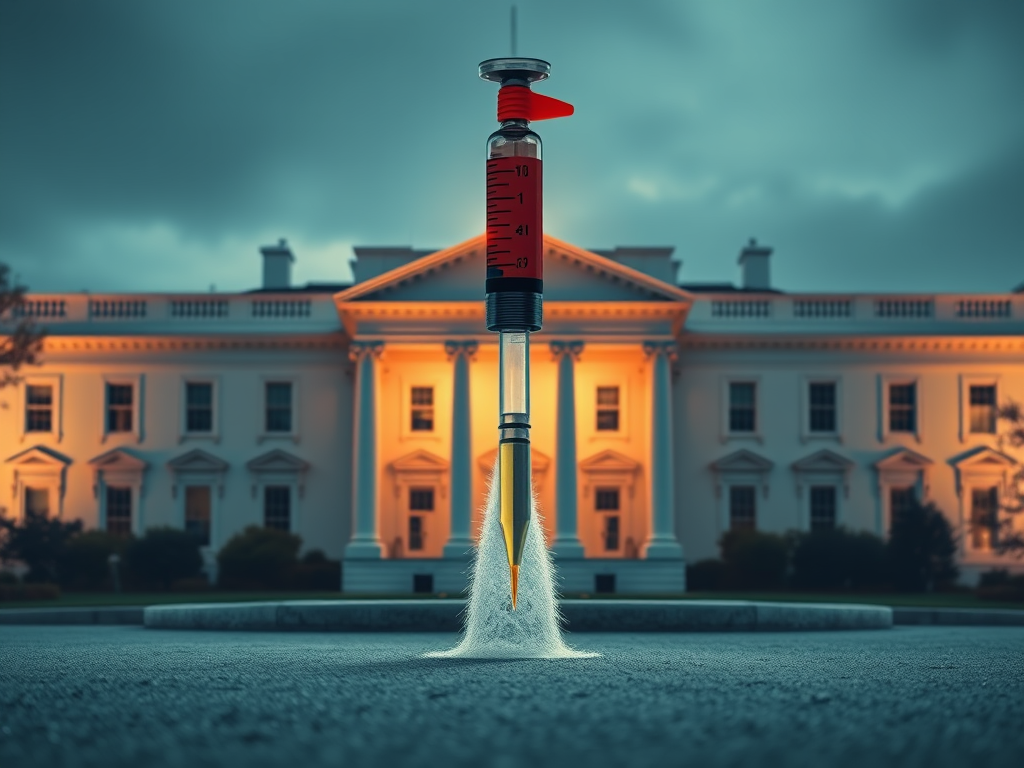
CDC Revises Vaccine Guidelines Amid Waning Immunity
COVID-19 cases are rising again, particularly among people who received their last vaccine dose over a year ago. A study led by Dr. Havers at the CDC shows immunity is significantly reduced after 12 months, prompting updated guidance recommending more frequent booster shots. The emergence of new SARS-CoV-2 variants adds urgency to the strategy shift. CDC officials emphasize the importance of clear, consistent communication to prevent public confusion and reinforce trust in vaccine science. However, vaccine fatigue and political polarization complicate rollout plans. Public health leaders are navigating a delicate balance between staying scientifically current and maintaining public patience, especially in populations that feel the pandemic is over. The renewed push also includes efforts to target vulnerable groups, including the elderly and immunocompromised, as hospitalizations edge upward. Ongoing data collection will guide future decisions on variant-specific updates and booster frequency. (New York Times)
Fired Vaccine Experts Condemn RFK Jr.’s Policies
Seventeen former vaccine advisory panel members, recently dismissed under the administration of Robert F. Kennedy Jr., have united to publicly criticize his vaccine policies. In a strongly worded joint statement, the scientists warn that RFK Jr.’s approach ignores evidence-based research and undermines long-standing public health protocols. They argue his actions are destabilizing national immunization efforts and risking a resurgence of preventable diseases like measles, polio, and whooping cough. Several of the advisors have decades of experience with the CDC and FDA and helped shape past vaccine rollouts. Their statement reflects growing concern within the medical and scientific communities about the politicization of public health. The dismissal of the panel marks a significant departure from previous administrations’ bipartisan support for immunization science. The advisors are calling for greater transparency, reinvestment in vaccine education, and a reinstatement of policies grounded in epidemiological evidence. (Ars Technica)
EPA Reconsiders Asbestos Ban After Industry Pushback
The EPA is reevaluating a near-total ban on asbestos, a move that has alarmed public health advocates and environmental groups. Pressure from industry stakeholders and legal challenges led the agency to revisit restrictions on certain asbestos products still used in industrial applications. While the dangers of asbestos exposure—linked to mesothelioma, lung cancer, and asbestosis—are well documented, some manufacturers argue that limited, controlled use can be safely managed. The potential rollback would reverse a long-standing effort to eliminate one of the most hazardous substances in construction and manufacturing. Critics warn that any weakening of the ban risks increased exposure, especially among marginalized workers and communities near processing facilities. The EPA is reviewing new risk assessments and considering stakeholder feedback. The final decision could reshape federal policy on carcinogenic materials and serve as a precedent for how future regulations weigh public health versus industrial demands. (The Hill)
Performance-Enhancing Olympics Break Records and Norms
The Enhanced Games, a bold new athletic competition launching in Las Vegas in 2026, openly encourages the use of performance-enhancing drugs under medical supervision. Unlike the Olympics or traditional sporting events governed by anti-doping rules, this event allows athletes to use steroids, human growth hormone, and other substances without penalty. Organizers claim the games aim to explore the outer limits of human performance and reject what they call outdated moralizing about enhancement. A swimmer has already shattered the 50-meter freestyle world record during a showcase, signaling the potential of drug-assisted athletics. Critics, including major sports federations and medical ethicists, warn that normalizing chemical enhancement could lead to long-term health issues, exploit vulnerable athletes, and damage public perception of fair competition. Still, proponents frame the games as a futuristic experiment in human optimization and personal choice, challenging conventional notions of sport, safety, and success. (Wired)

CAR-T Cell Therapy Shows Promise Against Lupus
A groundbreaking clinical trial has demonstrated that CAR-T cell therapy—a technique originally developed to treat certain cancers—may induce remission in patients with severe, treatment-resistant lupus. The therapy involves extracting a patient’s immune cells, genetically engineering them to target malfunctioning B-cells, and reinfusing them. Five patients who previously showed no improvement with conventional treatments experienced full remission within three months. Researchers observed that the reprogrammed cells effectively eliminated the autoimmune response without severe side effects. While the trial was small, its success raises hopes for a broader application of CAR-T therapy in autoimmune disorders beyond lupus, including multiple sclerosis and rheumatoid arthritis. Scientists caution that more research is needed to understand long-term efficacy and safety, as well as cost implications. If replicated in larger studies, the findings could transform how clinicians approach diseases previously thought to be chronic and unmanageable. (New York Times)
Ancient Water Ice May Pre-Date the Sun
Scientists have detected semi-heavy water ice (HDO) in a protoplanetary disk around a young star, providing key evidence that some of the water in our solar system likely predates the Sun itself. The discovery was made by analyzing infrared emissions from ice particles in the cold outer reaches of the disk. The ratio of deuterium to hydrogen in the water suggests it formed in the frigid conditions of interstellar space before the protostar began to shine. This finding strengthens the theory that water, a critical ingredient for life, was delivered to Earth by icy bodies like comets and asteroids that retained these ancient compounds. Understanding the age and origin of water in solar systems also helps scientists assess the habitability of exoplanets. The study underscores how chemical fingerprints in space ice can offer a window into the earliest stages of planetary formation.(Space Daily)
NASA Recreates Moon Shadows to Prepare for Artemis III
NASA engineers at the Marshall Space Flight Center have built a large-scale lighting simulation facility to mimic the extreme low-angle lighting of the Moon’s south pole. The simulation is part of preparations for the Artemis III mission, which aims to land humans near the lunar south pole—an area marked by harsh shadows and unpredictable lighting. Using a giant, dimmable array and a perfectly flat test surface, the team replicated the stark contrasts that astronauts will face while navigating and landing. Engineers use the setup to test lander sensors, camera systems, and astronaut operations under shadow-heavy conditions. These insights are critical for ensuring safe descent, equipment deployment, and mobility in areas where sunlight barely grazes the surface. The effort reflects NASA’s growing emphasis on designing technologies that can operate in the most challenging environments of future lunar and planetary exploration. (NASA)
China Advances Cislunar Strategy with New Orbital Tests
China has launched multiple small spacecraft into unique lunar and cislunar orbits as part of a long-term strategy to build infrastructure between Earth and the Moon. The orbits, some of which are novel and rarely used, are being tested to assess how spacecraft can relay communications, conduct navigation, and monitor conditions in lunar space. These missions are intended to support future robotic and crewed exploration while laying the groundwork for a potential permanent presence on or around the Moon. Officials in China’s space program describe the effort as a foundation for broader space ambitions, including mining, energy transfer, and lunar base development. The maneuvers also demonstrate China’s growing technical capacity in deep space mission design. By positioning assets in key cislunar zones, China is securing strategic advantages in what is being viewed as the next frontier of geopolitical space competition. (Space News)
Astronomers Unveil a Colorful Portrait of the Sculptor Galaxy
A striking new image of the Sculptor Galaxy has been produced by the Very Large Telescope in Chile, combining more than 100 exposures to create one of the most detailed visual maps of this nearby spiral galaxy. Spanning over 65,000 light-years, the image features a remarkable array of subtle colors that indicate the presence of different stellar populations, glowing gas clouds, and intricate dust structures. The project also led to the identification of 500 previously unknown planetary nebulae, offering new insight into stellar life cycles. The colors aren’t just for aesthetics—they reveal temperature variations and chemical compositions across the galaxy’s arms. Astronomers hope the image will improve models of galactic evolution and shed light on the processes driving star formation and interstellar matter recycling in galaxies similar to the Milky Way. (AP)
Axolotl Regeneration Mechanism Revealed
Scientists have uncovered key genetic and molecular mechanisms behind the axolotl’s remarkable ability to regenerate limbs, offering potential pathways for human regenerative medicine. The study identifies an enzyme, CYP26B1, which regulates levels of retinoic acid along the regenerating limb, helping the organism “remember” where the limb was amputated. When the enzyme was blocked, axolotls regenerated a full arm even from a wrist stump. Researchers also found that a gene called Shox, typically associated with limb growth in mammals, plays a crucial role in positioning and shaping the new limb. These findings challenge the belief that complex regeneration is beyond mammalian biology. By manipulating these signaling pathways, future therapies may help humans regenerate tissue lost to injury or disease. The research could eventually lead to advanced treatments in orthopedics, neurology, and wound healing. (Wired)
Octopuses Taste Bacteria to Avoid Rotten Food and Infected Eggs
Octopuses, despite lacking noses, can detect spoiled food using specialized taste receptors on their suckers. A new study shows these sensors respond to microbial byproducts like H3C and LUM—chemicals emitted by Vibrio bacteria on decaying crab shells and contaminated octopus eggs. When octopuses detect these signals, they reject the food or toss out infected eggs to protect their offspring. Researchers found that engineered cells with octopus receptors fired signals when exposed to these bacterial compounds. Tests confirmed octopuses avoided H3C-coated fake crabs and LUM-coated gelatin eggs. This suggests octopuses use surface-based chemical cues to assess microbial threats. The findings highlight a rare case of external microbiomes influencing animal behavior, offering new insight into how microbes and animals coevolve. Scientists call it a breakthrough in understanding how organisms interpret and act on microbial signals. (Science)
Thanks for reading. Let’s be careful out there.
WORDS: The Biology Guy.
IMAGE CREDIT: NASA.



Leave a Reply