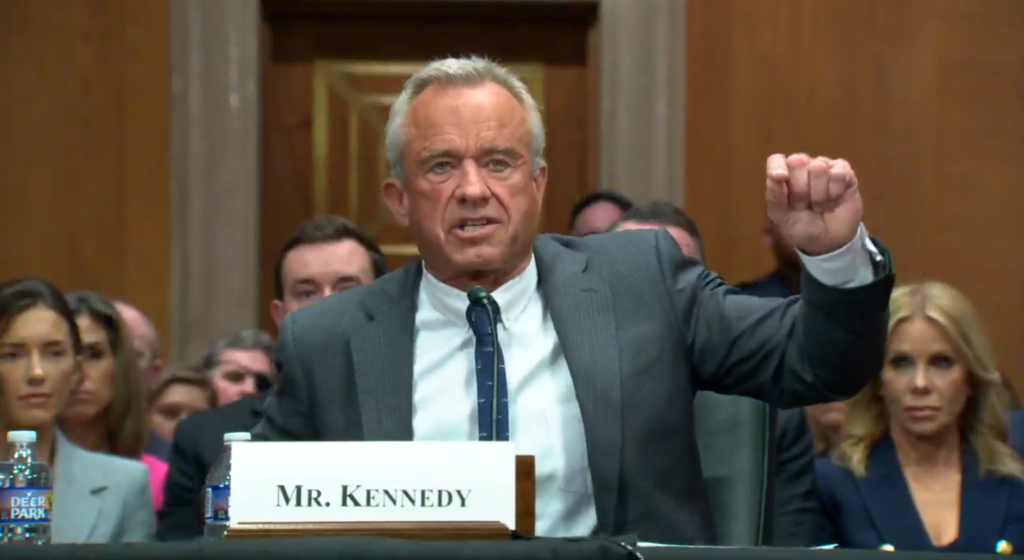
RFK Jr. Removes Entire CDC Vaccine Advisory Committee
Health Secretary Robert F. Kennedy Jr. dismissed all 17 members of the CDC’s Advisory Committee on Immunization Practices, which guides national vaccine policy, and intends to appoint his own panel. The sweeping move sparked immediate backlash from physicians and public health organizations, who criticized it as undermining expert guidance on vaccine use. The action reflects Kennedy’s controversial stance on vaccines and signals a major shift in federal immunization advisory dynamics. (AP)
NIH Shutters Pandemic-Prevention Network
The National Institutes of Health has ended funding for a network designed to detect and prevent emerging pandemics. Critics argue the move caters to “lab‑leak” skeptics, potentially hampering rapid response capabilities. The termination drew sharp criticism from scientists like Wang, who view the network as essential for future outbreak preparedness. The decision comes amid broader NIH funding cuts and pandemic-related retrenchments. (Science)
China’s Bid to Attract Global Talent Intensifies Amid U.S. Immigration Crackdown
Across China, local governments are offering large financial incentives to attract top researchers and skilled workers. From Sichuan’s Gulin County promising PhDs a $42,000 bonus to Zhejiang’s Taizhou paying university graduates up to $14,000, provinces are aggressively courting talent. These efforts — including generous salaries, housing, healthcare, and research funds — coincide with tightened U.S. immigration policies, which may prompt Chinese-origin scholars to return. Once reliant on overseas recruits, China now taps a deep domestic talent pool, supported by revamped programs like the High-End Foreign Talents Plan. Despite this, challenges remain: scholars cite concerns over academic freedom and quality of life. Yet, with prominent researchers relocating to institutions like Shenzhen’s SMART, China’s long-term success depends on creating a more open and supportive research ecosystem. (Nature)
WHO Tracking Nimbus, New COVID Variant
A newly identified Omicron descendant, dubbed Nimbus (NB.1.8.1), is under WHO scrutiny as it spreads across Europe and North America. Featuring spike protein changes linked to increased transmissibility and partial immune evasion, it may challenge existing antibody defenses. Though experts caution it’s too early to predict a surge, symptoms mirror typical COVID. WHO has classified it as a “variant under monitoring,” prompting close observation. (Wired)
Scientists Oppose Redefinition of PFAS
A coalition of 20 scientists warns against efforts—potentially driven by political or economic motives—to narrow the definition of PFAS (“forever chemicals”), which could weaken regulations. PFAS are persistent synthetic compounds found in numerous products, from nonstick pans to firefighting foams. The scientists argue that changing the standardized definition, including IUPAC’s ongoing review, risks excluding hazardous subgroups, undermining regulatory protections. (The Guardian)

WHO Extends Mpox Emergency Due to African Surge
WHO has prolonged its global public health emergency designation for mpox in response to escalating outbreaks in Africa. The ongoing outbreak now spans 25 countries, including a major surge in Sierra Leone, prompting new recommendations for travel-related and sustained-transmission regions. First declared in August 2024, this marks the fourth emergency committee meeting reviewing the evolving situation. (CIDRAP)
Mars Rover Hunts Ancient Rocks in Forlandet Flats
NASA’s Perseverance rover has descended into relatively flat terrain called Forlandet Flats, aiming to sample some of Mars’ oldest rocks yet explored. These ancient formations could provide vital clues about the planet’s early history and habitability, offering unprecedented insight into Mars’ geologic past. (NASA)
Why Cutting Off BeiDou May Hurt U.S. Innovation and Security
While concerns over Chinese technologies like Huawei and DJI are often justified, experts argue that China’s BeiDou satellite navigation system should not be treated as a threat in the same way. U.S. officials have raised fears about surveillance, malware, and signal manipulation, but technical evidence shows these risks are mostly speculative. BeiDou, like GPS, broadcasts one-way signals and cannot track users or deliver malware. Field tests reveal that disabling BeiDou reduces positioning accuracy by 30–40%, which could harm sectors like logistics, robotics, and emergency response. Critics warn that restricting BeiDou access would reduce system resilience and economic competitiveness, especially as precision navigation becomes critical to future technologies. Experts argue that the U.S. should focus on GPS modernization and international leadership rather than defensive overreach. Treating BeiDou as a Trojan horse may be a strategic miscalculation with costly consequences. (Space News)
Emperor Penguin Populace Declining in Antarctica
Researchers report a significant decrease in emperor penguin numbers across Antarctic breeding colonies, attributed to climate change reducing sea ice. Lower ice cover disrupts breeding and feeding cycles, threatening chick survival. The findings highlight broader ecosystem vulnerabilities and demand urgent conservation actions to mitigate warming impacts. (AP)
Thanks for reading. Let’s be careful out there.
WORDS: The Biology Guy.
IMAGE CREDIT: NASA.


Leave a Reply