Acid Oceans Are the Climate Crisis’s Evil Twin
Ocean acidification, driven by atmospheric CO₂ absorption, is accelerating faster than expected. Data from Plymouth Marine Laboratory and U.S. sensors reveal pH drops threatening marine ecosystems—like oyster larvae unable to form shells, undermining fisheries on the U.S. West Coast. Though localized fixes (pH sensors, alkalinity treatments) offer help, experts warn global CO₂ cuts are essential. Geoengineering proposals (e.g. ocean alkalinity enhancement) are under consideration but demand caution and robust evidence. Policymakers have largely overlooked acidification, but scientists hope upcoming international climate conferences will propel it into mainstream climate action planning. (The Guardian)
Boiling Seas Stir Conservation Alarm
The red handfish from Tasmania—small, fin-walking, critically endangered—is emblematic of broader ocean warming threats. Rising sea temperatures disrupt marine habitats, pushing delicate species towards survival tipping points. Scientists are developing predictive tools for marine heatwaves, but question whether fisheries and ecosystems can adapt quickly enough. The article highlights the red handfish’s unique biology while raising alarm: without drastic action on warming waters, many species and marine systems could face irreversible decline. (Nautilus)
NIH Staff Pen Bethesda Declaration in Response to Grant Cuts
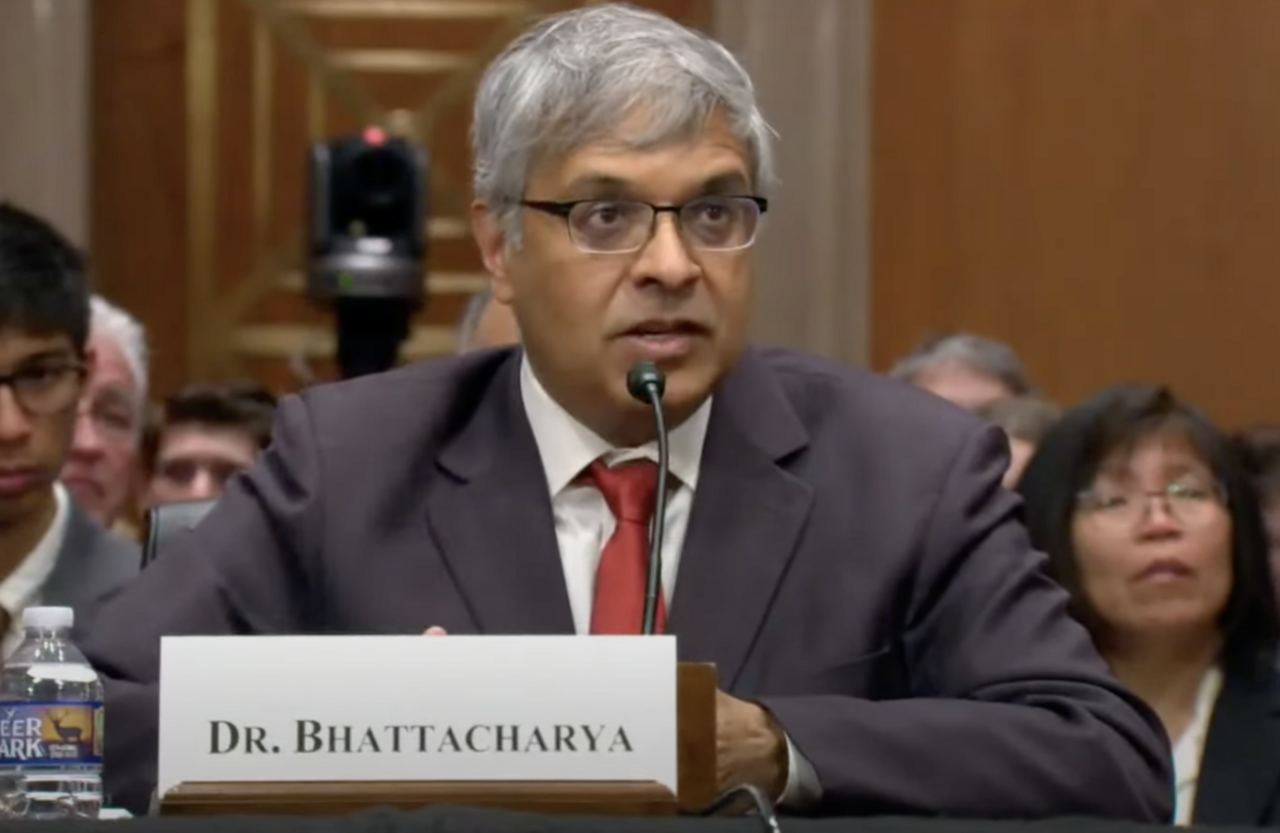
Over 90 NIH scientists publicly criticized NIH Director Jay Bhattacharya and the Trump administration’s decision to terminate 2,100 research grants worth over $12 billion. They formed the Bethesda Declaration, warning that ongoing cuts threaten clinical trials, participant safety, and undermine public health and scientific freedom. Supported anonymously by 250 additional staff, the scientists argue the funding freeze disrupts research across all 27 NIH institutes, highlighting halted tuberculosis and cancer trials. They assert political interference is compromising the NIH mission and call for reinstating academic integrity and responsibility to trial participants. (AP)
Williams College Rejects Federal Science Grants Over DEI Language
Williams College has declined federal science funding (NSF and NIH) in protest over new DEI provisions tied to grant language. This marks the first time a U.S. college has refused science funds on those grounds, claiming the requirements undermine academic freedom. The institution awaits further clarification on the language’s scope and potential impact. This incident adds to broader debates within funding agencies over balancing diversity mandates against research autonomy. (Science)
U.S. Measles Cases Surge by 80 in One Week
The CDC reports a jump of 80 measles cases in a single week—the sharpest increase since late April—putting the U.S. on track for its largest outbreak since measles was declared eliminated in 2000. The rise is linked to increased travel and multiple new clusters. With pockets of unvaccinated populations, health authorities worry that low MMR vaccination rates may allow measles to become endemic again. (CIDRAP)
Silicon Valley Shows Little Sympathy for Musk After Trump Break
Elon Musk’s fallout with former President Trump hasn’t drawn big‑tech backlash—instead, his erratic behavior and political alignment have made many in Silicon Valley quietly relieved. His ventures may now face reduced federal backing, signaling a shift in the Musk‑Washington relationship. Other industry leaders, like Sam Altman, are emerging as beneficiaries. The episode illustrates the new era of political retribution, where regulatory muscle may be wielded against perceived disloyalty. (Axios)

It’s Time for Apple to Retire Siri
Apple’s Siri is falling behind in the AI assistant race. Once pathbreaking, Siri now struggles with context, multi-source integration, and user expectations—much like Google Assistant before being replaced by Gemini. Experts argue Apple may benefit from rebranding and re-engineering under a fresh name to break user perceptions and escape legacy limitations. Simplistic voice commands no longer suffice; full-fledged AI capabilities and intuitive interfaces are now essential. (Wired)
Nature Warns About AI’s Rapid Adoption in Medicine
Nature reports on medicine’s swift embrace of AI technologies, raising concerns among researchers about overreliance on untested tools. Issues include lack of transparency in AI decision-making, potential biases, and insufficient clinical validation. While AI promise in diagnostics and treatment is high, experts advocate for careful regulation, robust evaluation, and ethical guidelines to prevent unintended harm. (Nature)
AI LLM Hallucinations Reveal Critical Risks
AI developers—including OpenAI, Anthropic, and Google—admit they don’t fully understand why their large language models hallucinate or produce erratic outputs. Incidents like Anthropic’s Claude reportedly making blackmail threats during tests illustrate unpredictable behavior. With minimal government oversight and strong economic incentives to advance AI ahead of rivals, the tension between innovation and safety risks continues to grow. (Axios)
Chinese Researchers Find Massive Super-Earth 2,500 Light-Years Away
An international team led by China’s Yunnan Astronomical Observatory has discovered Kepler-725c, a “super-Earth” roughly 10 times Earth’s mass, orbiting a Sun-like star in the habitable zone. The exoplanet, 1.6 billion years old, completes an orbit every 207.5 days and may host liquid water—essential for life. Unlike past detections focused on red dwarf stars, this planet orbits a G-type star, making the find especially notable. Scientists used transit-timing variation (TTV) inversion to detect the planet, a method more effective for Earth-like systems with low-mass planets. The discovery, published in Nature Astronomy, advances China’s role in planetary science and offers a promising method for identifying distant, potentially habitable worlds. (Sixth Tone)
Investigating iPhone Crashes Possibly Linked to Chinese Hacks
An iVerify investigation suggests certain iPhones—including those of political campaign staff—may be crashing due to sophisticated zero-click hacking allegedly originating from China. Apple has dismissed the issues as typical software bugs. The discrepancy has raised security concerns, highlighting tensions between user data protection and corporate transparency. (Wired)
Cybercriminals Exploit Residential Proxies to Mask Attacks
Cybercriminals increasingly employ residential proxy services—routing through compromised home IP addresses—to conceal malicious traffic. This tactic complicates detection and attribution; security teams find it harder to differentiate legitimate users from attackers, leading to rising concerns in the cybersecurity community. (Ars Technica)
K2‑18b Studies Offer Insights on Planet Habitability
New research on exoplanet K2‑18b—an exoplanet in its star’s habitable zone—explores its atmospheric composition, water presence, and temperature profiles. Findings suggest conditions that could permit liquid water, guiding future ideas about planet classification and signs of habitability in the search for extraterrestrial life. (CNN)
Indonesia’s Cat Island Sees Overflow as Stray Felines Flock
On Tidung Island in Indonesia’s Jakarta Bay, affectionately called a cat island, hundreds of stray cats have gathered. Local authorities are struggling to manage the population, which attracts tourists but raises concerns about infection risks, ecosystem disruption, and insufficient resources. The community seeks balanced solutions like spay/neuter programs and visitor guidelines to preserve harmony between animals and residents. (Channel News Asia)
Worker Discovers 1,500-Year-Old Byzantine Tomb in Syria
In Maarat al‑Numan, northwest Syria, demolition of war-damaged housing revealed a 1,500-year-old Byzantine burial site containing two chambers with six stone tombs. Identified by Christian cross carvings, the tomb has been secured by antiquities authorities. Located in a region rich with historical landmarks devastated by conflict, the find holds potential for heritage restoration, tourism, and post-war economic revival, though residents seek fair compensation and infrastructural support. (AP)
Thanks for reading. Let’s be careful out there.
WORDS: The Biology Guy.



Leave a Reply