Anemonefish, sometimes called clownfish, have been popular attractions in aquariums ever since Disney’s animated film Finding Nemo arrived in cinemas in 2003. Living symbiotically with sea anemones that shelter them from predators, the fish drive away organisms that nibble at their hosts.
Anemonefish have also shown they will provide their hosts with the food given to them by humans, but does this happen in the wild?
An Osaka Metropolitan University Graduate School of Science team led by PhD student Yuya Kobayashi and Professor Satoshi Awata found evidence of this feeding behavior during field experiments.
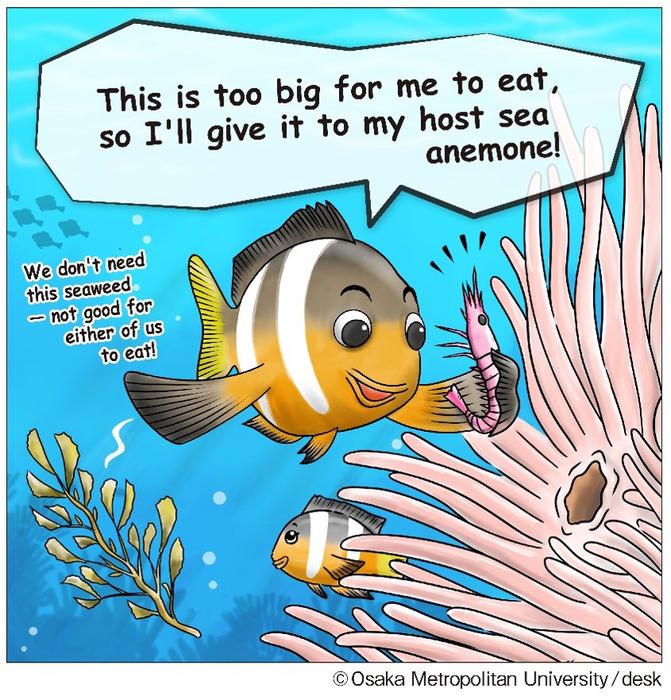
They saw Clark’s anemonefish actively provisioning food to bubble-tip anemones, such as by attaching a clam they cannot eat to the tentacles of their hosts. For smaller food, the fish had their fill first before feeding the sea anemones.
“We also confirmed that feeding the anemonefish directly increases the growth rate of the sea anemones,” stated PhD student Kobayashi. “It is known that in other anemonefish species, the number of eggs laid increases when the hosts are larger. For anemonefish, which cannot leave their sea anemone, feeding their hosts is extremely important and will ultimately benefit themselves.”
Sign up for the Daily Dose Newsletter and get every morning’s best science news from around the web delivered straight to your inbox? It’s easy like Sunday morning.
Professor Awata added, “We believe that correctly understanding animal behavior will not only lead to the development of ecology, biology, and other fields of research, but will also provide appropriate methods for the protection and conservation of animals that are on the verge of extinction.”
IMAGE CREDIT: Osaka Metropolitan University / desk



Leave a Reply