
HHS CANCELS OVER 12 BILLION IN PUBLIC HEALTH FUNDS
The Department of Health and Human Services recently canceled over $12 billion in federal grants to states that were used for tracking infectious diseases, mental health services, addiction treatment, and other public health needs. These funds, allocated during the COVID-19 pandemic, were critical for state health departments, many of which are already underfunded and managing numerous health challenges. The abrupt cuts, effective immediately, have left states scrambling to halt ongoing projects, including efforts to combat outbreaks like measles and mpox. Health officials warn that thousands of public health workers could lose their jobs as a result. States that had been modernizing outdated systems and improving crisis services now face unfinished projects. The cuts also affect programs tackling mental health and substance abuse, with some states fearing the loss of lifesaving services. The termination has sparked lawsuits from states exploring legal avenues to challenge the decision. (New York Times)
MEASLES OUTBREAK SPREADS IN KANSAS AMID LOW VACCINATION RATES
A measles outbreak is rapidly spreading in Kansas, with cases doubling in a week, now totaling 23 across six counties. The majority of those affected are unvaccinated children, with vaccination rates as low as 41% in some areas. The outbreak is believed to be linked to a similar surge in West Texas, where cases have also been climbing in under-vaccinated communities. The virus has now spread to New Mexico and Oklahoma, with Kansas reporting the first case in the state since 2018. Despite the dangerous nature of the virus, none of the Kansas cases have required hospitalization, though the risk remains high. Many of the affected areas have low vaccination rates, particularly in certain school districts. The outbreak has also sparked a rise in anti-vaccine sentiment, with some parents turning to unproven treatments like vitamin A, which can cause liver damage when misused. (Ars Technica)
NIH RESUMES GRANT POSTINGS WITH POLITICAL REVIEW REQUIREMENTS
After a two-month hiatus, the U.S. National Institutes of Health (NIH) will resume posting notices for grant proposals, but with a new requirement: the Department of Health and Human Services (HHS) and the newly created Department of Government Efficiency (DOGE) will review each proposal to ensure it aligns with the priorities of President Trump’s administration. This has raised concerns among NIH staff about increased political interference in the agency’s process for determining scientific priorities. The review process, which will now involve additional layers of approval, has been described as “chilling” by insiders. NIH has a significant backlog of Notices of Funding Opportunities (NOFOs) that have been delayed, but the approval process now requires political review before any new NOFO can be published. Additionally, NIH has pulled 97 NOFOs related to health disparities and other sensitive topics, aligning with executive orders from Trump. This move has led to delays and disruptions in grant awards. (Science)
FDA APPROVES GEOPOTIDACIN FOR TREATING URINARY TRACT INFECTIONS
The U.S. Food and Drug Administration (FDA) has approved gepotidacin, a new antibiotic for treating uncomplicated urinary tract infections (uUTIs) in women and children 12 years and older. Developed by GSK in collaboration with the U.S. Biomedical Advanced Research and Development Authority, gepotidacin is the first antibiotic in nearly 30 years for uUTIs, targeting bacterial replication using a unique mechanism of action. It is effective against pathogens like Escherichia coli and Klebsiella pneumoniae. The approval is significant given the rising resistance to existing antibiotics, with an estimated 16 million women annually affected by uUTIs in the U.S. Gepotidacin, marketed as Blujepa, was found to be noninferior to nitrofurantoin in phase 3 trials, and even superior in some cases. GSK plans to launch the drug later this year and is also exploring its potential use for treating uncomplicated gonorrhea. (CIDRAP)

WEBB TELESCOPE CAPTURES FIRST IMAGES OF NEPTUNE’S AURORAS
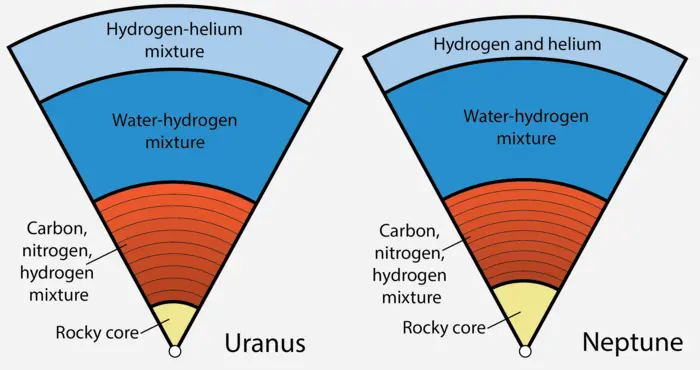
The Webb Space Telescope has provided the first direct images of Neptune’s auroras, a stunning phenomenon that had eluded scientists until now. Using Webb’s near-infrared spectrograph, astronomers captured detailed images of the planet’s auroral activity, which was first hinted at during Voyager 2’s 1989 flyby. Neptune’s auroras are caused by charged particles interacting with its atmosphere, similar to Earth’s northern and southern lights. However, unlike other planets, Neptune’s auroras occur at its mid-latitudes due to the planet’s uniquely tilted magnetic field, which is shifted by 47 degrees. This discovery, made in June 2023, adds Neptune to the list of planets with confirmed auroral activity, completing the solar system’s auroral picture. The new findings are crucial for future missions to outer planets like Uranus and Neptune, emphasizing the importance of infrared instruments to study their atmospheres and auroras. (Gizmodo)
GAIA TELESCOPE CONCLUDES MISSION AFTER A DECADE OF COSMIC MAPPING
The European Space Agency’s Gaia space telescope has completed its mission after over a decade of charting the cosmos, providing astronomers with invaluable data on nearly two billion stars, millions of potential galaxies, and thousands of asteroids. Launched in 2013, Gaia’s primary goal was to map the Milky Way’s structure and history by measuring the positions, velocities, and colors of celestial objects. It has revolutionized our understanding of the universe, contributing to key discoveries such as the mass of dark matter surrounding the galaxy and the detection of new exoplanets. Despite the mission’s end, only a fraction of the data collected has been released, with the next data release scheduled for 2026. Gaia’s legacy will live on through its contributions to current and future missions like the James Webb Space Telescope. European scientists are also planning a successor to continue Gaia’s work into the 2040s, extending the exploration of the Milky Way. (New York Times)
SAGRADA FAMILIA FEATURES UNIQUE “MAGIC SQUARE” WITH RELIGIOUS SYMBOLISM
Barcelona’s Sagrada Familia, designed by Antonio Gaudí, is not only a marvel of art and architecture but also houses a fascinating scientific detail: a “magic square” on its Passion façade. This numerical matrix, used since Ancient China and in Islamic and Indian cultures, has rows and columns where the sum of each equals the same value, known as a “magic constant.” The square on the Sagrada Familia is unique because, unlike traditional magic squares that use consecutive numbers, sculptor Josep Maria Subirachs modified it. By removing the numbers 12 and 16 and repeating 10 and 14, he ensured that every row, column, and diagonal added up to 33, the age of Jesus Christ at his crucifixion. This detail adds a layer of religious symbolism, as the initials “INRI,” meaning “Jesus of Nazareth, King of the Jews,” can also be read from the repeated numbers. The square exemplifies the blend of art, religion, and hidden messages in sacred architecture. (Union Rayo)
Thanks for reading. Let’s be careful out there.
WORDS: The Biology Guy.



Leave a Reply