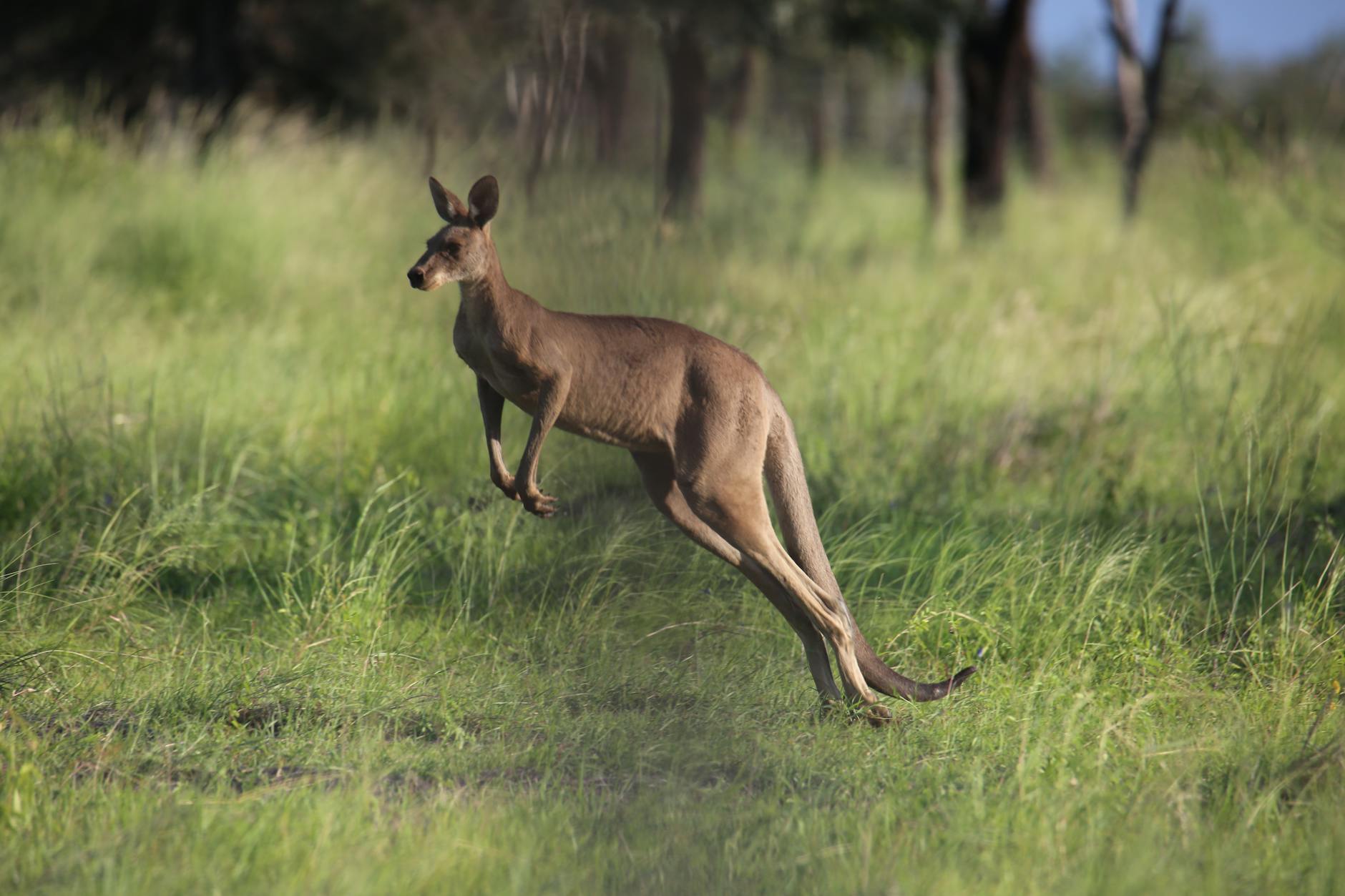
Prehistoric kangaroos in southern Australia had a more general diet than previously assumed, giving rise to new ideas about their survival and resilience to climate change, and the final extinction of the megafauna, a new study has found.
The new research, a collaboration between palaeontologists from Flinders University and the Museum and Art Gallery of the Northern Territory (MAGNT), used advanced dental analysis techniques to study microscopic wear patterns on fossilised kangaroo teeth.
The findings, published in Science, suggest that many species of kangaroos were generalists, able to adapt to diverse diets in response to environmental changes.
The article, ‘Dietary breadth in kangaroos facilitated resilience to Quaternary climatic variations’ (2025) by Samuel D Arman, Grant J Gully and Gavin A Prideaux has been publishing in the journal Science DOI: 10.1126/science.adq4340
The research focused on fossil kangaroo species from the renowned Victoria Fossil Cave at the Naracoorte Caves World Heritage Area in South Australia and refutes the long-held idea that those species that did not survive past 40,000 years ago became extinct because they had specialised diets.
The Naracoorte Caves World Heritage Area of southeastern South Australia contains the richest and most diverse deposit of fossil kangaroos known from the Pleistocene (2.6 million to 12,000 years ago).
Sign up for the Daily Dose Newsletter and get every morning’s best science news from around the web delivered straight to your inbox? It’s easy like Sunday morning.
“Our study shows that most prehistoric kangaroos at Naracoorte had broad diets. This dietary flexibility likely played a key role in their resilience during past changes in climate,” says lead researcher Dr Sam Arman, from MAGNT in Alice Springs and Flinders University.
Using Dental Microwear Texture Analysis, the team compared the diets of 12 extinct species with those of 17 modern species. The results contradict previous assumptions that certain species went extinct due to their specialised diets. Instead, the study found that most species were mixed feeders, capable of consuming a combination of shrubs and grasses.
“The distinctive short-faced kangaroo anatomy led to a widespread view that sthenurines were unable to adapt their diets when climate change altered vegetation patterns, leading to their extinction,” says co-author Professor Gavin Prideaux from Flinders University.
“By shedding light on the ecological roles of Australia’s marsupial megafauna, we will develop a better understanding of how its modern ecosystems evolved. Among other things, this might help to contextualise why Australia has been so vulnerable to introduced large mammals, such as pigs, camels, deer and horses.”
“Most of the Naracoorte kangaroo species actually had similar everyday diets, which would reflect foods that were most nutritious and readily accessible,” adds Dr Arman.
“Having the hardware though, to eat more challenging foods would have helped them get through seasons or years when their preferred food was rare. An analogy might be my 4×4. Most of the time, I don’t need to engage four-wheel drive, but this capability becomes crucial when I do need it.”
“The Victoria Fossil Cave was an ideal place to start. It’s the locality with the greatest available sample to get a good look at Pleistocene diets for a large number of species. We hope to extend this dataset to other Pleistocene deposits across Australia, especially those that span the interval 60,000 to 40,000 years ago when many megafaunal species became extinct,” he says.
While diet may still have played a role, determining extinction will likely involve better understanding other attributes, like body size and locomotion, and how these interacted with Pleistocene environments and the arrival of humans.
Another author, Flinders Palaeontology Lab manager and curator Grant Gully, says the new research, which applied the “powerful analytical and modelling methods to a massive sample of 2650 kangaroo tooth scans” supports “an important step in understanding the ecology of Australian megafaunal species”.
“This allowed us to capture the degree to which diets vary between individuals and regions for modern species, and then use this as a basis for investigating diets of fossil species through time.”
IMAGE CREDIT: Tharshikan Sivapprakasam.



Leave a Reply