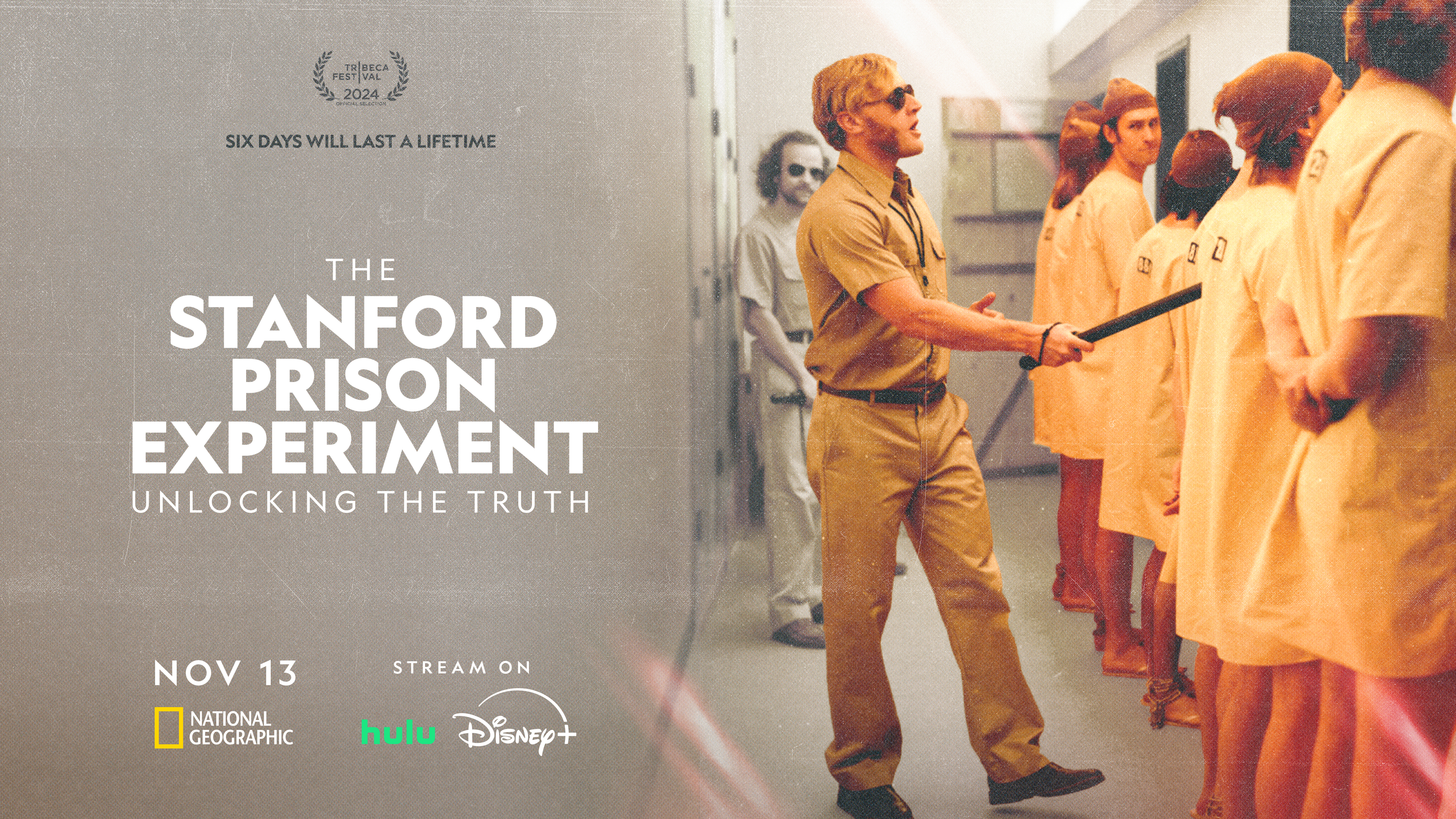
National Geographic’s riveting new docuseries “The Stanford Prison Experiment: Unlocking the Truth” masterfully peels back the layers of one of psychology’s most influential and controversial studies. Through intimate interviews with the original participants—many speaking on camera for the first time in 50 years—director Juliette Eisner crafts a compelling narrative that challenges our understanding of this infamous experiment while raising profound questions about power, perspective, and the nature of truth itself.
The three-part series is brilliantly structured, with each episode building upon the last to create an increasingly complex portrait. “The Hallway” introduces viewers to the experiment as it’s been understood for half a century, setting up the familiar narrative of how ordinary college students transformed into cruel guards and submissive prisoners. For viewers new to the subject, this first episode serves as an essential foundation, efficiently conveying the experiment’s basic premises and its outsized impact on our understanding of human behavior.
However, it’s in the second episode, “The Unraveling,” where the series truly distinguishes itself. Here, long-held secrets emerge and the participants begin to challenge Dr. Philip Zimbardo’s official account. The episode introduces French researcher Thibault Le Texier, whose meticulous investigation reveals surprising inconsistencies in the experiment’s methodology. These revelations are handled with remarkable fairness, allowing viewers to question the established narrative without entirely dismissing the study’s broader implications about power and human nature.
What makes this documentary particularly compelling is its timing. With Zimbardo’s recent passing at 91, his appearance in the series takes on added significance as he defends his legacy against mounting criticism. The documentary handles this delicate situation with grace, allowing Zimbardo to present his perspective while also giving voice to his critics. Rather than attempting to definitively settle the debate, Eisner allows multiple truths to coexist, presenting a nuanced exploration of how stories shape our understanding of reality.
The series’ most powerful moments come from its innovative approach to reconstruction. By bringing the original participants to a meticulously recreated set and having them direct actors in key scenes, the documentary creates a unique space for reflection and reconciliation. This ambitious creative choice pays off brilliantly, offering viewers not just a window into what happened in 1971, but also how those events continue to resonate with the participants today. The recreation sequences serve multiple purposes: they provide necessary visualization for moments not captured on film, they allow participants to literally revisit and reframe their experiences, and they create opportunities for powerful moments of connection and healing.
One such moment occurs when former guard Dave Eshleman, nicknamed “John Wayne” for his particularly aggressive behavior, apologizes to former prisoner Clay Ramsay. This unexpected reconciliation demonstrates how the experiment’s impact continues to reverberate through their lives decades later. It’s these human moments that elevate the series beyond mere historical investigation into something more profound and moving.

The documentary also excels in its examination of the experiment’s lasting influence on both its participants and society at large. Through thoughtful interviews and careful editing, we see how the study’s findings have been used—and misused—to explain everything from prison guard behavior to corporate culture. The series raises important questions about the responsibility of researchers to their subjects, the role of media in shaping scientific narratives, and the complex relationship between truth and storytelling.
Eisner’s direction shows remarkable restraint, maintaining neutrality while still delivering a compelling narrative arc. The documentary succeeds in being both intellectually stimulating and emotionally engaging, accessible to viewers familiar with the experiment and newcomers alike. Through expert pacing and thoughtful editing, it transforms what could have been a dry academic review into a gripping exploration of human nature and the power of perspective.
Perhaps most impressively, the series manages to question the experiment’s methodology without completely dismissing its broader insights about human behavior. It suggests that even if the specific conclusions drawn from the study were flawed, the questions it raised about power, authority, and human nature remain deeply relevant. The documentary’s willingness to sit with this complexity, rather than pushing for simple answers, is one of its greatest strengths.
The technical aspects of the production deserve special mention. The seamless integration of archival footage, contemporary interviews, and dramatic recreations creates a rich visual tapestry that keeps viewers engaged throughout all three episodes. The sound design and scoring are subtle but effective, enhancing the emotional impact of key moments without ever feeling manipulative.
“The Stanford Prison Experiment: Unlocking the Truth” is must-watch television that transcends its subject matter. While it may not provide definitive answers about the experiment’s validity, it offers something more valuable: a nuanced examination of how stories shape our understanding of truth and human nature. In an era of increasing polarization, this series’ willingness to embrace complexity and multiple perspectives feels both refreshing and necessary.
The docuseries serves as a powerful reminder that even our most cherished scientific narratives deserve careful scrutiny, and that the search for truth often reveals more questions than answers. It challenges viewers to consider not just what happened in that Stanford basement in 1971, but how the stories we tell about such events shape our understanding of ourselves and our society.
The docuseries premieres tonight on National Geographic, offering viewers a chance to reexamine one of psychology’s most enduring legends through a contemporary lens. Whether you’re a psychology enthusiast, a student of human nature, or simply interested in compelling storytelling, this thoughtful and provocative series delivers a viewing experience that will leave you questioning everything you thought you knew about this infamous chapter in scientific history. It’s a remarkable achievement in documentary filmmaking that manages to be both intellectually rigorous and emotionally resonant, setting a new standard for how we examine and understand historical events.




Leave a Reply