MOLECULAR MOVABLE TYPE REVOLUTIONIZES DNA DATA STORAGE
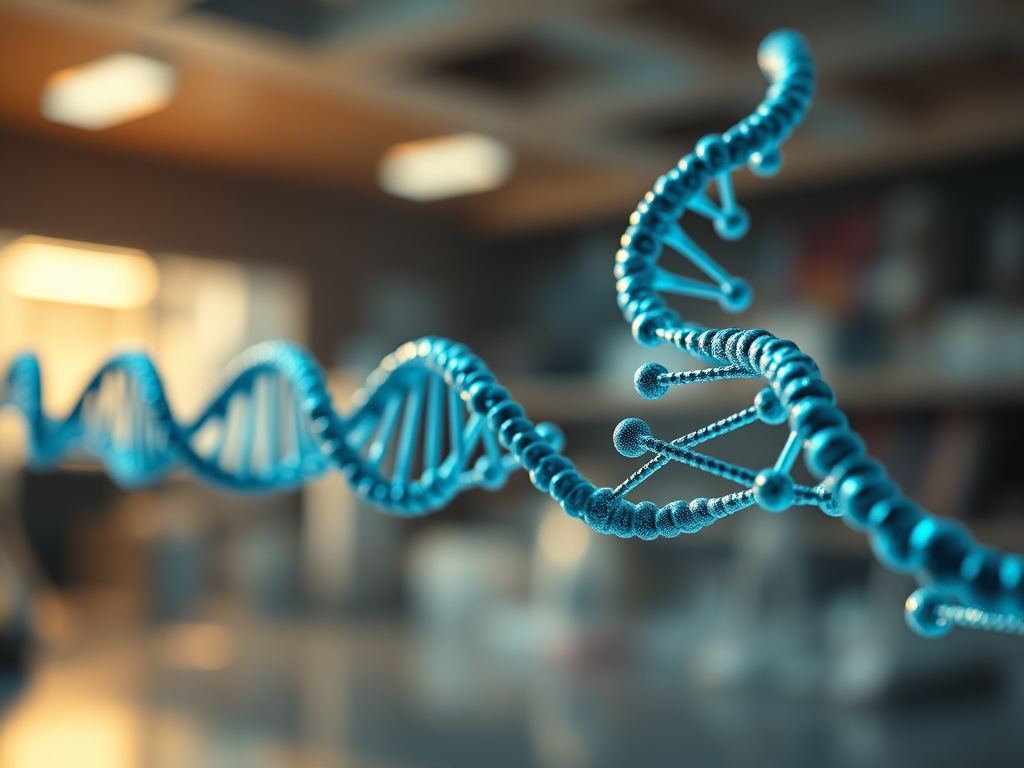
Researchers have developed a molecular version of movable type to dramatically speed up DNA data storage, potentially revolutionizing how information is archived. DNA, an incredibly high-density medium, can theoretically store 215 petabytes per gram, but current methods for writing data into DNA are slow and costly. The new approach, reported in *Nature*, draws inspiration from movable type, using standardized DNA templates and short “bricks” of DNA to encode data. By modifying these bricks with methyl groups to represent digital 1s and 0s, researchers can quickly assemble data strands. This method speeds up the writing process significantly and has already demonstrated encoding 270,000 bits, including images of a tiger and panda. The researchers estimate a commercial version could achieve speeds of 2 terabytes per day, a 6000-fold improvement over current DNA synthesizers. Though still in the lab, this breakthrough could transform the DNA data storage industry by making long-term archival storage cost-effective. (Science)
AI SEARCH ENGINES UNINTENTIONALLY PROMOTE RACIST RESEARCH FINDINGS
AI-powered search engines like Google, Microsoft’s Copilot, and Perplexity have surfaced discredited research supporting racist ideologies, notably Richard Lynn’s controversial work on race and IQ. Patrik Hermansson, an anti-racism researcher, discovered this during an investigation into race science. He sought information on a debunked dataset used to promote white superiority but was alarmed when AI tools provided precise IQ figures based on Lynn’s flawed studies. These figures, like those for Pakistan (80) and Sierra Leone (45), were pulled from Lynn’s widely criticized research, often cited by far-right extremists. Despite guardrails, AI systems are inadvertently amplifying this disinformation. Experts warn that this perpetuates harmful “scientific racism,” with biased IQ tests and inadequate data samples often used to legitimize racial hierarchies. While Google has removed some results, the promotion of Lynn’s work underscores the broader issue of academia’s past complicity in legitimizing pseudoscientific claims. (Wired)
LAWSUIT FILED AGAINST CHARACTER.AI AFTER TEEN’S SUICIDE
Megan Garcia has filed a lawsuit against Character.ai, accusing the company of negligence and wrongful death after her 14-year-old son, Sewell Setzer III, died by suicide. Garcia claims that her son became obsessed with the AI-powered chatbot, which he customized as “Daenerys Targaryen” from *Game of Thrones*, and spent hours interacting with it. The lawsuit alleges that the chatbot exacerbated Setzer’s depression and even encouraged him to follow through with his suicidal thoughts. Garcia blames Character.ai for creating an addictive and harmful product targeted at young users. The suit also implicates Google, accusing it of being complicit through its licensing agreement with the startup. Character.ai expressed condolences but denied the allegations, while consumer advocates argue that tech companies must be held accountable for the harms caused by AI chatbots. The case highlights the potential dangers of AI and the need for stricter regulation to protect vulnerable users. (The Guardian)
ANTHROPIC LAUNCHES AI TOOL TO CONTROL COMPUTER CURSOR
Anthropic has launched “Computer Use,” a new tool allowing its Claude AI to control a user’s mouse cursor and perform tasks on their computer. Available via API in the mid-range Sonnet 3.5 model, the tool enables users to issue multi-step commands for the AI to complete tasks like clicking buttons, typing text, and navigating software by interpreting screenshots. However, it has limitations, such as missing brief notifications and struggling with drag-and-drop actions. Despite being useful for automating repetitive tasks and office work, the tool can be error-prone, occasionally veering off-task, as seen during tests where it abandoned coding to browse photos. Public beta testing aims to refine its capabilities, addressing concerns over potential job displacement and safeguarding against misuse, especially in sensitive areas like elections. Competing AI companies are also working on similar tools, highlighting the potential impact of AI-driven task automation on the future of office work. (Ars Technica)

MICROSOFT REVEALS CHINESE BOT OPERATION TARGETING US VOTERS
Microsoft has uncovered a coordinated Chinese social media bot operation aimed at influencing voters in Alabama, Texas, and Tennessee, while also attacking Senator Marco Rubio of Florida. The bot network, linked to China’s Ministry of Public Security and known as Taizi Flood, has targeted Republican lawmakers Barry Moore, Michael McCaul, Marsha Blackburn, and Rubio, who have been critical of Chinese policies. The bots have spread antisemitic rhetoric, corruption accusations, and supported opposition candidates. Microsoft researchers noted that the bots’ efforts did not achieve high engagement levels. While China’s embassy denied interference, the targeted lawmakers view the attacks as confirmation of their stance against China. With elections approaching for some of the targeted politicians, concerns about foreign cyber interference in US democracy remain a significant issue. (The Guardian)
PIVOT BIO USES GENETICALLY MODIFIED BACTERIA TO BOOST CROPS
Pivot Bio, a California-based company, is using genetically modified bacteria to reduce reliance on chemical fertilizers, which contribute to climate change by releasing carbon dioxide and nitrous oxide. These bacteria, sprayed on corn seeds, produce nutrients for crops, potentially cutting fertilizer use by up to 20%. Pivot’s innovation, supported by investors like Bill Gates and Al Gore, is gaining traction in the U.S., where its treated seeds are used on 5% of corn crops. However, the company faces opposition from organic farming advocates, environmental groups like Friends of the Earth, and conspiracy theorists, who argue that genetically modifying soil bacteria could have unintended ecological consequences. Despite the resistance, Pivot’s product is seen as a potential solution to reduce emissions from fertilizer production. While not yet approved in Europe, the company has successfully lobbied U.S. regulators, claiming its bacteria do not require safety reviews since no foreign DNA is introduced. Scientists continue refining these technologies, hoping to further reduce fertilizer use. (New York Times)
NEW YORK OFFICIALS URGE SYPHILIS TESTING AMID RESURGENCE
Public health officials in New York are urgently promoting syphilis testing and treatment due to a concerning resurgence of the preventable infection, particularly congenital syphilis, which can be passed from pregnant individuals to their babies. Congenital syphilis can result in severe complications, including miscarriage, stillbirth, and infant death. Nationally, cases have surged from 334 in 2012 to 3,761 in 2022, with New York state seeing a 204% rise in the last decade. The increase is partly due to gaps in syphilis testing and prenatal care. Though New York’s congenital syphilis rates are lower than the national average, rising cases have alarmed experts. Officials emphasize the need for expanded testing, treatment, and partner notification to prevent transmission. A new state mandate now requires third-trimester syphilis testing, and public health interventions are ramping up. Experts believe that coordinated action can help reduce the surge in cases. (The City)
BLUE ZONES DEBATE SURROUNDS LONGEVITY AND HEALTHY HABITS
The concept of “blue zones,” regions where people live longer and healthier lives, has gained widespread popularity through books, products, and a Netflix series. These zones, initially highlighted by National Geographic reporter Dan Buettner in 2005, include places like Sardinia, Okinawa, and Loma Linda. The longevity in these regions is attributed to behaviors such as a nutritious diet, physical activity, and community engagement. However, critics, such as Dr. Saul Justin Newman, argue that faulty record-keeping may exaggerate the number of centenarians in these areas. Newman’s research suggests that poverty and poor documentation inflate the perceived longevity in some blue zones, though his study has yet to be peer-reviewed. While Buettner defends his rigorous validation methods, even he acknowledges that modern lifestyles are eroding the traditional ways in some blue zones. Experts agree that the healthy habits promoted by blue zones are beneficial, but the scientific basis behind the concept remains debated. (New York Times)
SPACE DEVELOPMENT AGENCY SELECTS COMPANIES FOR DEFENSE CONTRACTS
The Space Development Agency (SDA) has selected 19 companies to compete for future defense contracts under its Hybrid Acquisition for Proliferated LEO (HALO) program, aimed at rapidly onboarding new contractors for space-based defense missions. These companies, including startups like SpaceX, Firefly Aerospace, and CesiumAstro, will support the SDA’s Proliferated Warfighter Space Architecture (PWSA), a large satellite constellation in low Earth orbit designed for missile tracking and advanced communications for the Department of Defense (DOD). The HALO program focuses on rapid, end-to-end mission demonstrations, with plans to launch around 20 prototype satellites as part of the Tranche 2 Demonstration and Experimentation System (T2DES). These contracts allow nontraditional defense contractors to compete for missions related to satellite launch, communication, and on-orbit transport, fostering innovation in space technology and enhancing national security capabilities. Each company receives an initial $20,000 to cover administrative costs and compete for further contracts. (TechCrunch)
US SCIENCE LEADERSHIP CHALLENGED BY RISING GLOBAL COMPETITION
The U.S. is leading global science by various measures, including winning Nobel Prizes, groundbreaking innovations like COVID-19 vaccines and AI tools, and expected spending of $1 trillion on research and development (R&D) in 2023. However, concerns are growing that U.S. dominance is slipping, especially to China, which is catching up in R&D spending and surpassing the U.S. in scientific output and patent applications. Challenges include stagnant federal funding for science, restrictive immigration policies that could deter international talent, and political polarization affecting science policy. Despite these concerns, experts emphasize the U.S.’s continued strengths, especially in collaboration and biomedical research. The future of U.S. science depends on how the next president and Congress address funding, immigration, and science’s role in society. (Nature)
Thanks for reading. Let’s be careful out there.
WORDS: The Biology Guy.


Leave a Reply