Cleveland Clinic researchers have discovered a new bacterium that weakens the immune system in the gut, potentially contributing to certain inflammatory and infectious gut diseases.
The team identified the bacterium, Tomasiella immunophila (T. immunophila), which plays a key role in breaking down a crucial immune component of the gut’s multi-faceted protective immune barrier.
Identifying this bacterium is the first step to developing new treatments for a variety of inflammatory and infectious gut diseases. These conditions, including inflammatory bowel disease, Crohn’s and ulcerative colitis, are associated with decreased levels of secretory immunoglobulin A (SIgA), an antibody that protects mucosal surfaces.
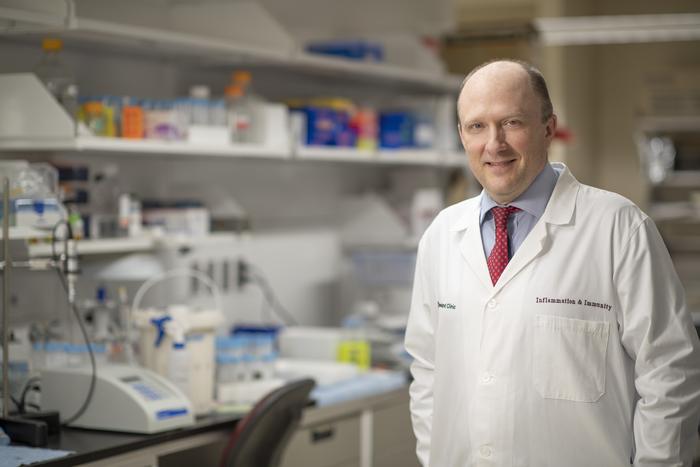
The study, published in Science, was led by Thaddeus Stappenbeck, M.D., Ph.D., chair of Cleveland Clinic’s Department of Inflammation and Immunity, and Qiuhe Lu, Ph.D., research associate and the paper’s first author.
“Our research represents a critical role of a specific component of the gut microbiome in human health and disease,” said Dr. Stappenbeck. “By identifying this specific bacterium, we have not only enhanced our understanding of gut diseases but also opened a promising new avenue for treatment. Pinpointing the culprit behind the breakdown of the gut’s protective adaptive immune barrier is a significant step toward developing much-needed therapies for conditions like inflammatory bowel disease, Crohn’s and ulcerative colitis.”
Sign up for the Daily Dose Newsletter and get every morning’s best science news from around the web delivered straight to your inbox? It’s easy like Sunday morning.
In the gut, SIgA binds continuously to microbes, preventing them from reaching and damaging the body’s tissue. In previous research, the team discovered that intestinal bacteria could reduce SIgA levels, which can lead to increased risk of infection and excess inflammation.
In this new study, researchers found that T. immunophila’s presence in the gut increases susceptibility to pathogens and delays repair of the gut’s protective barrier. T. immunophila’s name is an homage to a pioneer in immunology. SIgA was discovered by Dr. Thomas Tomasi, who published his findings in a foundational paper in Science in 1963.
“Drs. Stappenbeck and Lu’s rigorous and elegant study provides a key insight and an exciting potential mechanism for why some people have low or absent levels of SIgA in their gut, yet retain normal levels of SIgA in their bloodstream,” says Michael Silverman, M.D., Ph.D., a physician with the Division of Infectious Diseases at Children’s Hospital of Philadelphia.
Dr. Silverman, whose expertise includes immune system development, provided input on the research findings. “This discovery is quite important, as SIgA in the intestine functions as a critical component of the barrier for the trillions of microbes that live in our intestines,” Dr. Silverman said. “This study provides a new avenue to develop therapeutics to manipulate SIgA in the gut and improve health.”
“We know that there are a substantial number of patients that have this defect in are at risk for infection and inflammation in the intestine,” said Dr. Lu. “We surmised that a gut microbe that can degrade SIgA was the culprit. We believe that important therapeutic targets for a variety of inflammatory and infectious diseases in humans can be found through our work.”
IMAGE CREDIT: Cleveland Clinic


Leave a Reply