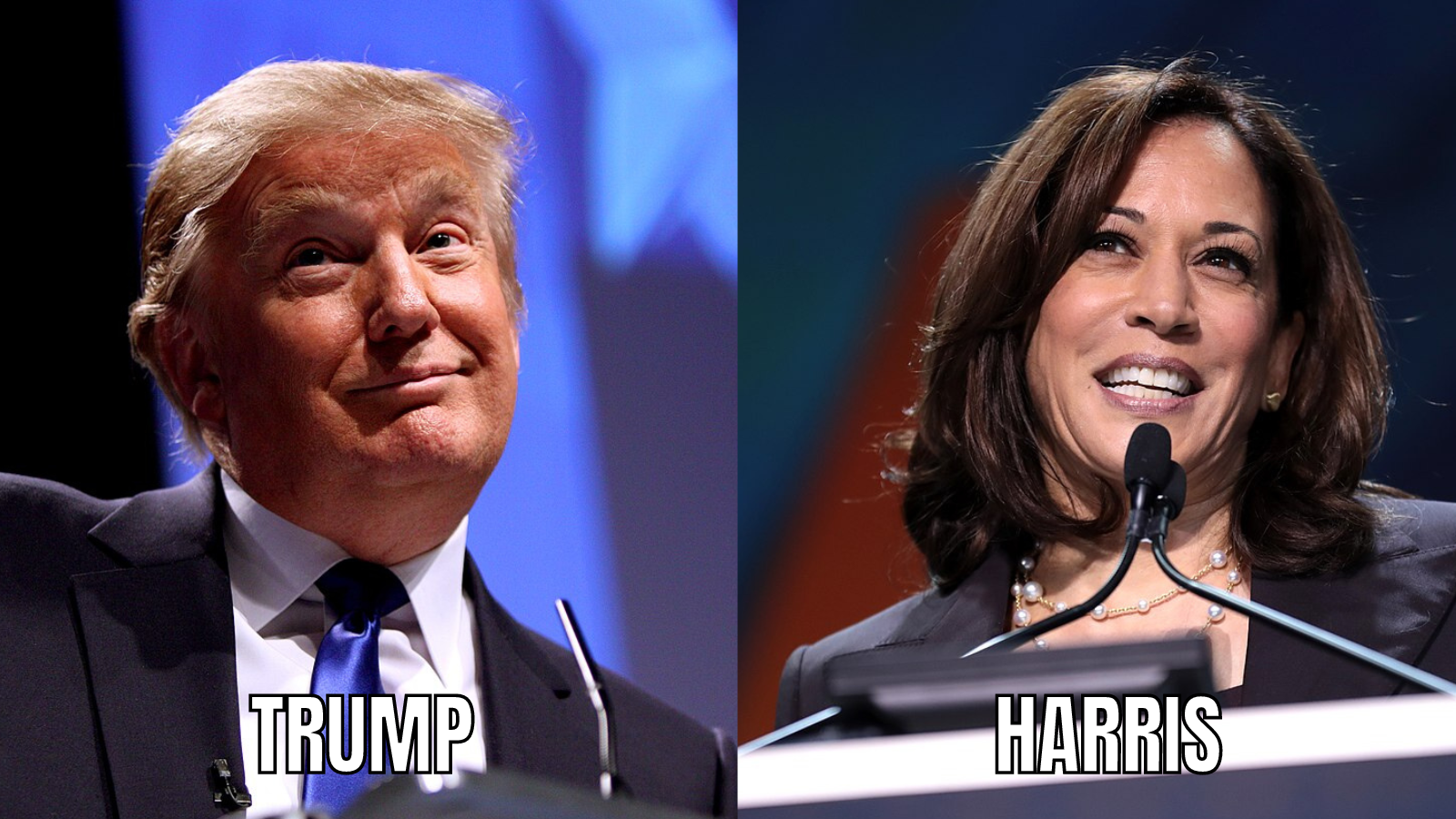
Former President Donald Trump and Vice President Kamala Harris have a rare point of agreement in their otherwise bitter and divisive contest: It’s up to the government to cut high U.S. drug prices.
Harris cast the tie-breaking Senate vote in 2022 for legislation that allows Medicare to negotiate drug prices for its more than 60 million beneficiaries. Before that, she was an aggressive regulator of the drug industry as California attorney general.
As president, Trump would likely retain Medicare price negotiations unless the pharmaceutical industry can come up with something more compelling that they’d put on the table, people close to him say. In his first term, he proposed various policies aimed at reducing prescription costs but had limited success with their implementation.
The drug industry could benefit, though, if Trump remains unable to advance such proposals.
“His efforts were largely fragmented and faced resistance from both the industry and lawmakers,” said Sergio Jose Gutierrez, a political strategist who has primarily worked with Democrats in the U.S. “The lack of a cohesive strategy and the limited ability to implement significant changes made his approach less effective compared to what a Harris-Walz administration could offer.”
The industry is increasingly under attack by lawmakers from both parties for drug prices most Americans regard as unreasonable, according to KFF polling, so the election outcome could be pivotal to drug companies’ fortunes. Their predicament is a sharp reversal from years past, when the firms enjoyed a reputation as being almost untouchable. For more than a decade, manufacturers successfully fended off proposals to let Medicare negotiate lower drug prices before losing the battle two years ago.
The shift in their political standing shows up in pharmaceutical companies’ contributions to candidates. An industry that gave three or four times as much to GOP candidates as to Democrats in the 1990s and early 2000s is now hedging its bets. So far in the 2024 cycle, drug companies have given $4.89 million to Democrats and $4.35 million to Republicans, according to OpenSecrets, a nonpartisan research group.
Harris has received $518,571 from the industry and Trump has received $204,748.
Sign up for the Daily Dose Newsletter and get every morning’s best science news from around the web delivered straight to your inbox? It’s easy like Sunday morning.
At the Democratic National Convention in Chicago last week, Harris and fellow Democrats touted their records on curbing drug prices. Harris supporters point to her past and present.
While she was California’s attorney general, she joined cases that resulted in nearly $7.2 billion (about $22 per person in the U.S.) in fines for drug companies.
Her vote to pass President Joe Biden’s Inflation Reduction Act paved the way not only for Medicare price negotiation but also an annual $2,000 cap on Medicare beneficiaries’ total drug spending and a $35 cap on their monthly insulin supplies.
“In the United States of America, no senior should have to choose between either filling their prescription or paying their rent,” Harris said Aug. 15 in her first joint appearance with Biden since he exited the presidential race.
She has promised to extend both the annual drug spending cap and the insulin price cap to all Americans with insurance, not just those on Medicare, if elected president.
Harris also backed a contentious policy that, in some instances, would empower the federal government to inject more competition into the marketplace by seizing the patents on some high-cost drugs developed with federal funds.
Doug Hart, 77, of Tempe, Arizona, has been spending about $7,000 annually on prescription drugs. A drug he takes to prevent blood clots will cost less under the Medicare price negotiations. The retired labor union president said the decrease will be considerable and it is one reason he backs Harris.
“The Republicans all voted against Medicare negotiation. Harris broke the tie in the Senate to allow it,” said Hart, who is a board member for the Arizona Alliance for Retired Americans, which works to mobilize returned union members and activists on progressive issues.
While Republicans as a party remain more friendly to the pharmaceutical industry, Trump has been willing to challenge GOP orthodoxy by taking action to combat high drug costs.
He sought during his administration to tie drug prices in Medicare to lower international prices, a proposal that the PricewaterhouseCoopers health research institute estimated would cost five drugmakers as much as $500 million a year. What was known as the “most favored nation” interim final rule was blocked because of legal challenges and later rescinded by the Biden administration.
Trump issued a rule setting up a path to import drugs from Canada and other countries, with Florida this year becoming the first state to get federal approval to import some prescriptions from Canada. But the state has been stymied by pushback from Health Canada, the Canadian government department responsible for national health policy.
And on his campaign website, Trump posted a video in which he questioned whether childhood health problems are the result of “overprescription” of medications.
“Too often, our public health establishment is too close to Big Pharma — they make a lot of money, Big Pharma — big corporations, and other special interests, and does not want to ask the tough questions about what is happening to our children’s health,” he said. “If Big Pharma defrauds American patients and taxpayers or puts profits above people, they must be investigated and held accountable.”
Trump hasn’t said much about drug prices in his 2024 campaign, but allies and former advisers say he remains committed to knocking down prescription prices if reelected.
He would likely focus on increasing generic and biosimilar competition, importing drugs made in the U.S. but sold overseas back to the U.S., and capping out-of-pocket insulin costs, according to former Trump administration officials. Other goals may be lowering prices for drugs in the Medicare 340B program, which requires drugmakers to provide outpatient drugs at reduced prices to eligible health organizations that serve lower-income and uninsured patients.
“The No. 1 issue he cared about while I was in the White House, and I continue to hear him talk about, is lowering drug prices,” said Theo Merkel, a senior research fellow at conservative think tanks Paragon Health Institute and the Manhattan Institute. Merkel was also a special assistant in the Trump White House. “I’m confident that will be at the top of the agenda,” he added.
Catherine Hill, a spokesperson for Pharmaceutical Research and Manufacturers of America, or PhRMA, said the industry trade group looks forward to collaborating with any future presidential administration.
She criticized the Biden administration’s plan for Medicare price negotiation as well as Trump’s plan to align U.S. prices with those in foreign countries. This month, the administration announced new, reduced prices for 10 drugs in the program following negotiations between the federal government and drugmakers. The lower costs take effect in 2026.
“Previous price controls adopted by the Biden administration threaten to stifle that innovation,” Hill said. “Undermining intellectual property protections and borrowing other countries’ price controls will further undercut innovation and threaten patients’ access to medicine.”
This article was originally published in KFF Health News.
WORDS: Stephanie Armour: sarmour@kff.org, @StephArmour1
IMAGE CREDIT: Gage Skidmore
If you enjoy the content we create and would like to support us, please consider becoming a patron on Patreon! By joining our community, you’ll gain access to exclusive perks such as early access to our latest content, behind-the-scenes updates, and the ability to submit questions and suggest topics for us to cover. Your support will enable us to continue creating high-quality content and reach a wider audience.
Join us on Patreon today and let’s work together to create more amazing content! https://www.patreon.com/ScientificInquirer



Leave a Reply