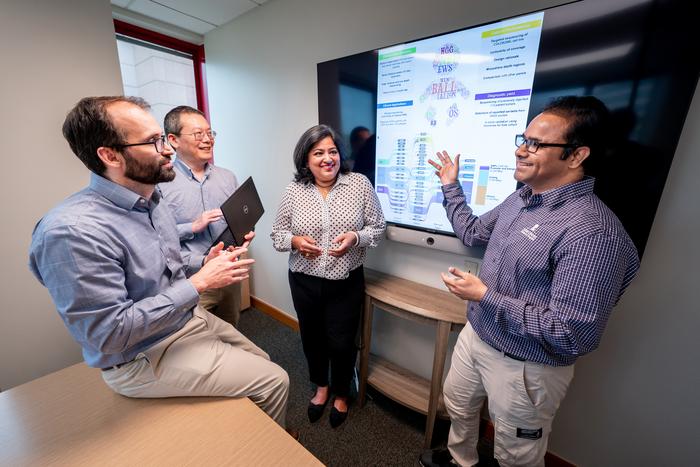
Scientists at St. Jude Children’s Research Hospital have created a panel that is able to provide a diagnosis for >90% of pediatric cancer patients by sequencing 0.15% of the human genome. The panel is a cost-effective way to test and classify childhood malignancies and to help guide patient treatment. The panel’s performance and validation were published this week in Clinical Cancer Research.
Finding the mutations in a child’s cancer with powerful sequencing technology can lead to better outcomes. Physicians use that knowledge to tailor targeted treatments to the specific cancer-causing mutations affecting each patient. However, current high-end whole genome sequencing requires physical and computational infrastructure that most institutions lack. To address this bottleneck, the St. Jude team developed SJPedPanel, which targets a smaller subset of genes, focusing on those well known to be involved in childhood cancer, instead of looking at the entire genome.
“We have performed clinical genomics for quite a few years and one of the challenges is diagnosing every tumor, especially those with a low percentage of cancer cells in the tested sample.” said co-corresponding author Xiaotu Ma, PhD, St. Jude Department of Computational Biology. “So, we created SJPedPanel as a summary to concentrate most of the genetic knowledge we have gained in the last decade into one smaller test that can be used clinically.”

The proof is in the panel
The group designed the new panel from the beginning for pediatric cancer samples, while other genetic panels were designed for adult cancers and then adapted for children. The scientists also had practical insights into the realities of detecting certain mutations, allowing them to select the most informative genes to include. Those differences led to huge outperformances when compared to existing cancer gene panels.
“We compared this panel with six other commercially available panels,” Ma said. “SJPedPanel provides the most coverage of pediatric cancer driver genes, providing close to 90% when others are closer to 60% coverage.”
That improved performance was the result of dedicated effort. “We performed an iterative optimization of a careful panel design based on our knowledge of pediatric cancer genetics,” said co-corresponding author John Easton, PhD, St. Jude Computational Biology Genomics Laboratory director, who previously served as the leader of the validation laboratory for the Pediatric Cancer Genome Project. “And we pursued that iterative process with the panel manufacturer to ensure its capabilities.”
Sign up for the Daily Dose Newsletter and get every morning’s best science news from around the web delivered straight to your inbox? It’s easy like Sunday morning.
In addition to working better than adapting adult-focused cancer gene panels, the St. Jude panel can also outperform gold-standard whole genome sequencing in some circumstances. Whole genome sequencing interrogates the entire human genome which makes it difficult to use for the detection of low cell count cancers due to required high-depth sampling.
“There are certain situations, such as low tumor purity samples or even testing after a bone marrow transplantation, where our current clinical whole genome sequencing approach doesn’t work,” said co-corresponding author Jeffery Klco, MD, PhD, St. Jude Department of Pathology. “This fills an important clinical gap for our patients.”
Focus on childhood cancer genetics
One reason the panel has had such an immediate impact is its unique nature and origin. St. Jude was one of the hospitals that originated the Pediatric Cancer Genome Project, which sequenced hundreds of patients to provide the most detailed overview of the genomic landscape of pediatric cancer. Prior research focused only on adult cancers, which are genetically distinct from childhood malignancies.
“We’ve taken all of the knowledge gained from the Pediatric Cancer Genome Project and other sequencing activities within the research space and have used that knowledge to generate this panel, which is now clinically implemented and has been run on over 600 samples in our clinical lab,” said Klco.
That legacy of expertise in childhood cancer genetics will continue to be built upon by incorporating more recent findings into the panel. For example, including the UBTF gene, which was discovered by Klco’s group in 2022. “Clinicians can feel comfortable knowing that the clinical sequencing that we provide to their patients is based on very current research results,” Klco said.
Sharing success to save children
The success of the panel could have real consequences for patients around the world. Correctly diagnosing childhood cancer, and diagnosing it early, can help guide treatment and lead to better outcomes. However, whole genome sequencing requires expensive physical and digital infrastructure. The panel will give institutions without those resources a better chance at identifying those cancers.
“Panels like this are easier for a clinical or research lab to implement into pipelines than whole genome sequencing,” Easton said. “Not every place has the sequencing and analysis capabilities to deal with whole genome. We’ve given the field a more sensitive and practical test.”
While the panel will be commercially available, the St. Jude group also intends to freely share the knowledge of its makeup to help as many children as possible.
“Now that we have this panel, scientists around the world will be able to use it,” Ma said. “The panel is tiny. So, the costs, both sequencing and analytical costs, are going to be minimal and likely viable to use in developing countries and underserved regions.”
“We would be thrilled if more and more centers use this panel for sequencing pediatric cancers,” Klco said, “because we believe it will lead to better patient care and outcomes.”
IMAGE CREDIT: St. Jude Children’s Research Hospital
If you enjoy the content we create and would like to support us, please consider becoming a patron on Patreon! By joining our community, you’ll gain access to exclusive perks such as early access to our latest content, behind-the-scenes updates, and the ability to submit questions and suggest topics for us to cover. Your support will enable us to continue creating high-quality content and reach a wider audience.
Join us on Patreon today and let’s work together to create more amazing content! https://www.patreon.com/ScientificInquirer



Leave a Reply