
Autism spectrum disorder has yet to be linked to a single cause, due to the wide range of its symptoms and severity. However, a study by University of Virginia researchers suggests a promising new approach to finding answers, one that could lead to advances in the study of other neurological diseases and disorders.
Current approaches to autism research involve observing and understanding the disorder through the study of its behavioral consequences, using techniques like functional magnetic resonance imaging that map the brain’s responses to input and activity, but little work has been done to understand what’s causing those responses.

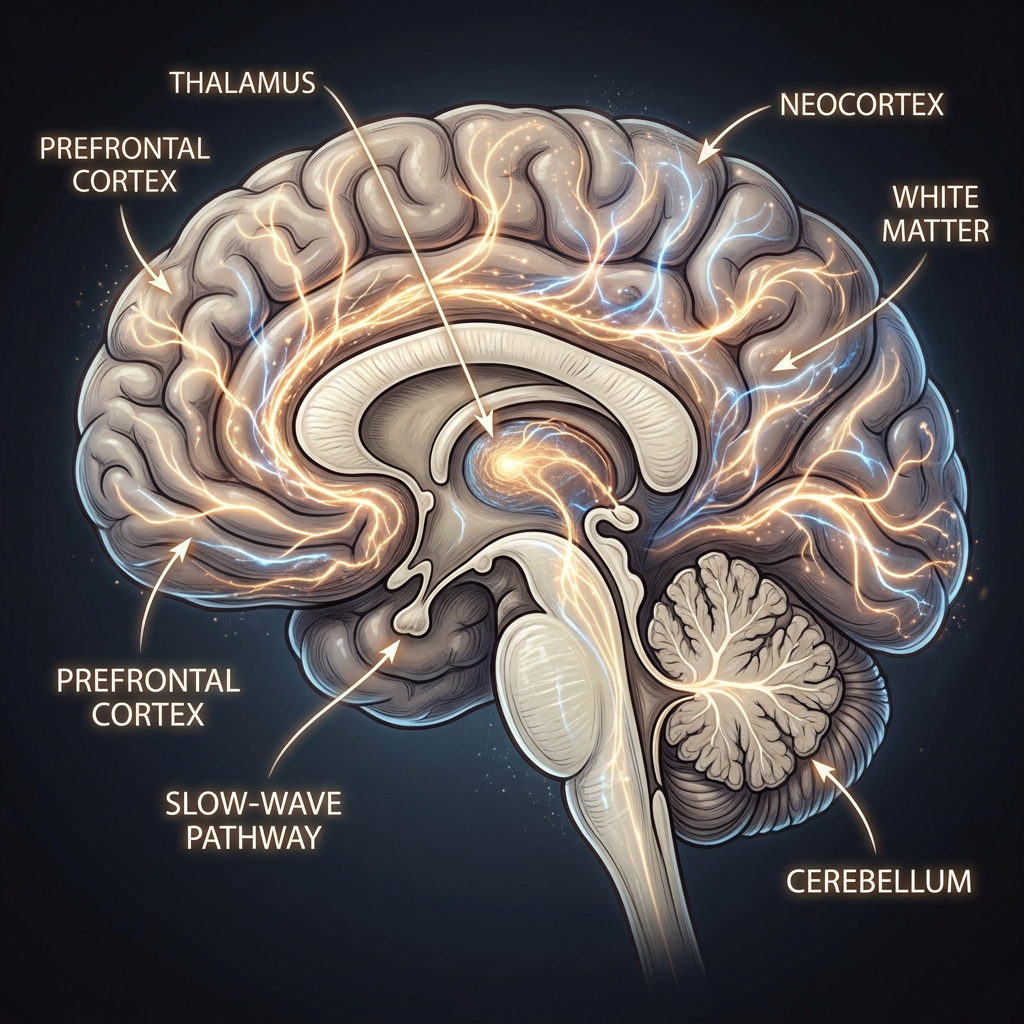
However, researchers with UVA’s College and Graduate School of Arts & Sciences have been able to better understand the physiological differences between the brain structures of autistic and non-autistic individuals through the use of Diffusion MRI, a technique that measures molecular diffusion in biological tissue, to observe how water moves throughout the brain and interacts with cellular membranes. The approach has helped the UVA team develop mathematical models of brain microstructures that have helped identify structural differences in the brains of those with autism and those without.
“It hasn’t been well understood what those differences might be,” said Benjamin Newman, a postdoctoral researcher with UVA’s Department of Psychology, recent graduate of UVA School of Medicine’s neuroscience graduate program and lead author of a paper published this month in PLOS: One. “This new approach looks at the neuronal differences contributing to the etiology of autism spectrum disorder.”
Sign up for the Daily Dose Newsletter and get every morning’s best science news from around the web delivered straight to your inbox? It’s easy like Sunday morning.
Building on the work of Alan Hodgkin and Andrew Huxley, who won the 1963 Nobel Prize in Medicine for describing the electrochemical conductivity characteristics of neurons, Newman and his co-authors applied those concepts to understand how that conductivity differs in those with autism and those without, using the latest neuroimaging data and computational methodologies. The result is a first-of-its-kind approach to calculating the conductivity of neural axons and their capacity to carry information through the brain. The study also offers evidence that those microstructural differences are directly related to participants’ scores on the Social Communication Questionnaire, a common clinical tool for diagnosing autism.
“What we’re seeing is that there’s a difference in the diameter of the microstructural components in the brains of autistic people that can cause them to conduct electricity slower,” Newman said. “It’s the structure that constrains how the function of the brain works.”
One of Newman’s co-authors, John Darrell Van Horn, a professor of psychology and data science at UVA, said, that so often we try to understand autism through a collection of behavioral patterns which might be unusual or seem different.
“But understanding those behaviors can be a bit subjective, depending on who’s doing the observing,” Van Horn said. “We need greater fidelity in terms of the physiological metrics that we have so that we can better understand where those behaviors coming from. This is the first time this kind of metric has been applied in a clinical population, and it sheds some interesting light on the origins of ASD.”
Van Horn said there’s been a lot of work done with functional magnetic resonance imaging, looking at blood oxygen related signal changes in autistic individuals, but this research, he said “Goes a little bit deeper.”
“It’s asking not if there’s a particular cognitive functional activation difference; it’s asking how the brain actually conducts information around itself through these dynamic networks,” Van Horn said. “And I think that we’ve been successful showing that there’s something that’s uniquely different about autistic-spectrum-disorder-diagnosed individuals relative to otherwise typically developing control subjects.”
Newman and Van Horn, along with co-authors Jason Druzgal and Kevin Pelphrey from the UVA School of Medicine, are affiliated with the National Institute of Health’s Autism Center of Excellence (ACE), an initiative that supports large-scale multidisciplinary and multi-institutional studies on ASD with the aim of determining the disorder’s causes and potential treatments.
According to Pelphrey, a neuroscientist and expert on brain development and the study’s principal investigator, the overarching aim of the ACE project is to lead the way in developing a precision medicine approach to autism.
“This study provides the foundation for a biological target to measure treatment response and allows us to identify avenues for future treatments to be developed,” he said.
Van Horn added that study may also have implications for the examination, diagnosis, and treatment of other neurological disorders like Parkinson’s and Alzheimer’s.
“This is a new tool for measuring the properties of neurons which we are particularly excited about. We are still exploring what we might be able to detect with it,” Van Horn said.
IMAGE CREDIT: Contributed
If you enjoy the content we create and would like to support us, please consider becoming a patron on Patreon! By joining our community, you’ll gain access to exclusive perks such as early access to our latest content, behind-the-scenes updates, and the ability to submit questions and suggest topics for us to cover. Your support will enable us to continue creating high-quality content and reach a wider audience.
Join us on Patreon today and let’s work together to create more amazing content! https://www.patreon.com/ScientificInquirer




Leave a Reply