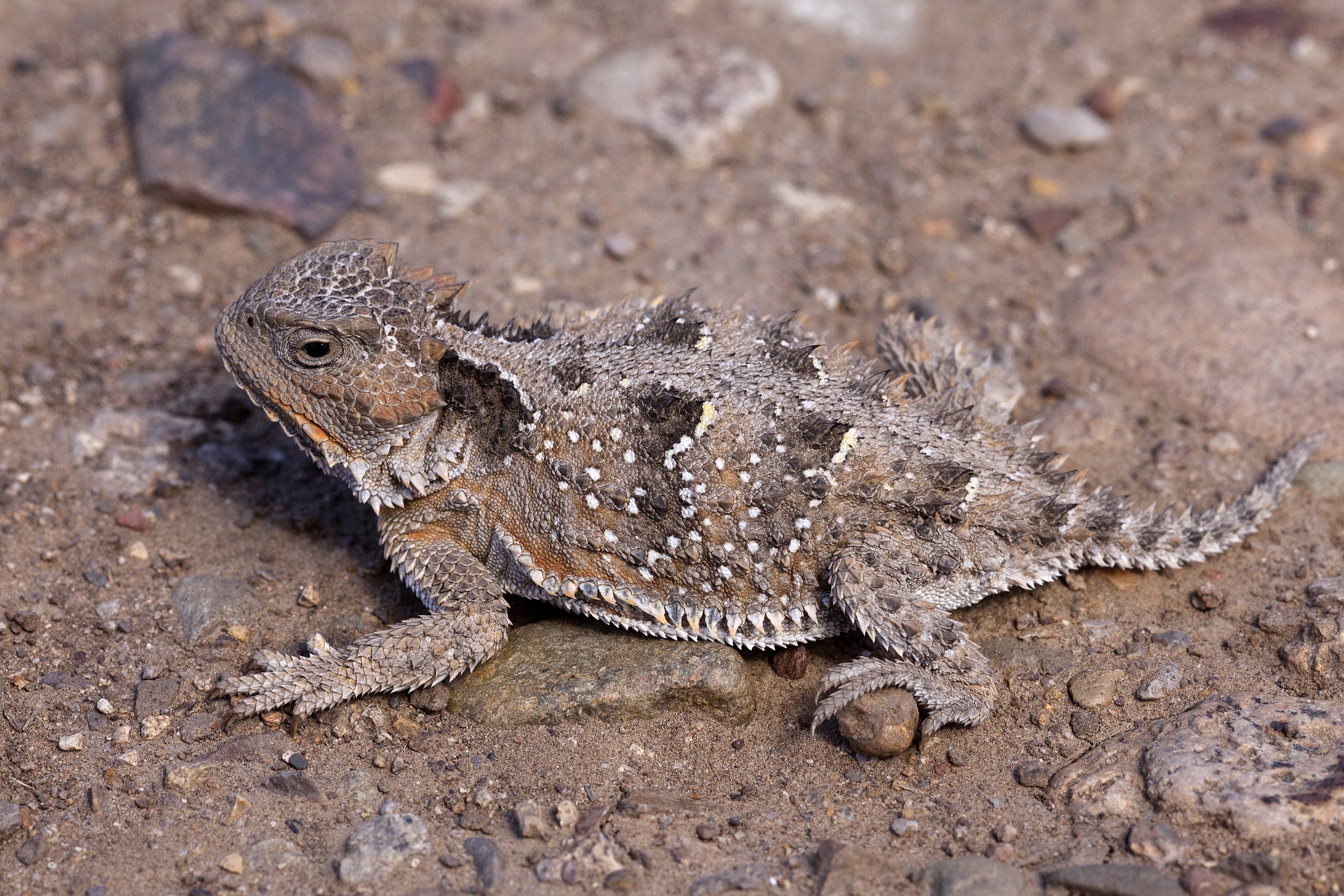

The horned lizard, a creature often associated with the deserts of North America, possesses an astonishing defense mechanism that has intrigued scientists and nature enthusiasts alike: the ability to shoot blood from its eyes. This unique adaptation, present in several species of horned lizards, including the mountain short-horned lizard (Phrynosoma hernandesi), serves as a deterrent against predators.
At the heart of this mechanism is the lizard’s specialized circulatory system. Horned lizards have evolved a highly controlled blood pressure system. When threatened, they can increase the blood pressure in the sinuses around their eyelids to extreme levels. This process involves the restriction of specific blood vessels, leading to an increase in blood pressure in the ocular sinuses. The force generated by this pressure buildup is sufficient to rupture the thin membranes of the sinuses, allowing the lizard to spray blood up to a distance of five feet.
The blood itself serves multiple purposes in defense. Primarily, the sudden and unexpected nature of this blood-squirting act can startle and confuse predators, giving the lizard a chance to escape. Moreover, the blood contains chemicals that are distasteful to canine and feline predators, such as coyotes and bobcats, which are common threats to the lizard in its natural habitat.
Interestingly, this defense strategy is not the horned lizard’s first line of defense. Typically, these lizards rely on their cryptic coloration to blend into their surroundings, avoiding detection by predators. When this fails, and a predator is too close or persistent, the horned lizard resorts to its blood-squirting ability.
This peculiar adaptation has been the subject of various studies aiming to understand the evolutionary pressures that led to its development. The harsh environments where horned lizards live, coupled with a high presence of predators, likely played a significant role in shaping this unique defense mechanism. It’s a vivid example of how extreme environmental conditions can drive the evolution of equally extreme biological adaptations.



Leave a Reply