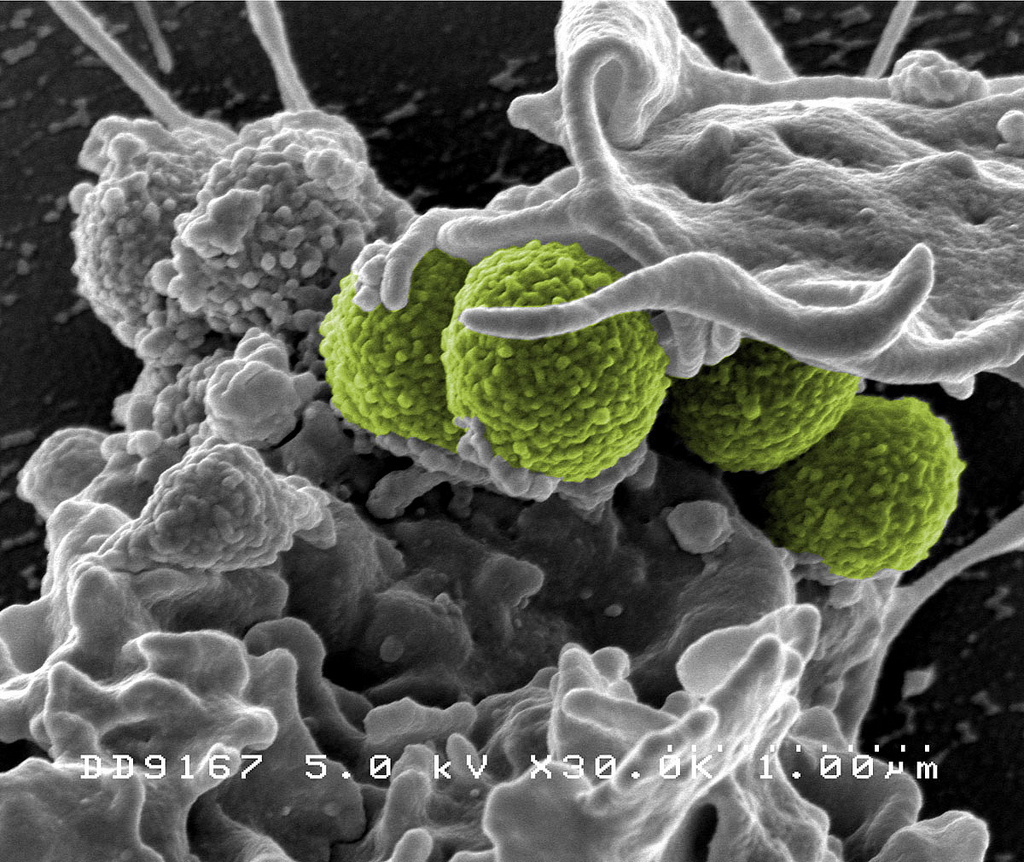
More and more bacterial pathogens are developing resistance. There is an increasing risk that common drugs will no longer be effective against infectious diseases. That is why scientists around the world are searching for new effective substances. Researchers from the University of Bonn, the German Center for Infection Research (DZIF), Utrecht University (Netherlands), Northeastern University in Boston (USA) and the company NovoBiotic Pharmaceuticals in Cambridge (USA) now have discovered and deciphered the mode of action of a new antibiotic. Clovibactin is derived from a soil bacterium. This antibiotic is highly effective at attacking the cell wall of bacteria, including many multi-resistant “superbugs.” The results have now been published in the renowned journal Cell.
“We urgently need new antibiotics to stay ahead in the race against bacteria that have become resistant,” says Prof. Dr. Tanja Schneider of the Institute for Pharmaceutical Microbiology at the University of Bonn and the University Hospital Bonn. She adds that in recent decades, not many new substances to combat bacterial pathogens have come onto the market. “Clovibactin is novel compared to current antibiotics in use,” says the co-spokesperson of the Transregional Collaborative Research Center “Antibiotic CellMAP,” who is also a member of the Transdisciplinary Research Area “Life & Health” and the Cluster of Excellence “ImmunoSensation2.” The Institute for Pharmaceutical Microbiology, together with the German Center for Infection Research, specializes in deciphering the mode of action of antibiotic candidates.
The soil bacterium Eleftheria terrae subspecies carolina carries its place of origin in its name: It was isolated from a soil sample in the US state of North Carolina and produces the new antibiotic compound clovibactin to protect itself from competing bacteria. “The new antibiotic simultaneously attacks the bacterial cell wall at several sites by blocking essential building blocks,” explains Tanja Schneider. It specifically binds to these building blocks with unusual intensity and kills the bacteria by destroying their cell envelope.

Research groups from different disciplines and countries worked together to unravel exactly how this works. The team led by Prof. Kim Lewis of the Antimicrobial Discovery Center at Northeastern University in Boston (USA) and the company NovoBiotic Pharmaceuticals in Cambridge (USA) discovered clovibactin using the iCHip device. This allows bacteria to be grown in the laboratory that were previously considered unculturable and were not available for the development of new antibiotics.
“Our discovery of this exciting new antibiotic further validates the iCHip culturing technology for finding new therapeutic compounds from previously uncultivated microorganisms,” says Dallas Hughes, Ph.D., president of NovoBiotic Pharmaceuticals, LLC. The company has demonstrated that clovibactin has very good activity against a broad spectrum of bacterial pathogens and has successfully treated mice in preclinical studies.
The mode of action of the new antibiotic was elucidated by researchers led by Tanja Schneider. The researchers from Bonn were able to show that clovibactin binds very selectively and with high specificity to pyrophosphate groups of bacterial cell wall components. Prof. Markus Weingarth’s group from the Department of Chemistry at Utrecht University in the Netherlands uncovered exactly what this interaction looks like. Using solid-state NMR spectroscopy, the researchers deciphered the structure of the complex of clovibactin and the bacterial target structure lipid II – under conditions similar to those found in the bacterial cell. These studies showed that clovibactin grips around the pyrophosphate group. This is where the name “Clovibactin” comes from, derived from the Greek “Klouvi” (cage), because it encloses the target structure like a cage.
Clovibactin acts primarily on gram-positive bacteria. These include “hospital pathogens,” such as MRSA bacteria but also the pathogens of the widespread tuberculosis, which affects many millions of people worldwide. “We are very confident that the bacteria will not develop resistance to clovibactin so quickly,” Tanja Schneider says. This is because the pathogens cannot change the cell wall building blocks so easily to undermine the antibiotic – their Achilles’ heel therefore remains.
But clovibactin can do even more. After docking to the target structures, clovibactin forms supramolecular filamentous structures that tightly enclose and further damage the target structures of the bacteria. Bacteria that encounter clovibactin are also stimulated to release certain enzymes, known as autolysins, which then uncontrollably dissolve their own cell envelope. “The combination of these different mechanisms is the reason for the exceptional resilience to resistance,” says Tanja Schneider. This shows the potential that still exists in the natural diversity of bacteria that are candidates for new antibiotics.
“Without the interdisciplinary cooperation between the partners, this important step in the fight against resistance would not have succeeded,” says Prof. Markus Weingarth. The research team now plans to use its findings to further increase the effectiveness of clovibactin. “But there is still a long way to go before a new antibiotic hits the market,” says Tanja Schneider.
IMAGE CREDIT: CDC.
Sign up for the Daily Dose Newsletter and get the morning’s best science news from around the web delivered straight to your inbox? It’s easy like Sunday morning.



Leave a Reply