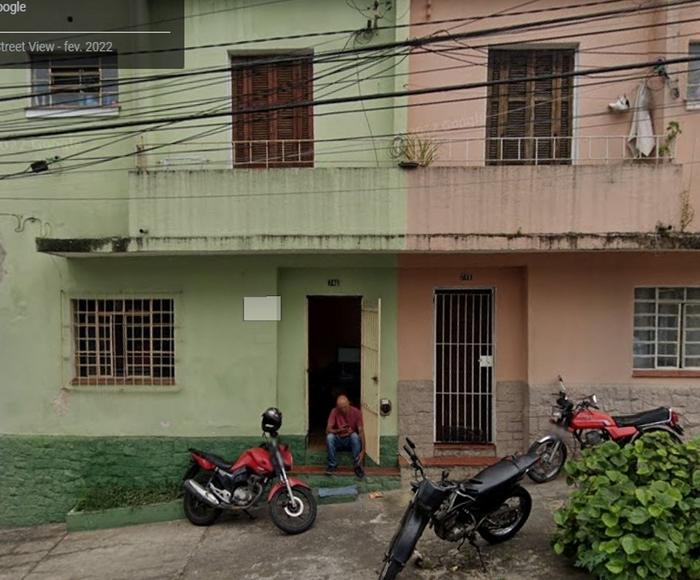
About a third of the restaurants listed on iFood, the food delivery app most used by Brazilians, are “dark kitchens”, according to the first study of the topic conducted in Brazil, and one of only a few worldwide.
An article on the study is published in the journal Food Research International. It has eight authors; the first three and the last are researchers at the State University of Campinas (UNICAMP) in São Paulo state.
Defined in the article as delivery-only restaurants that have no direct contact with consumers, have no premises for local consumption and sell solely through online platforms, dark kitchens (or ghost restaurants) have multiplied significantly since the COVID-19 pandemic. They are located far from the city center, mainly offer Brazilian food, as well as snacks and desserts, and are cheaper than conventional restaurants.
If you enjoy the content we create and would like to support us, please consider becoming a patron on Patreon! By joining our community, you’ll gain access to exclusive perks such as early access to our latest content, behind-the-scenes updates, and the ability to submit questions and suggest topics for us to cover. Your support will enable us to continue creating high-quality content and reach a wider audience.
Join us on Patreon today and let’s work together to create more amazing content! https://www.patreon.com/ScientificInquirer
To identify and characterize dark kitchens in the app, data was collected in two stages. First, the researchers obtained names, URLs and taxpayer numbers (CNPJ) for 22,520 restaurants in Limeira, Campinas and São Paulo city. They also analyzed distances from the city center, estimated delivery times, user reviews, types of food offered, whether delivery could be scheduled, and how orders were tracked.
In the second stage, some 3,000 establishments (about 1,000 nearest the center of each city) were analyzed qualitatively and divided into three categories: dark kitchens (727, or 27.1%); standard restaurants (1,749, or 65.2%); and undefined (206, or 7.7%), the latter having insufficient data or addresses where no such facilities existed. Dark kitchens accounted for 35.4% in São Paulo city.
“We believe the number is much higher. The platform doesn’t require specification of restaurants’ positioning or inform consumers. In many cases, we were unable to obtain enough data to classify them. Owing to these gaps, we also conducted an investigation by searching social media and Google Street View for information, phoning or messaging some of them, and even visiting to observe their frontage,” said Diogo Thimoteo da Cunha, corresponding author of the article. He is a professor of nutrition at UNICAMP’s School of Applied Sciences (FCA) and a researcher at its Multidisciplinary Food and Health Laboratory (LabMAS).
“We also found that dark kitchens were farthest from the center in all three cities, enabling them to charge less because of lower costs, whereas restaurants in better locations need to invest in frontage and other items,” said Mariana Piton Hakim, first author of the article and a researcher at LabMAS. “On the other hand, standard restaurants had more stars [in user reviews] in São Paulo and were rated by more users in all three cities, which probably relates to lower sales by dark kitchens and the fact that standard restaurants are usually better known.”
Other results of the study, which was funded by FAPESP, included the finding that dark kitchens served Brazilian cuisine in 30.3% of cases in São Paulo, and snacks and desserts in 34.7% of cases in the other two cities, which are not as large. Six different models of dark kitchen were identified: independent (kitchens leased by brands for their own exclusive use, with or without frontage); shell or hub (shared by more than one kitchen or restaurant); franchise (with more than one point of sale, well-established social media, and in many cases a presence in more than one city); virtual kitchen in a standard restaurant with a different menu (operating out of the same address as a physical restaurant but with a different name and service); virtual kitchen in a standard restaurant with a similar menu but a different name; and home-based dark kitchen in a residential building.
Consumer perceptions and sanitary issues
Noting that dark kitchens featured frequently in local news outlets owing to rows with neighbors over noise, smells and biker traffic around homes in the vicinity, the researchers also found health and safety issues to be problematic.
“We saw that this restaurant model appeared to be on the margins of the legislation, not because they’re illegal but because no one has taken the trouble to understand how this market segment works and how it can be improved,” Cunha said. “We don’t want to make life difficult for them, not least because they’re economically significant and are here to stay. Our aim is to understand their impact on the wider economy and find out how they can be made legally viable so as to be accessible to sanitary inspection, which currently faces difficulties with inspection of domestic kitchens. We want to see them stronger but with protection for consumers.”
This will be the focus for future research by the group, which plans to visit dark kitchens later this year to observe their qualities and defects first-hand, and to understand the producers’ perceptions. They expect to observe sanitary problems in domestic kitchens, such as the presence of animals and families, as well as failure to have separate refrigerators, and hope to find examples of how to solve these problems while offering suggestions of their own.
The researchers also noted that the situation is made more problematic by lack of consumer awareness regarding the dark kitchen concept and the potential risks for their food and family, as they detected in a previous study also published in Food Research International.
“Consumer perceptions are ambiguous. They believe in iFood’s reputation and think it will protect their orders yet don’t see the brand as responsible for food safety,” Hakim said.
The researchers at UNICAMP are partnering with colleagues at the University of São Paulo (USP) and the Federal University of São Paulo (UNIFESP), as well as the University of Central Lancashire (UCLan) in the United Kingdom and Gdansk University in Poland, so that food delivery apps in different countries can be compared.
Asked by Agência FAPESP for comment, iFood sent the following statement: “iFood reiterates that the study considered less than 1% of the database of active partners registered by our platform, which currently has business relationships with over 300,000 restaurants throughout Brazil. We emphasize that our entire ecosystem, which involves deliverers, customers, the public sector and restaurants, is completely transparent, and that our contract requires partners to meet all the legal requirements for operators in the sector, regardless of whether they are delivery-only. This encompasses legal, sanitary, tax, zoning and other obligations established by the competent authorities, which are also responsible for inspection and enforcement.”
IMAGE CREDIT: Google Street View/reproduction




Leave a Reply