HAVE YOUR SAY.
Join us in The Bullpen, where the members of the Scientific Inquirer community get to shape the site’s editorial decision making. We’ll be discussing people and companies to profile on the site. On Wednesday, March 8 at 5:30pm EST, join us on Discord and let’s build the best Scientific Inquirer possible.
Serial dependence is a bias affecting perceptual experience, in which what you currently perceive tends to be biased toward what you have perceived immediately before. This phenomenon has been observed in tasks using different stimuli, including tilt perception, number perception, and motion perception, but it was not known if this bias occurred during sensory perception or cognition.
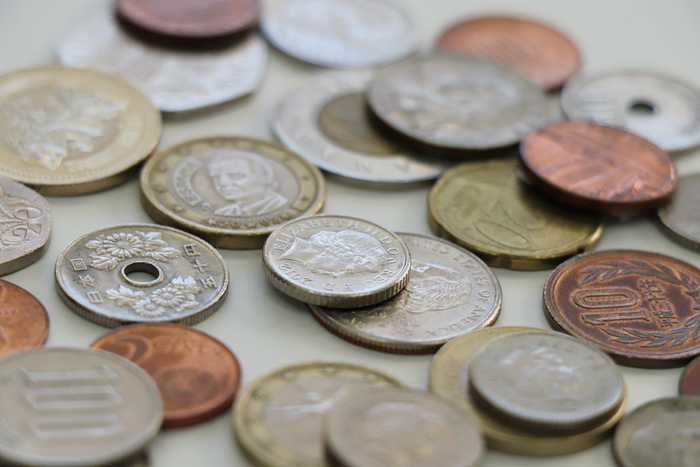
A research team, led by Professor Shogo Makioka from the Osaka Metropolitan University Graduate School of Sustainable System Sciences, conducted experiments on the serial dependence of number perception using coins, to see if serial perception bias occurred in lower-order perceptual or higher-order perceptual and cognitive processing.
Experiments were conducted in which between 8 to 32 Japanese coins of three types—silver one yen, gold five yen, and copper ten yen—were displayed on screen for half a second. In the first experiment, the 24 participants guessed the total number of coins that appeared on the screen 250 times; in the second experiment, participants saw coins appear on the screen, but guessed the total value of the money displayed 250 times. Serial dependence was confirmed for both tasks: it was found that a participant’s last guess, not the coins that they had just seen for half a second, had the greatest effect on how they answered. These results indicate that higher-order cognitive processing has a greater influence on the occurrence of serial dependence. Their findings were published in Scientific Reports.

“The results of this study show that our perceptual experiences and our decisions themselves influence our next decisions, which may be useful in capturing the tendency to misjudge and misunderstand in our daily lives,” explained Professor Makioka. “We believe that research advances on biases—such as the serial dependence bias—should be applied to how information is presented and can be used to create an environment that minimizes human error.”
IMAGE CREDIT: Osaka Metropolitan University

.jpg)
Leave a Reply