HAVE YOUR SAY.
Join us in The Bullpen, where the members of the Scientific Inquirer community get to shape the site’s editorial decision making. We’ll be discussing people and companies to profile on the site. On Wednesday, August 31 at 5:30pm EST, join us on Discord and let’s build the best Scientific Inquirer possible.
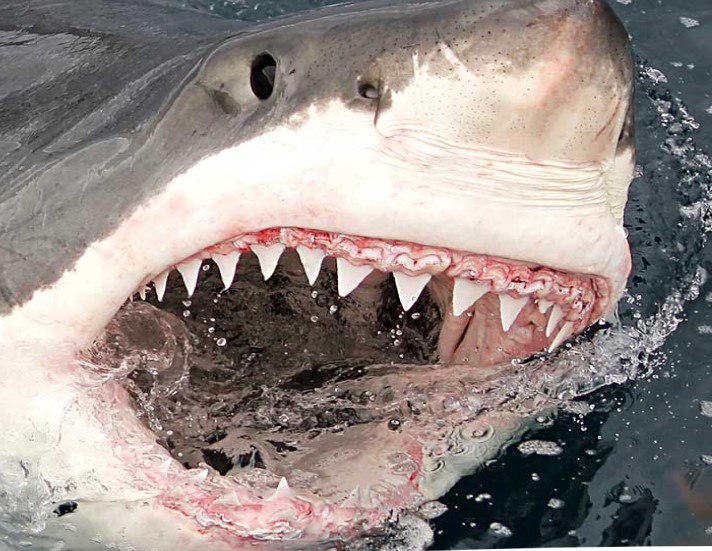
Oceanographers have discovered more about why the eastern Great Australian Bight supports a year-round abundance of marine predators, including different whale species and white sharks which attract cage divers and filmmakers inspired by the Hollywood blockbuster Jaws.
For the first time, experts from Flinders University and the South Australian Research and Development Institute (SARDI) have described substantial subsurface phytoplankton layers deep beneath the eastern part of the Bight – which serves to support the rich marine biodiversity even when the surface phytoplankton blooms disappear at certain times of the upwelling season.
“To conserve this important region, and prepare for climate change, we need to further understand these systems and food sources,” says Flinders University researcher Alex Shute, the first author of a new study in Continental Shelf Research.

“To understand this, we explored year-to-year variations of phytoplankton layers in the region using satellite data in conjunction with water-column data from the Integrated Marine Observing System (IMOS).”
To their surprise the IMOS data uncovered a ‘missing link’ of layers of substantial subsurface phytoplankton at water depths of 30m to 70m – undetected by even satellite imagery until now.
The seasonal upwelling of nutrient-rich water fuels the production of phytoplankton, which Flinders University oceanographer Associate Professor Jochen Kaempf and colleagues have studied for almost 20 years.
Known as the Great Southern Australian Coastal Upwelling System (GSACUS), it is one of Australia’s most productive marine ecosystems – attracting large marine mammals including whales, seals and sealions, as well as valuable fish populations such as the southern bluefin tuna.
Associate Professor Kaempf says this new study highlights how the marine food chain survives even in years when the surface phytoplankton upwelling doesn’t occur.
‘’Our observation of subsurface phytoplankton layers is the missing key explaining the high productivity of the region.
“This study demonstrates how little we actually know about the functioning of marine ecosystems, and how important real field observations are,’’ adds Associate Professor Kaempf, who is president of the Australian Meteorological and Oceanographic Society (AMOS), Adelaide Division.
IMAGE CREDIT: sharkcagediving.com.au


Leave a Reply