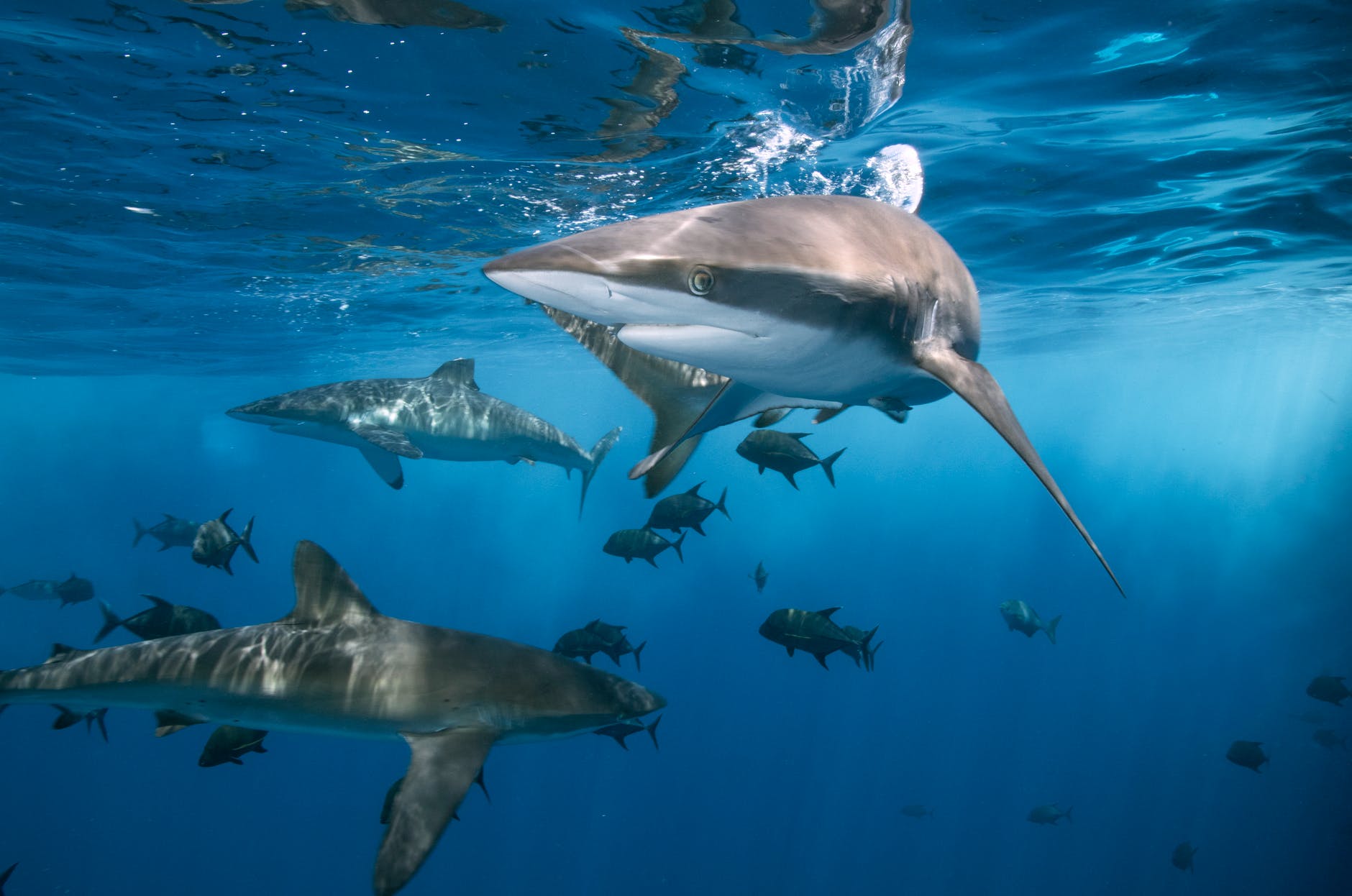
In case you haven’t been paying attention, National Geographic’s annual elasmobranch love-in, aka Sharkfest is in full swing. They kicked off festivities on Monday with a trio of shows, highlighted by Shark Beach with Chris Hemsworth. Tonight’s episode, Shark Gangs, keeps the momentum going with a fascinating — if not a little bit scary — look at whether sharks display pack-hunting behavior along coastal regions around the world.
The most common image of sharks — popularized by the Jaws franchise and subsequent other portrayals — is of the lone hunter trawling the ocean in complete silence, searching for prey. The truth is that it’s a misconception at odds with behavior observed by ichthyologists, aka fish scientists. As it turns out, swarms of sharks form quite often and many display behavior reminiscent of animals capable of forming social bonds. Scary, right? A bunch of massive creatures with razor sharp teeth and powerful jaws coordinating their next moves.
Shark Gangs runs through a gamut of sharks — sand tiger, great white, lemon, hammerhead, blacktip, and bull sharks — searching for answers not only as to whether they exhibit group behavior, but also the deeper question – why? The most obvious answer is that they join forces in order to increase the probability of success when hunting for their next meal. To some extent, observations bear this out. However, sharks behavior turns out to be much more nuanced as is shown with sand tiger sharks. They actually form packs of females who find safety in numbers from… drum roll please… male sharks. (In that sense, they’re no different than a group of friends going out to a club or a bar, I suppose.)
While shows like When Sharks Attack are much more sensational, Shark Gangs ultimately proves more informative and substantive. The fact that these creatures form groups with definite social bonds and hierarchies paints a more complex picture than we tend to credit them with. It almost makes them seem more, dare I say, human.
Shark Gangs premiers tonight at 10pm EST/11pm CST on the National Geographic channel.



Leave a Reply