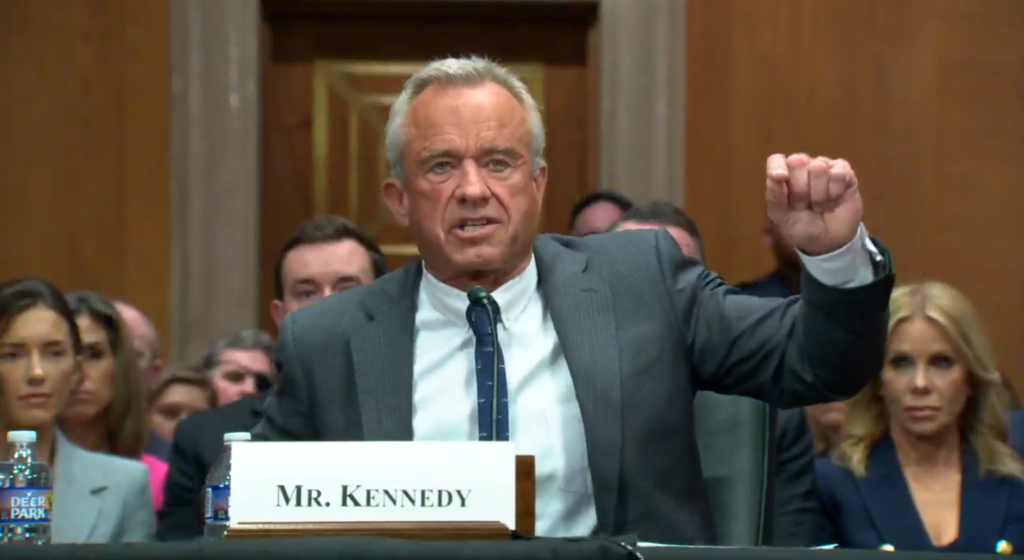
Court Hears Challenge to Kennedy’s Vaccine Authority: A federal court hearing has raised sharp questions about the scope of authority held by U.S. Health Secretary Robert F. Kennedy Jr. over national vaccine policy. During proceedings in Boston, a Department of Justice lawyer argued that Kennedy’s authority is so broad that his decisions on vaccine policy are effectively “unreviewable,” even if he recommended policies that ran counter to established public health practices. The case was brought by the American Academy of Pediatrics and other medical organizations, which are seeking to block recent vaccine policy changes made under Kennedy’s leadership. These include replacing all 17 members of the CDC’s vaccine advisory panel and altering the childhood vaccination schedule. U.S. District Judge Brian Murphy expressed skepticism of the government’s position and indicated he would rule on a requested injunction before the advisory committee’s next scheduled meeting. (Ars Technica)
Poll Finds Americans Trust Career Scientists More Than Health Agency Leaders: A new national survey suggests Americans place greater trust in career scientists working at federal health agencies than in the political leaders running them. The poll, conducted by the University of Pennsylvania’s Annenberg Public Policy Center and cited by CIDRAP, surveyed 1,650 U.S. adults in February 2026. About 67% of respondents said they were confident in career scientists at agencies such as the Centers for Disease Control and Prevention (CDC), National Institutes of Health (NIH), and Food and Drug Administration (FDA), while only 43% expressed confidence in the leaders of those same agencies. Trust in the agencies themselves has also declined, dropping from roughly 74–76% in 2024 to about 60–62% in 2026. Respondents reported even greater confidence in independent professional groups such as the American Academy of Pediatrics and American Medical Association when evaluating public health advice. (CIDRAP)
Oldest Bony Fish Fossils Push Back a Major Evolutionary Milestone: Two new Nature papers described what researchers say are the oldest known fossils of bony fishes, helping close one of vertebrate evolution’s biggest gaps. The finds come from southern China and include Eosteus chongqingensis, a tiny but unusually complete fish from about 436 million years ago, plus new anatomical detail for Megamastax amblyodus, the largest known Silurian vertebrate. Together, the fossils show that key bony-fish features such as jaws, teeth, braincase structures and parts of the fin apparatus emerged earlier than many researchers had assumed. Because bony fishes eventually gave rise not only to today’s ray-finned and lobe-finned fishes but also to tetrapods, including humans, the discovery matters well beyond fish paleontology. It also strengthens the case for South China as a crucial center in early vertebrate evolution. (EurekAlert!)
Tiny Colorado Teeth Expand the Range of the Earliest Primate Relative: New fossil teeth from Colorado’s Denver Basin have extended the known southern range of Purgatorius, the tiny Paleocene mammal widely regarded as the earliest-known relative of primates. Until now, Purgatorius had been known mainly from Montana and southwestern Canada, creating an awkward geographic gap in the story of how the group spread after the end-Cretaceous extinction. The new material, reported in the Journal of Vertebrate Paleontology, suggests these archaic primate relatives diversified and moved southward much sooner than previously documented. Researchers argue the fossils help clarify the biogeographic history of the earliest primate line and may connect its distribution to post-asteroid ecological recovery, especially the return of forested habitats. For anyone interested in human origins, the importance is obvious: this is a small fossil with very large implications. (EurekAlert!)
A Twisted-Jawed Tetrapod Reveals a Strange Plant-Eater From the Permian: A newly described Brazilian fossil has introduced paleontologists to Tanyka amnicola, a 275-million-year-old tetrapod with a bizarre jaw unlike anything expected from its time. The animal is known mainly from a set of lower jaws, but those jaws are enough to make it remarkable: they are twisted, lined with inward-facing denticles, and appear adapted for processing plant matter. Researchers interpret Tanyka as a relic member of an older tetrapod lineage that survived alongside more evolutionarily “modern” groups, making it something like a Permian-era living fossil. The anatomy suggests experimentation in herbivory was broader and stranger than standard textbook narratives imply. It also reminds us how much of early terrestrial ecosystems remains murky. Even fragmentary fossils can radically reshape our sense of who was eating what, and how, long before dinosaurs dominated the planet. (Discover Magazine)
Amber Fossils Capture Prehistoric Insects in Mid-Interaction: A new report highlighted especially rare amber fossils that preserve more than isolated insects: they capture interactions, or apparent interactions, between species. That distinction matters. Amber has long been valued as a biological time capsule, but researchers are increasingly asking whether multi-organism inclusions truly record behavior and ecology or merely preserve accidental entrapment. The fossils discussed here offer unusually vivid evidence for reconstructing ancient ecosystems, especially among insects, which are abundant in life but comparatively underrepresented in conventional fossil deposits. Because amber can preserve bodies in exquisite detail, it opens windows onto behavior, habitat, association and even possible conflict. This is not the kind of paleontology built around giant skeletons, but it is no less revealing. Fossils like these can illuminate ancient food webs and ecological relationships that bones alone rarely show. (Discover Magazine)
T. rex May Have Run More Like a Bird Than a Reptilian Tank: A new study suggests Tyrannosaurus rex may have moved with a more birdlike gait than many classic reconstructions imply. Rather than planting its feet heel-first, the giant predator may have struck the ground with its toes first, effectively running on tiptoes. Researchers combined fossil track evidence with anatomical analysis of four T. rex skeletons and used the results to model how the animal likely moved. The conclusion is striking not only visually but biomechanically: toe-first locomotion may have helped the dinosaur stay balanced and move efficiently despite weighing more than 10 tons. The study deepens the already strong case that tyrannosaurs, far from being lumbering monsters, shared important functional traits with living birds. It is also a reminder that locomotion studies remain one of the fastest-moving areas in dinosaur science. (Smithsonian Magazine)
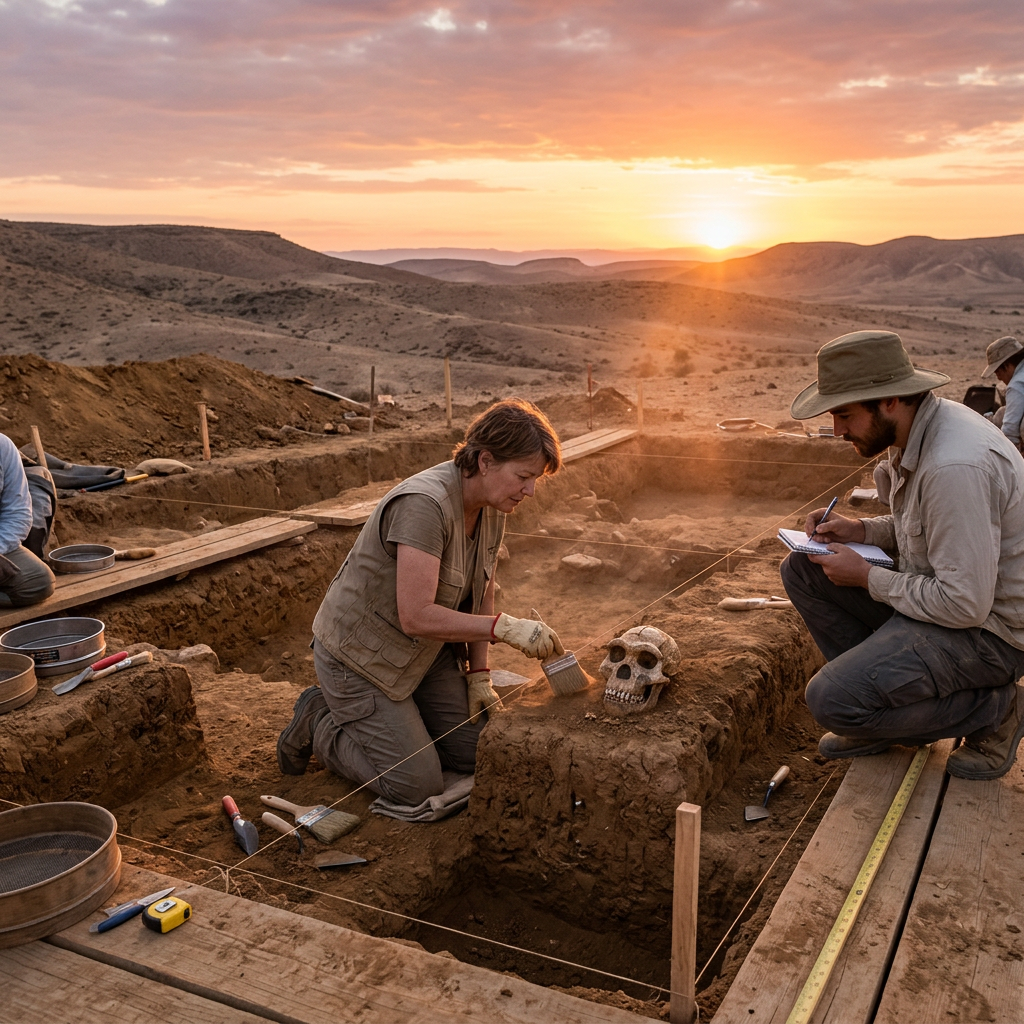
Little Foot Gets a New Face—and New Evolutionary Context: A digital reconstruction of the famous South African hominin fossil known as Little Foot has given researchers their clearest look yet at one of the most complete early Australopithecus skeletons ever found. By using high-resolution scans to correct distortion caused by millions of years of geological pressure, scientists produced a more reliable model of the face and compared it with other fossil hominins and living great apes. The result is especially interesting because Little Foot appears to share notable similarities with East African specimens rather than matching a younger South African comparison as closely. That does not solve every taxonomic debate, but it sharpens them in a useful way. In paleoanthropology, anatomy still drives the biggest arguments, and this reconstruction adds a significant new piece to the discussion of early human diversity in Africa. (Science News)
NASA Rules Out a 2032 Lunar Impact for Asteroid 2024 YR4: NASA said new observations from the James Webb Space Telescope have allowed scientists to refine the orbit of near-Earth asteroid 2024 YR4 and rule out a lunar impact in December 2032. The updated trajectory places the object passing the Moon at roughly 13,200 miles, or about 21,200 kilometers, from the lunar surface. The result is a useful example of what planetary defense work looks like in practice: early uncertainty, targeted follow-up observations and progressively tighter orbital constraints. Webb’s role was especially notable because the asteroid had become extremely difficult to observe from Earth and most space-based platforms, making these among the faintest asteroid measurements yet obtained with the telescope. The story is less about danger than about capability, showing how modern observational tools can rapidly reduce risk assessments for potentially concerning objects. (NASA Science)
Carruthers Observatory Begins Its Main Mission to Study Earth’s Hydrogen Halo: NASA’s Carruthers Geocorona Observatory has officially begun its 24-month primary science mission, turning its attention to Earth’s exosphere, the outermost part of the atmosphere. Operating from the Sun-Earth L1 Lagrange point about a million miles from Earth, the spacecraft will image the geocorona, a vast cloud of hydrogen atoms glowing in ultraviolet light when illuminated by the Sun. That constant vantage point gives Carruthers a unique ability to monitor the structure and behavior of this poorly understood region. The mission carries two ultraviolet imagers with different fields of view, allowing both wide and more focused observations. While less flashy than a Mars rover or asteroid mission, this is foundational space science: understanding the exosphere matters for atmospheric escape, space weather interactions and the long-term evolution of Earth’s upper atmosphere. (NASA Science)
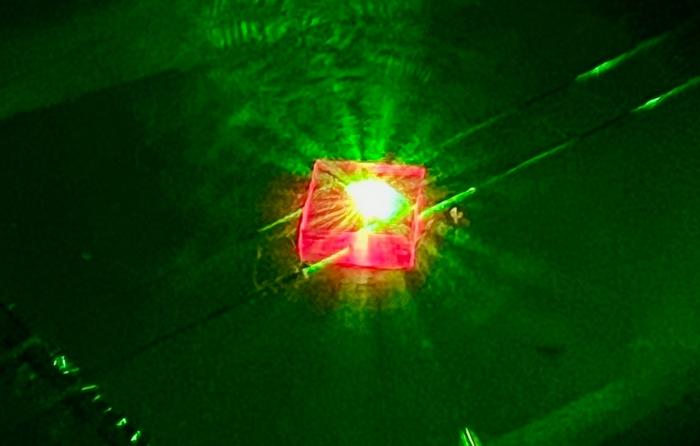
Researchers Model Lightning-Like Bursts Inside Solid Materials: Penn State-led researchers reported that lightning-like electrical discharges may be possible not only in storm clouds but inside dense insulating materials such as acrylic, quartz and glass. Using mathematical modeling and simulations, they found that solid materials can reproduce thundercloud-like electric conditions on much smaller scales, potentially over just centimeters rather than kilometers. If confirmed experimentally, the result could open a controlled laboratory route to studying how lightning forms and propagates. The team also notes possible practical applications, including compact X-ray sources for medicine and security. The broader scientific appeal, though, is conceptual: phenomena associated with the atmosphere might be recreated inside ordinary materials under the right conditions. That shifts lightning research from something largely observed in nature to something that may eventually be probed, and perhaps manipulated, on the lab bench. (Phys.org)
A Huge New Gravitational-Wave Catalog Expands the Known Population of Black Holes: A newly released gravitational-wave catalog from the LIGO-Virgo-KAGRA collaboration has more than doubled the number of known detections, giving physicists a much richer sample of black hole mergers and other extreme cosmic events. According to Scientific American, the expanded dataset includes more varied black holes than before, including systems with strong asymmetries and very rapid spins. That matters because gravitational-wave astronomy is still young; every jump in sample size moves the field from headline-making firsts toward population science. Instead of asking whether these collisions exist, researchers can now ask what kinds are common, which are rare and how well Einstein’s general relativity continues to hold up under increasingly stringent tests. The new catalog is less a single discovery than a major upgrade in the depth and statistical power of an entire branch of astronomy. (Scientific American)
Leave a Reply